Is this police force professional and capable of handling violen...
/ 2026-10-16 18:54:07Focus


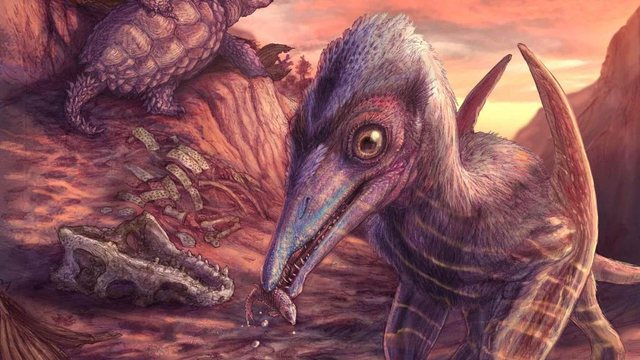
A rare and important discovery for the world of science has been made in Arizona, United States: a new species of pterosaur, a flying reptile that lived more than 200 million years ago. According to researchers at the Smithsonian Institution in Washington DC, this is the earliest pterosaur ever discovered in North America.
The fossil belongs to a flying reptile that lived during the Triassic period, an era when dinosaurs were just beginning to appear. Although the pterosaur's jawbone was first found in 2011 in Petrified Forest National Park, it was only thanks to advanced scanning techniques that it was possible to identify it as a species entirely new to science.
The reptile has been named Eotephradactylus mcintireae, which means "ash-winged dawn goddess," a reference to the volcanic ash that helped preserve its remains in an ancient riverbed.
According to Dr. Kligman, a paleontologist on the research team, this fossil is about 209 million years old and its discovery is particularly valuable because pterosaur bones are usually very small, thin, and fragile, so they are rarely preserved as fossils.
"The fact that we have been able to identify pterosaur bones in ancient river sediments leads us to believe that there may be many other places in the world where similar fossils may still be preserved," Dr. Kligman told BBC News.
Other fossils, including bones, teeth, fish scales and even fossilized feces (coprolites), were also found at the same site, which together provide a unique view of a 200-million-year-old ecosystem. The fossil bed bears traces of a period of evolutionary transition, where ancient animals that later became extinct lived alongside creatures that resemble those we know today, such as frogs and turtles.
Analysis of the pterosaur's teeth has shown high wear on their tips, suggesting that this reptile fed on animals covered in hard scales, such as some ancient fish. Similar in size to a sea hen, this species had large wings that made it capable of long flights over the former supercontinent of Pangaea.
The discovery has been published in the scientific journal Proceedings of the National Academy of Sciences and is expected to pave the way for new research into early life on Earth and the evolution of pterosaurs.