Berisha: Altin "Troplini" Dumani amnestied electoral crimes, SKA...
/ 2026-10-19 11:44:20Focus


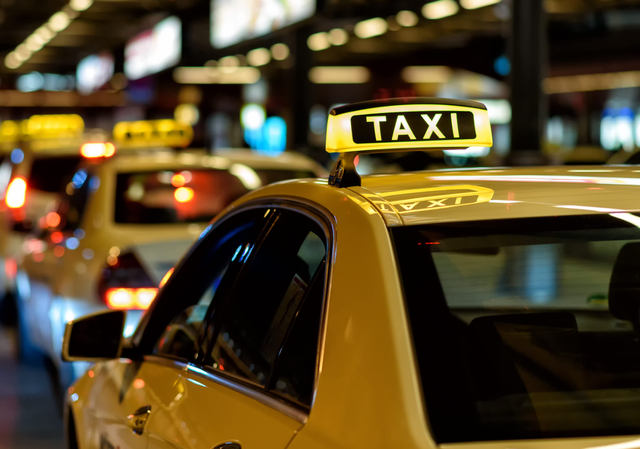
On Elbasan Street, within just 5 minutes, 87 taxis passed, according to an observation made by "Monitor" at 9:30 in the morning. And if you move a little closer to the center, in front of Toptani, 17 parked taxis are waiting for you, ready to pick up passengers in the heart of the capital.
According to the Directorate of Transport and Road Traffic, there were 2850 licensed vehicles and 130 legal entities operating in the capital until the end of May 2025.
Based on Census 2023 data on the resident population, the Albanian capital currently has 4.8 taxis for every 1,000 inhabitants.
This figure ranks Tirana among the countries with the highest number in Europe and the Balkans, surpassing only Podgorica (4.9). After the Albanian capital comes Sarajevo (4.6).
In Europe, the busiest capital is Paris, with 8.5 taxis per 1 thousand inhabitants.
According to relevant sources from the official institutions of each country, processed by "Monitor", Tirana leaves behind many of the largest and most developed metropolises of the continent.
Compared to cities such as Berlin (1.49), London (1.62) or Rome (2.74), Tirana has significantly more taxis in relation to the population.
Popular tourism countries such as Athens (4.33 taxis per 1,000 inhabitants), Istanbul (1.17), and Madrid (2.3) have a significantly lower number of taxis per capita compared to Tirana.
This comparison highlights not only a feature of the Albanian urban transport market, but also the fact that, although Albania is a smaller destination, it offers a higher access to taxi services, an element that positively impacts the visitor experience and ease of movement within the city.
The country's turn into a tourist destination has significantly boosted this market in the country. Meanwhile, the ongoing problems of public transport have forced citizens to rely more and more on alternatives such as taxis.
These two factors were combined with the introduction of electric taxi fleets, which in addition to increasing supply, also reduced service prices due to cheaper cost compared to conventional taxis that used fuel.
Within just the first five months of this year, 274 new taxis have been registered in Tirana. According to data from the General Directorate of Road Transport Services, in 2024, the number of registered taxis was 2,576 and in May this year this number reached 2,850, marking an increase of about 10.6%.
In the face of the high demand, many new operators have entered the market, bringing more competition and as a result, a significant reduction in prices for trips within and outside the city.
Online platforms and taxi ordering apps have added flexibility for customers, while operators compete to offer the cheapest prices and the highest quality service.
The number of taxis increases, prices decrease
The increase in the number of taxi operators in the market has brought with it not only more alternatives for passengers, but also a significant reduction in prices for the most popular destinations.
The entry of operators serving electric fleets has significantly reduced transportation costs. An electric taxi can travel for 300 km for a charging cost of 200-500 ALL.
A taxi with fuel for the same road spends about 4 – 5 thousand lek of diesel or gasoline.
According to an observation in the market, with the increase in competition, offers have also increased, especially from large operators, which aim to attract customers with promotional prices or occasional discounts.
In the past, the trip to Rinas Airport cost between 2,000 and 2,500 ALL, while now, through various applications and operators, this price goes on average to 1,200 ALL, but there are operators that offer even cheaper prices up to 1,000 ALL.
According to data published by some of the largest operators in the country, the current tariffs for taxi service in Tirana are as follows
Starting fee: 300 ALL for the first
1.5 km Zone A (5 km after 1.5 km): 120 ALL/km and 25 ALL/minute
Zone B (10 km after 6.5 km): 95 ALL/km and 21.25 ALL/minute
Zone C (over 16.5 km): 80 ALL/km and 20 ALL/minute
Mr. Kurtaj says that at Green Taxi they try to maintain stability throughout the year, but in special cases, such as during holidays or the tourist season, there may be moderate adjustments to cope with the increased flow and increased costs for destinations outside the jurisdiction of the Municipality of Tirana.
Technological development has started to radically change the way it operates in this market. The Uber platform has introduced new standards in the service, enabling simple payments, monitored rides and increased customer trust.
Technology has brought more transparency and choice for citizens, while for taxi drivers themselves, it has created a fairer channel to provide the service, without being forced to operate in an intermediate or informal way.
P.sh. Patoko, a local platform, currently counts over 800 registered drivers, of which 760 operate in Tirana. Arbër Kadia, CEO and co-founder of Patoko, says that the most active users are young people between 18 and 42 years old, a group that seeks convenience, secure payment and good service.
"We see an increase in card payments every month from Albanian consumers as well," says Mr. Kadia, emphasizing that trust in technology has increased significantly.
Despite the innovations in technology, the problem remains as most of them are individual taxi drivers.
According to Dashnor Memaj, the head of the Public Transport Association, "most taxis are individual taxis, without being structured in large companies and this makes it difficult to perform the service on time and with a good standard".
Unlike companies, which follow predetermined schedules and more precise work schedules, individual taxi drivers often "go to work and leave according to their own time", creating gaps in demand coverage, especially in busy schedules or suburban areas.
This difference in the way of organization translates into different qualities of experience for citizens and shows that, although technology has started to bring order, the market still needs more complete standardization.
The number of taxis increases, what about prices?!
The increase in the number of taxi operators in the market has brought with it not only more alternatives for passengers, but also a reduction in prices for the most popular destinations. The entry of operators serving electric fleets has significantly reduced transportation costs.
An electric taxi can travel for 300 km for a charging cost of 200-500 ALL. A taxi with fuel for the same road spends about 4 – 5 thousand lek of diesel or gasoline.
According to an observation in the market, with the increase in competition, offers have also increased, especially from large operators, which aim to attract customers with promotional prices or occasional discounts.
In the past, the trip to Rinas Airport cost between 2,000 and 2,500 ALL, while now, through various applications and operators, this price goes on average to 1,200 ALL, but there are operators that offer even cheaper prices up to 1,000 ALL.
According to data published by some of the largest operators in the country, the current tariffs for taxi service in Tirana are as follows
Starting fee: 300 ALL for the first
1.5 km Zone A (5 km after 1.5 km): 120 ALL/km and 25 ALL/minute
Zone B (10 km after 6.5 km): 95 ALL/km and 21.25 ALL/minute
Zone C (over 16.5 km): 80 ALL/km and 20 ALL/minute
Mr. Kurtaj says that at Green Taxi they try to maintain stability throughout the year, but in special cases, such as during holidays or the tourist season, there may be moderate adjustments to cope with the increased flow and increased costs for destinations outside the jurisdiction of the Municipality of Tirana.
Technological development has started to radically change the way it operates in this market.
The Uber platform has introduced new standards in the service, enabling simple payments, monitored rides and increased customer trust. Technology has brought more transparency and choice for citizens, while for taxi drivers themselves, it has created a fairer channel to provide the service, without being forced to operate in an intermediate or informal way.
P.sh. Patoko, a local platform, currently counts over 800 registered drivers, of which 760 operate in Tirana. Arbër Kadia, CEO and co-founder of Patoko, says that the most active users are young people between 18 and 42 years old, a group that seeks convenience, secure payment and good service. "We see an increase in card payments every month from Albanian consumers as well," says Mr. Kadia, emphasizing that trust in technology has increased significantly.
Despite the innovations in technology, the problem remains as most of them are individual taxi drivers.
According to Dashnor Memaj, the head of the Public Transport Association, "most taxis are individual taxis, without being structured in large companies and this makes it difficult to perform the service on time and with a good standard".
Unlike companies, which follow predetermined schedules and more precise work schedules, individual taxi drivers often "go to work and leave according to their own time", creating gaps in demand coverage, especially in busy schedules or suburban areas.
This difference in the way of organization translates into different qualities of experience for citizens and shows that, although technology has started to bring order, the market still needs more complete standardization.
Taxis increase the import of electric cars
During the period 2019–2024, a gradual and steady increase in the number of electric vehicles registered for the first time in Albania has been observed, mainly influenced by the increase of taxi companies that have electric fleets.
According to data from the General Directorate of Road Transport Services (DPSHTRR), in 2024 3,127 electric vehicles were registered, an increase of 72% compared to the previous year and almost 5 times more than in 2022, when only 675 vehicles were registered.
For the most part, electric vehicles are primarily to be used as taxis.
According to DPShTRr data, out of 2,576 taxis operating in 2024, 1,467 are electric, 63 hybrid, and 1,046 are fueled. Electric vehicles accounted for 57% of the total taxi fleet (up from 31.2% in 2023).
This can also be seen in the infrastructure for these vehicles. While citizens face difficulties in finding charging posts, taxi companies have invested in special stations for their fleet, giving themselves a clear advantage in using this technology.
The administrator of Green Taxi claims for "Monitor" that "the use of electric cars has led to significant reductions in fuel costs and routine maintenance.
We as a company have special charging points, giving us an operational advantage".
He points out that the company's strategy for a more sustainable fleet is closely related to new market demands and increasingly high customer expectations.
According to the Energy Regulatory Body, in total, a total of about 178 contracts for charging stations have been registered in the Republic of Albania, with a total installed capacity of 26,627 kWh.
Despite the increase, the number of electric vehicles remains minimal in relation to the total number of new cars registered in a year.
In 2019, the number of electric vehicles was only 35, out of a total of 51,994 vehicles registered that year.
The peak of this trend reached in 2024, with 3,127 EVs registered, accounting for about 3.1% of the total of 99,441 new registrations.
Technical and infrastructural challenges
However, this transition is not easy. Albania still faces a shortage of trained specialists for the maintenance of hybrid cars, and spare parts are often missing or expensive.
Additionally, road infrastructure leaves much to be desired: potholes, damaged pavements, and few electric charging stops can cause damage and delays for drivers
using electric vehicles.
Mr. Kurtaj from Green Taxi says that "the main challenge is the lack of specific spare parts for electric models in the domestic market".
Largest Companies in the Market
Several large taxi companies operate in Tirana, which occupy a significant part of the passenger transport market inside and outside the city.
According to data from NBC on the annual turnover realized in 2023, four of the most well-known names in this sector are:
Merr Taxi, currently one of the largest operators in the country, has realized a turnover of 562.6 million ALL.
Lux Taxi, known for its service with high-category vehicles, has reported revenues in the amount of 138.1 million ALL.
City Taxi, another consolidated name in the market, has generated 79.7 million Lek in revenue.
Smart Taxi, a smaller operator compared to others, has reported a turnover of 9.2 million ALL.
The operators' profit rate fluctuates at 8-10%, according to the operators' balance sheets, not resulting in a very profitable business./Monitor