How Belinda Balluku is fabricating the rumor about Top Channel's...
/ 2026-10-19 16:19:00Focus


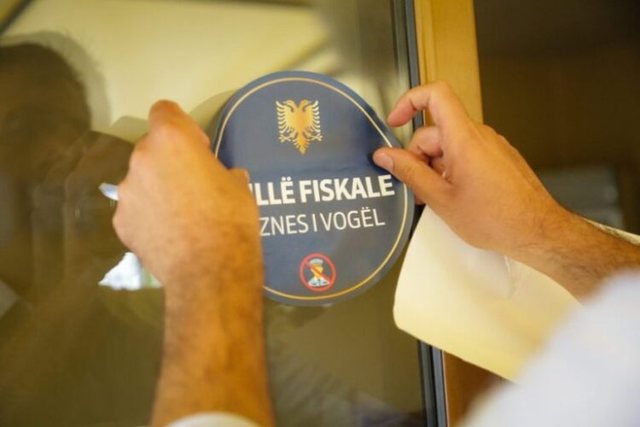
The government has approved new tariffs for fiscal stamps used by businesses for excise goods.
According to the decision published in the Official Gazette, the price for 1,000 fiscal stamps will now be between 15 and 25 euros, depending on the product category. Specifically:
For excise goods: 15.65 euros per 1 thousand pieces (from 20 euros previously)
For beer: 17.22 euros (from 22 euros)
For wine: 25.04 euros (from 32 euros)
This price change comes after the termination of the contract with the previous concessionaire, the Swiss company SICPA, which managed the fiscal stamp system since 2012. Initially, the contract had a 10-year term, but it was extended by another two years in 2023, continuing until the end of December 2024. The extension was justified as a measure to avoid a clash in international arbitration and was accompanied by a partial tariff reduction of 10%, but the tariffs still remained much higher than regional and European market standards.
A long and high cost for businesses.
During the 12 years of SICPA's concession (2012–2023), the company earned over 110.5 million euros, with revenues that remained high year after year. In 2022 alone, revenues from this concession reached 10.2 million euros. Even after reducing tariffs by 10% in the final phase of the contract, the drop in revenues was only 19.6%.
Meanwhile, costs for Albanian businesses have been several times higher than in neighboring countries. For years, prices for fiscal stamps in Albania have been up to 7 times higher than in Europe:
In Albania: up to $22.4 per 1,000 pieces
In the EU: around $3
In Kosovo: $2.2
In the 2012–2021 period alone, it is estimated that Albanian businesses have paid around €60 million more for this service than they would have paid under free market conditions and with tariffs harmonized with the region. In the same period, the benefit to the Albanian state has been minimal – around €1.2 million in total.
After the termination of the contract with SICPA, the production and distribution of fiscal stamps were given to a new company with joint Albanian-Arab ownership: “AlbTrace Co.”. Its ownership structure is:
51% is owned by the Securities Printing House, an institution under the Albanian state.
49% is owned by “O&S Security and Solutions”, a company registered in the United Arab Emirates.
There is not yet full public information on the experience, final beneficiaries or technical capacities of this foreign partner. In the absence of an open and documented competition, this agreement raises questions about the selection criteria and the guarantees given to the public interest.
But is this a structural solution?
At first glance, the 10 to 25% price reduction may be a welcome relief for businesses. But it remains to be seen whether this move represents a real reform in the way the country's fiscalization system is handled, or simply a transfer of benefits from one concessionaire to another, in a model that has not fundamentally changed.
Are these new prices closer to the real cost? Is the state now more involved in revenue control and process transparency? Or do we simply have a new contract, with new faces, but with the same profitable logic at the expense of business and consumers?
These questions remain open as the new model begins to be implemented. In a sector where transparency, competition and public interest must be priorities, continued institutional oversight and media attention are more necessary than ever./Top Channel