Is this police force professional and capable of handling violen...
/ 2026-10-16 18:54:07Focus


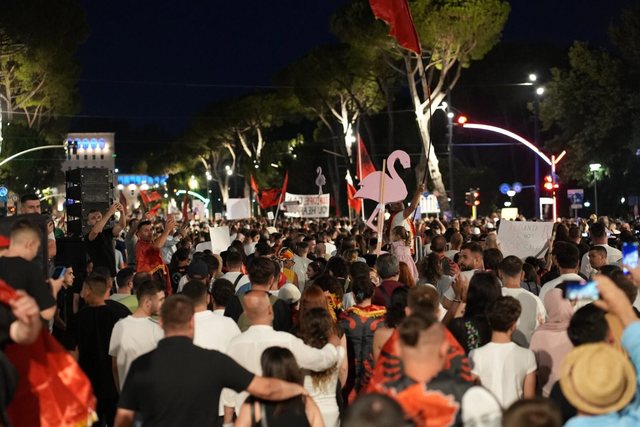
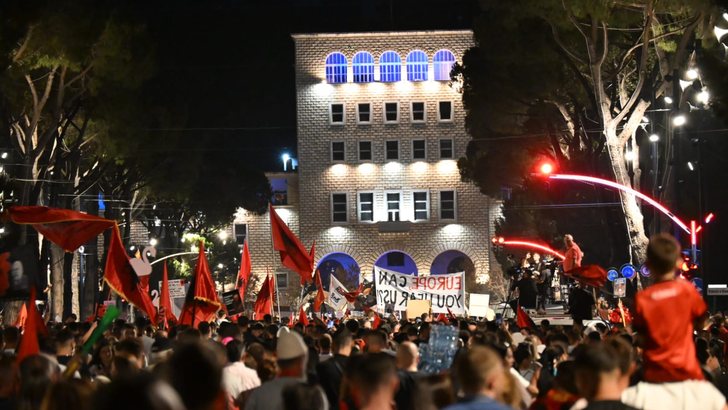
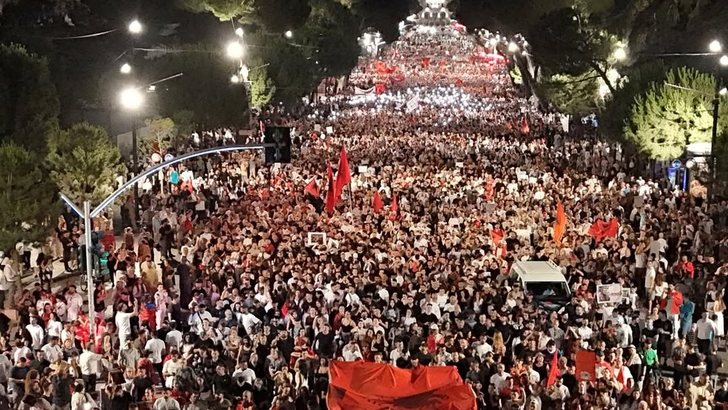
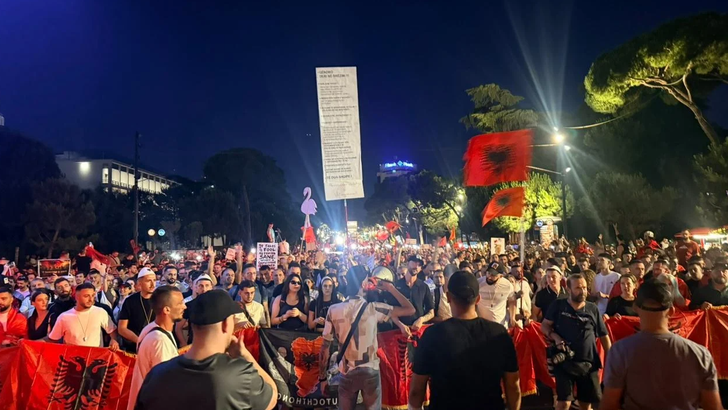
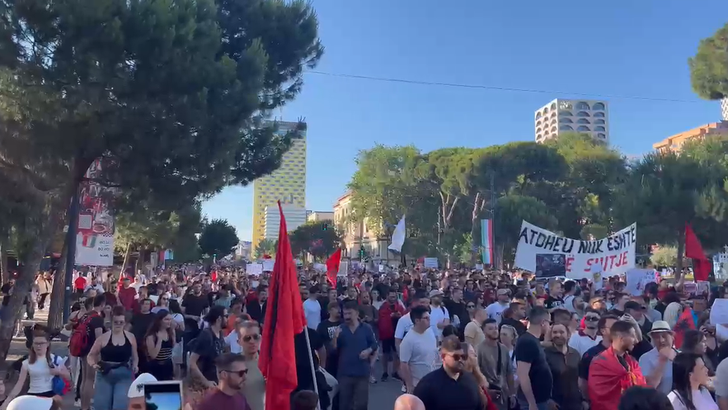
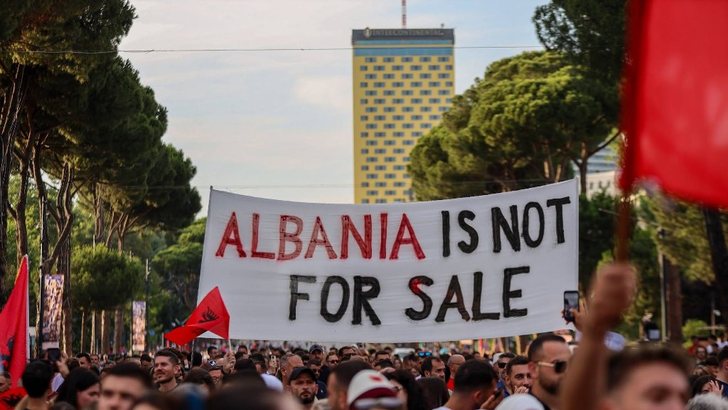
They do not have a program, but they are describing how they want Albania. They have not built any political concept, but they are listing the failures of these 35 years. They even have no proposal for the economic model they want, but they are against the existing one. Perhaps, this is the most important thing we need to understand from the protest, leaving aside its romanticization or the political movement that does not exist. There is confusion, emotional slogans with scattered messages and sometimes dangerous words. But, amidst that noise and great confusion, there is a clear substance: here we are not talking only about Zvërnec, the environment, strategic investments or the removal of the old politics, but about the way the state has been administered over the last three decades.
They call it "New Albania".
First of all, it is good to make it clear that with such a term one must be very careful. “New Albania” is a phrase used during communism as part of the regime’s ideological vocabulary. It belonged to a time when the state promised a new society, a new man and a new reality, but in return it produced isolation, fear and control. Therefore, the use of this phrase must be measured to avoid giving the wrong message. One must stay away from the various political forces that have approached and are confusing the message by trying to change the narrative.
I think what the protesters are asking for, but are not yet clearly defining, is that Albania needs new rules of the game.
The idea is that if the call “New Albania” remains on the streets, it will quickly fade. Just as, if it remains on the streets, the slogan against Rama and Berisha will be consumed politically, this “New Albania” will remain only in the context of anger, where it will ultimately fragment and be exhausted. The only solution is to make a concrete socio-economic offer centered on the new model of public interest for Albania. So far, the protest is rejecting, not only the politicians, but also the system that has produced these politicians. They are rejecting the model of economic development. They are rejecting a model where the country is growing on paper, but is not reflected in the household economy.
I think that this is precisely the hidden meaning of the protest. And this is a completely socio-economic meaning.
Protests are divided into three phases. It begins with the venting of anger, continues with the organization of leaders and ends with concrete demands. This does not necessarily mean that it can turn into a political movement. In order for this civic movement not to repeat itself and consequently be consumed, it is good that the main demands of the protesters are summarized in a clear structure and presented publicly.
If we talk only about pure civic interest, without taking into account the meddling of political forces or malicious influences without authorship, sincere protesters have four main concerns: national assets, property, foreign investments, and nature protection. All four of these issues can be summarized in a single demand, that of fundamentally revising the law on strategic investments.
To give an example in concrete terms and to avoid that the status of strategic investor does not remain strategic only for the investor, it can be proposed to apply the 40 percent rule. At least 40% of the companies that will work, be Albanian. At least 40% of the materials used, be produced in Albania. At least 40% of the workforce, be Albanian. At least 40% more protected area in relation to the investment area. After the start of business operations, at least 40% of the employees, be Albanian. And at least 40% of the products that will be served, be produced in Albania.
Using this common denominator, those concerned about public assets will get what they want. Those concerned about property will get more long-term benefits. Those concerned about foreign investment will be reassured by the involvement of citizens in the project. And those concerned about the environment will have more protected space when the investments are completed.
On the other hand, the proposal for the revision of the strategic investment law, at its core, should have the support of domestic production such as agriculture, construction materials, more qualified workers, and more development opportunities for local suppliers and communities.
For this mechanism to work, the same logic must be applied to the return on investment in material goods for the community such as roads, water supply, sewage systems, schools, health centers, etc. This, coupled with another strict control mechanism to calculate the increase in per capita income.
What is understood from the slogans and the expressed dissatisfaction, in essence the model that citizens are unconsciously describing is close to that of a social market with public interest, which is open to investments, but with the condition that the return on investment is made fairly. In other words, citizens uninvolved by political narratives, through the slogan “New Albania” are demanding new rules, new guarantees and a new social contract.
If protesters can understand this, their movement can produce more than noise, because otherwise it will remain an episode of anger that names the problem but fails to organize the response.