Is this police force professional and capable of handling violen...
/ 2026-10-16 18:54:07Focus


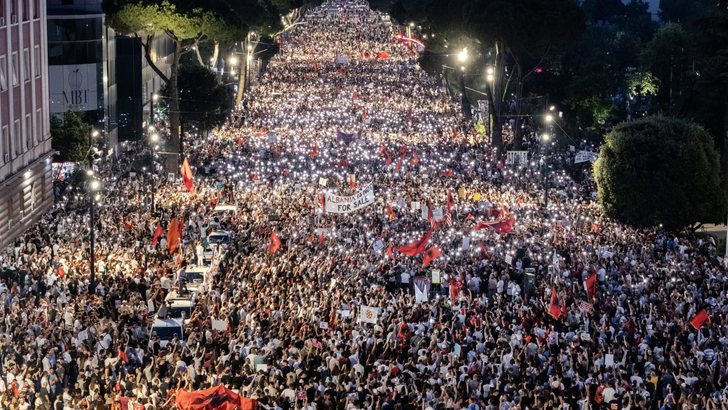
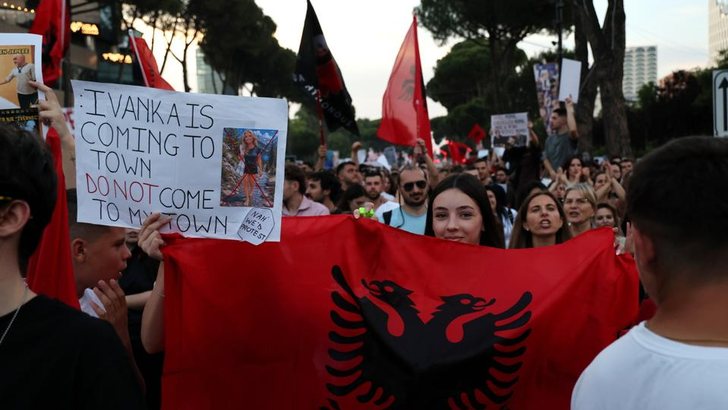
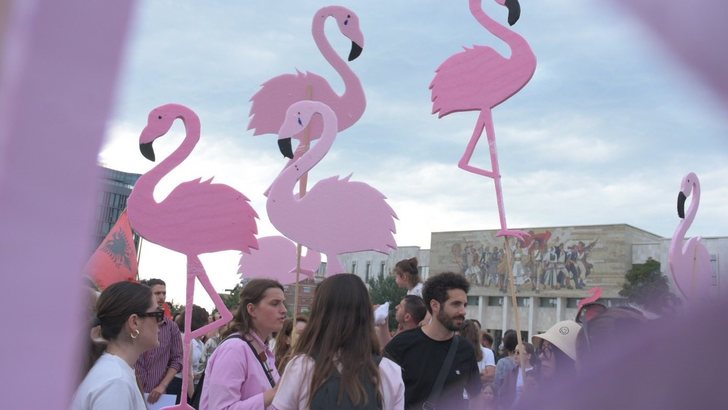
The Tirana protest, which analysts have dubbed the Flamingo Revolution, has passed its thirteenth day. Initiated by environmental associations as a reaction to the protection of the environment in Zvërnec and the Narta lagoon, the protest, with its articulated slogans, has now practically entered the political arena. The citizens of this free country have come out to protest and once again demand freedom. This is not a paradox. Because freedom is not a quota or final goal, but a process, where each generation aims for a new stage on the path of democratic development.
Other political commentators have described the protest as a civic movement of Generation Z, which includes those born between 1990 and 2010, as successors to the "Silent Generation" or X (1960–1990). So, in a sense, in the protest with a diverse spectrum, Gen Z represents children born in transition and the sons of that generation, which with the establishment of democracy gained freedom and basic rights and in the course of a traumatic transition, secured a new material standard, compared to the barazitism of poverty in the former communist regime.
Meanwhile, Generation Z, as the spirit of protest and spokesperson for a broad mass of citizens angry with the accumulated injustices of the transition, has a different approach, has other demands, which, in essence, are demands for more positive freedom within the freedom achieved, which means a more functional, more qualitative democracy, with equal opportunities, with life chances and more inclusive development. It is the generation that has created the awareness that the future must be sought Here and not elsewhere, Now and not postponed to a future that never comes.
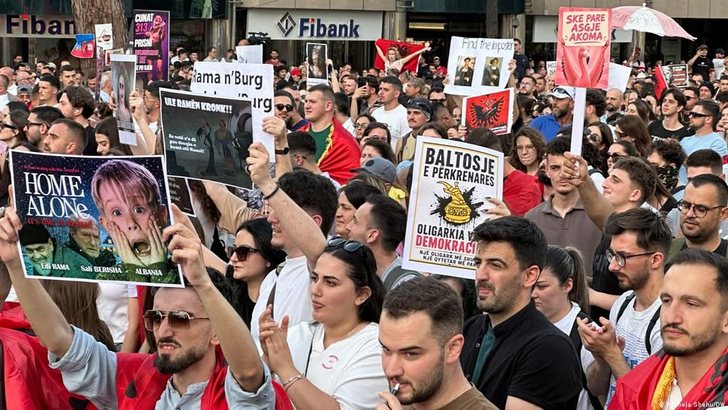
We were given the wrong impression that this generation, raised on social media and Instagram Stories, participating in the feast of neoliberal consumerist hedonism, was apathetic and apolitical. Suddenly, it woke up and articulated the forgotten call of its fathers – “Revolution” – a call that combines the cry of anger with the hope of great change. With their protest slogans, cynical memes and the anger harshly vented on social media, they speak out against the political establishment and everything that has been presented as progress so far.
From this perspective, the anonymous protester, as a symbol of this faceless civic movement, seems to me like the image of the nihilistic Bazarov in Turgenev's novel Fathers and Sons. The rebels who have come out are the children of transition, who do not want to be "superfluous people", desperate and excluded from society, with the only alternative to salvation - emigration.
Judging by the slogans raised in the protest and the discourse on social networks, Generation Z, with its demands for a more functional democracy, represents young people, mainly from the middle class, which is being structured as a social and political force. Although it does not live in a super-welfare society, in the Tirana Civic Movement an orientation towards "post-materialist" values of environmental protection, increased participation in decision-making, transparency, etc. can be observed.
If you carefully follow the statements of the protagonist figures of the protest, the statuses of civil society activists and the numerous comments on social networks, you understand that within this civic movement there are various currents, the left with neo-Marxist anti-globalist inspirations, the right with sovereign nationalists, preachers of isolationism and the development of capitalism "with our own strength", citizens frustrated by extreme polarization and social exclusion, etc. All these currents involved in the protest have grown in fertile ground that feeds a broader anti-government anger, beyond the cause of protecting pelicans and living things in Zvërnec.
Capitalism inevitably produces social inequalities. It is clear that not everyone will become rich. But, beyond these naive perceptions of capitalism, the point is that the development model, promoted over the past three and a half decades by left and right governments, is deepening the gap of extreme polarization and unequal regional development. A minority is creating a pole of the rich with stratospheric capital, supported by the state through preferential clientelistic policies and, on the other hand, a majority is being created that remains vulnerable near the poverty line.
Ordinary citizens feel excluded from the "benefits" of this development model that produces poverty, marginalization, polarization, depopulated rural and peripheral regions, and the emigration of young people.
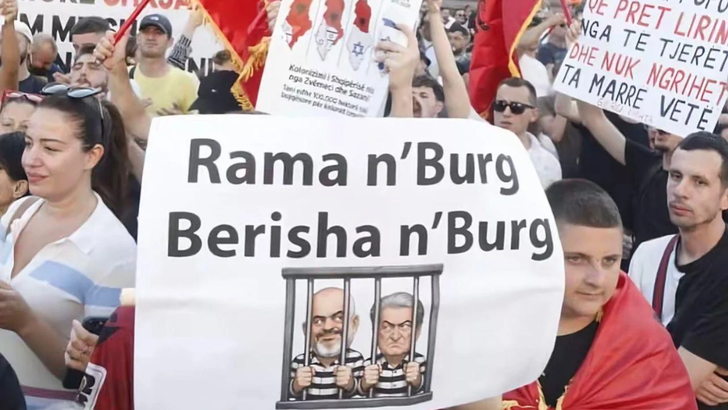
If young people are preached to be patient, to work hard, and, in the meantime, the fastest way to make money and climb the social hierarchy is party militancy, endemic corruption, speculation and criminal activities, what results – expressed according to Robert Merton – is anomie, as "a collapse in the cultural structure of society". Beyond the logo of the fragile flamingo, the shadows of the Tyranny of the Crowd also hover around the Tirana revolters, manifested in the exclusionary attitudes "in the name of the people" and the Jacobinism revealed in the pathetic calls "to prison", "death to traitors", etc.
The slogan "patriots and traitors" carries the premises of exclusionary radicalization. We have even fixed the narrative of "patriots and traitors" in the text of our National Anthem. Our recent history shows us that in the name of oaths for the homeland and sovereignty, true patriots have been eliminated and ideologized crowds have engaged in the hunting and public lynching of "traitor witches."
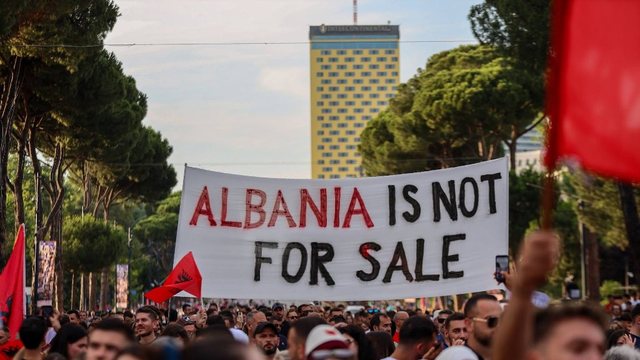
Modern Albania is built on a continuous historical trauma of invasions, territorial fragmentation, foreign intervention, depopulation and mass emigration. For this reason, the figure of "selling the homeland" has a much greater emotional resonance than mere accusations of corruption, abuse of office or violation of laws. Therefore, the slogan "Albania is not for sale" does not stem only from anger at the politics of the day, but touches on a much older collective memory.
The conflicting approach between "patriots" and "traitors" turns the missing public debate on the country's governance and development models into a moral trial, where logic is dominated by emotions and public action takes on the characteristics of collective hysteria.
Stagnation, social apathy and adaptation to the status quo create the impression of an endless, eternal present, where political elites are recycled and citizens lose faith that they can influence the course of events. Despite the preaching of the “end of history”, political rotations, the continuation of the democratic process and the repetition of the same promises by political elites, create the perception of a linear history, of an endless present, where there is no new alternative horizon.
Suddenly, spurred on by the scandalous images of Zvërnec, the protest fell like a bolt from the blue. What happened was what Walter Benjamin, in his essay On the Concept of History, calls the “messianic moment,” as a rupture in homogeneous time, as the possibility of a new horizon, where revolutions occur not in the name of futuristic utopias, but when the current generation rises up in the name of the suffering, sacrifices, and unfulfilled dreams of past generations. These are the silent disappointments, gradually accumulated, which at one point find the path to explode into protest.
The social contract is being questioned. “Times when the skeleton of the social contract is stripped of its skin, flesh and blood are also times when fundamental questions are asked. Sometimes they find answers,” says sociologist Ralf Dahrendorf. With the slogan for “New Albania”, the protesters are articulating the need for a new social contract, the resizing of representative institutions and electoral law.
Përtej spektrit laraman të Lëvizjes Qytetare apo “Revolucionit të Flamingove”, kauzave të ndryshme dhe motiveve të pjesëmarrjes, një nga pyetjet themelore që shtrohet sot është ajo mbi modelin e zhvillimit të ekonomisë së tregut, mbi rolin e shtetit dhe raportet mes publikes dhe privates. Protesta qytetare sot ka shtuar pyetje thelbësore për modelin e zhvillimit të turizmit – masiv apo me resorte luksoze të mbyllura për elitat e pasura? A duhet shitur toka të huajve, sidomos në zonat me rëndësi strategjike ? Nëse turizmi do të jetë e vetmja alternativë e zhvillimit ekonomik apo duhen stimuluar bujqësia, industritë e prodhimit dhe përpunimit, të cilat sigurojnë punësim dhe zhvillim të balancuar rajonal etj. etj.
Thirrjet korale të protestuesve: “Revolucion! Revolucion!”, duken si thirrje mobilizuese për rritjen e pjesëmarrjes qytetare por edhe shprehje e një vullneti për ndryshime rrënjësore. Studiues, sociologë dhe deri te antropologë të ritualit kanë vërejtur se revolucionet, përpos mobilizimit, kanë edhe një dimension festiv. Njerëzit që protestojnë ndjejnë euforinë e çlirimit. Sheshi mbushet me këngë, simbole, parulla, flamuj dhe një energji kolektive ndjehet gjithandej. Protesta e Tiranës mund të lexohet si tension mes dy mundësive: nga njëra anë ajo shënon rikthimin e qytetarit të përjashtuar dhe që shpërfillej në hapësirën publike. Nga ana tjetër, duke mbetur në formatin e deritanishëm si manifestim qytetar, pa fytyra përfaqësuese dhe pa propozime për të ardhmen, protesta mbart rrezikun e çdo lëvizjeje kolektive, pra iluzionin se rrëzimi i një qeverie është i barabartë me shpëtimin e shoqërisë.
Prandaj pyetja që shtrohet sot nuk është nëse protesta do të rrëzojë apo jo qeverinë. Pyetja më e thellë është se çfarë kërkohet përmes protestës: revolucion apo rotacion politik? Në studimet politike, disa autorë përdorin termin “revolucion demokratik” për procese ku qytetarët mobilizohen masivisht; zgjerohen të drejtat politike; transformohen institucionet; ndryshon rendi kushtetues dhe riformatohet arkitektura e ndërtimit të shtetit. Shembuj të tillë shpesh diskutohen në lidhje me tranzicionet nga autoritarizmi në demokraci më pjesëmarrëse ose me zgjerime të mëdha të të drejtave civile.
Nëse stanjacioni dhe “ngrirja e historisë” krijojnë iluzionin e të tashmes së përjetshme, revolucioni mund të krijojë iluzionin e kundërt, se një akt i vetëm, pra rrëzimi i qeverisë, do të hapë menjëherë një epokë të re. Kjo do të thotë se “Revolucioni i Flamingove”, sido që të vazhdojë, në kuptimin më të thellë nuk duhet perceptuar si premtim për parajsën në “Shqipërinë e Re”.
But will this protest manage to mark a historical turning point, or will it be capitalized on by the current opposition spectrum as a springboard to come to power? Will the protest mark a revolution by retiring the old political elite or will the entire battle end as a political rotation, where the "patriot, loyal guardian of the Albanian lands" will replace the "traitor, the seller of Zvërnec and the enemy of flamingos"?!
The protest so far represents a civic act that says: “The present is not the only possible world”. In this sense, the protest opens up as an opportunity, as a rupture of linear time and the projection of a new horizon. However, it is still too early to make predictions and cheer with enthusiasm, because, as the poet Ervin Hatibi says in one of his poems: “All penultimate revolutions are”. Because no revolution, no matter how transformative it is, exhausts the thirst for freedom and that every revolution creates victors and produces new dissatisfied ones.