Is this police force professional and capable of handling violen...
/ 2026-10-16 18:54:07Focus


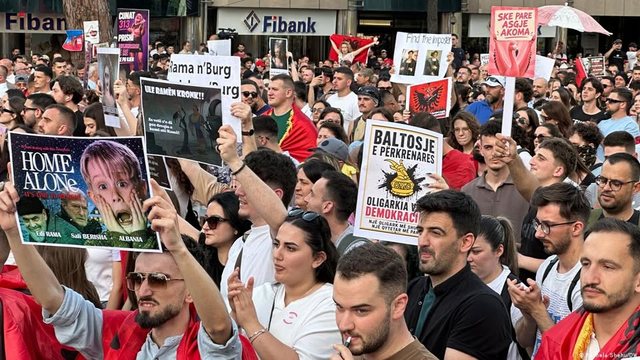
On the twelfth day of the protest, I decided to take a closer look at the protesters who were marching near my apartment.
It took a few minutes to realize that the crowd was an unusual mix of people, ideas, and demands. “What’s not here, all sorts,” a woman among the protesters told me, laughing.
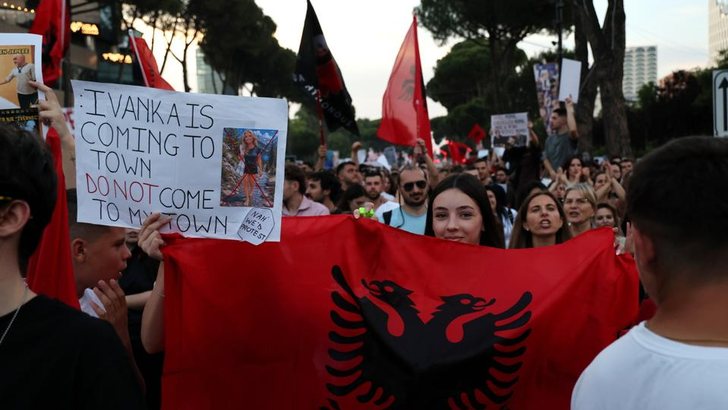
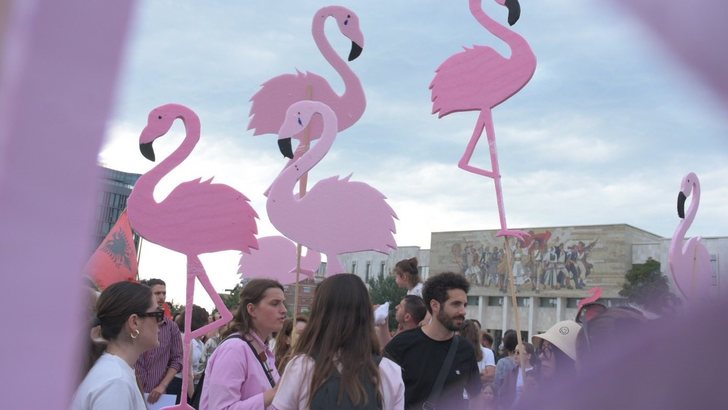
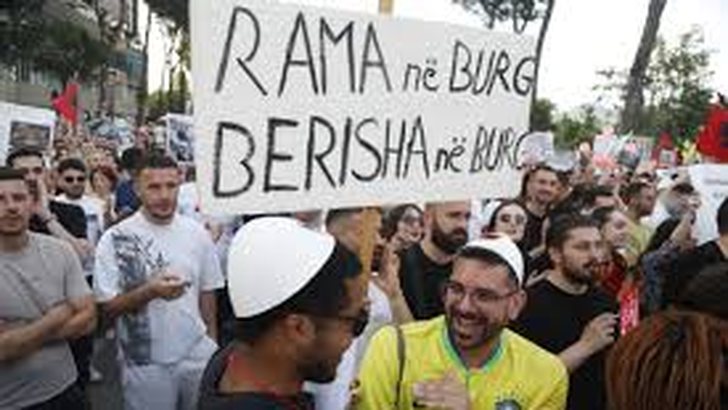
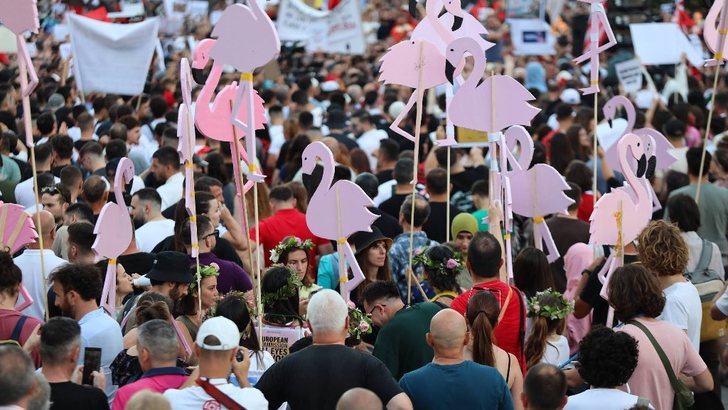
The spectacle on offer was impressive. A group of protesters chanted "Rama resigns." A little further on, they had a bad rap with the opposition leader. National flags were waving, and as the crowd passed by the bust of Adem Jashari, they chanted "Ethnic Albania" and "Long live the KLA." Most of them were young. There was also a considerable number of minors. There was also no shortage of family members pushing strollers. There were also people who gave the impression that they were there more for the atmosphere than for any specific cause.
I think this is where the problem lies.
The more you observe the protest, the harder it becomes to understand what it is really asking for. If you ask ten protesters, you are likely to get ten different answers. Someone will talk about corruption. Someone about poverty. Another about the national issue. Someone about immigration. Someone else about a personal injustice that probably has no direct connection to the government. At the end of the long column, calls for revolution could also be heard. And when you call for revolution, the well-known portrait of Che Guevara could not be missing, which galloped before my eyes along the street of Durrës. Something else caught my eye that shocked me. A young man was holding a banner with a picture of Hitler. Below the picture was written a vulgar message against the Israelis. A shameful and unacceptable sight, which showed that positions that have no connection with its declared claims are also finding a place in this protest.
Another detail caught my attention, the passers-by. Many of them stopped for a few minutes, filmed on their phones, commented among themselves, smiled, and continued on their way. It didn't seem like they were facing a moment of political tension or a clash that could have concrete consequences. On the contrary, the impression was created that they were attending a public performance, an event that needed to be seen, recorded, and commented on.
Perhaps this is why protest increasingly feels like a self-sustaining activity. People gather because there is a protest, and the protest continues because people gather. Twelfth Night confirmed the same ritual: the same cries and the same uncertainty about what is expected to happen next.
It is still not clear what the concrete goal of the protest is. Not building the resort in Zvërnec? The overthrow of the government? Early elections? Reform? Legal changes? Revolution? All of these are heard in the protest. The problem is that they appear as scattered slogans, not as part of a common political platform.
History knows many spontaneous protests that have managed to produce political changes. But they have only begun to yield results when they have been organized, structured, have had a distinct leader and direction, and of course a clear set of demands. No matter how great the dissatisfaction, if it is not unified, it is not enough.
This is why, at least so far, the protest has become more like a fair of grievances. Everyone brings their own reason for anger, disappointment, or dissatisfaction. Someone exposes their reason for protest with a banner, someone with a slogan, someone with a flag. But amidst all this diversity, the substance that gives meaning to a movement, the common political goal, is missing. Shouting loudly in the streets of Tirana “Rama resigns,” no matter how large the protest group, is not enough.
Another very significant indicator is that the protest is producing more and more spectators. People follow it, film it, comment on it, and even enjoy it as part of everyday urban life. It undoubtedly attracts people's attention, but does it manage to convince them? So, the movement creates curiosity, but not necessarily their commitment. In fact, over time, these parades and roadblocks will become annoying for the rest, since no matter how beautiful the spectacle is, it cannot be watched more than once or twice.
Thus, if a protest starts to be perceived more as a show than as a tool for political pressure, it loses its main function. People will continue to gather for several more days. Based on the young age of the protesters, their creativity and use of social networks, the protest will continue to produce impressive images, which will be used by each interest group involved in the protest according to their goals.
Experience shows that crowds gather easily. The difficulty begins when you have to give them direction. History shows that it is not enough to unite discontented people, but you must unite their goals. So far, this is where the protest seems to have stalled. Therefore, at least for the moment, it looks more like a fair of discontent than a movement that can impose concrete change.