Is this police force professional and capable of handling violen...
/ 2026-10-16 18:54:07Focus



It is difficult to find a period in modern Albanian history in which there has not been talk of a new beginning. Entire patriotic, political and ideological movements have promised a different Albania, different from the previous one. Sometimes there has been talk of national renaissance, sometimes of revolution, sometimes of the new man and sometimes of the new democracy. These days we are hearing more and more often about the “New Albania”. Historical experience shows that something has remained unchanged: the belief that the country’s problems can only be solved through a major upheaval, a radical reform or a revolution, and not through the slow and difficult work of building institutions and gradually correcting the shortcomings of society.
This way of thinking has accompanied Albanian history for more than a century. In various forms, almost every generation has sought to build an Albania different from the one it inherited.
At the end of the 19th century and the beginning of the 20th century, the renascentists and patriots rightly aimed to create a nation-state in the historical Albanian territory. For them, the main problem was the lack of a state and the strengthening of national consciousness. The ethnic Albania they imagined had to be united and able to survive among more powerful neighbors. In a way, even then, the creation of a new Albanian was being sought, freed from the regional, tribal and religious divisions that had characterized traditional society and with a strong sense of national identity.
The first attempt to radically change Albanian political culture came with the June Revolution of 1924. Beyond the political conflict of the moment, it represented the clash between the traditional Albania that had emerged from the Ottoman Empire and an Albania that aimed to approach the political and cultural models of Western Europe. Noli sought the creation of a new state and civic culture. His democratic-liberal political program aimed at reforming the administration, modernizing the economy, limiting traditional privileges and creating a new state-forming elite. In essence, it represented the first attempt to build what today we would unhesitatingly call a “new Albania”.
The failure of the June Revolution did not end the debate on the path that Albania should follow, but deepened it even further. The triumph of Ahmet Zog's Legality did not simply bring about the restoration of the previous order. The first years of his regime were characterized by a harsh confrontation with political opponents, by assassinations, internments and forced exiles, by the restriction of political life and the gradual weakening of the opposition, to the efforts to neutralize any challenge to the new power. The Albania of 1925–1930 was far from a peaceful institutional state model.
However, over time, the autocratic Zog regime increasingly focused on the consolidation of the state. Central administrative institutions were built, the educational system, although in its beginnings it took on a Renaissance and national character, legislation was reformed and the authority of the state was strengthened. Zog also had his own project for a new Albania. Unlike Noli, he did not believe in political revolution as an instrument of transformation. His project was based on the conviction that a strong, authoritarian and functional state could gradually transform Albanian society.
The most radical response came after 1944. For the first time in Albanian history, the transformation of society was no longer presented as a reform, but as a complete reconstruction of man and his world. The concept of the “New Man” became one of the main ideological pillars of the communist regime. The new Albanian had to think differently, believe differently, live differently and sever ties with the past.
The “New Man” was the most ambitious attempt to create a new society in Albanian history. It was the conviction that politics could produce a new popular anthropology and that history could begin anew. The communist regime transformed the economy, developed education and built institutions, but it failed to create the new man it had projected. Albanian society turned out to be much more complex than the ideological model it sought to impose on it.
The fall of communism did not bring the end of this mentality. The Albanian transition was filled with promises of new beginnings. Democracy was seen as a complete break with the past, and NATO membership and EU integration were often presented as guarantees that many of the country's historical problems would be resolved. The first reforms were presented as historical turning points. In this context, several measures were taken to "revolutionize the democratic life of the Albanian people", such as the blank check theory, the absurd concept of shock therapy, pyramid schemes, etc. Albania was not supposed to improve gradually, calmly and with its feet on the ground, but it was supposed to be constantly reborn, as it "died" in succession.
Let's go back to today's slogan of "New Albania", although the idea is not problematic at all. We all understand it and we want Albania to be different from what it was. This reminds me of my mother's words, when in January 1997 she accompanied me to Rinas, while I was leaving for studies in Germany: "Go son", she said to me. "By the time you return in a few years, many things will have changed here". Later I realized that behind those words there was more hope than a conviction of hers. Perhaps she was expressing the very hope that many Albanians had at that time: the conviction that great change was always close and that Albania was constantly on the verge of a decisive transformation. Almost 30 years have passed, but unfortunately my late mother's words still remain relevant.
Of course, Albania needs stronger institutions, a more functional justice system, a more competitive economy, a more professional administration, and higher living standards. In this regard, the strategic orientation towards the EU has long been clear. But the question is what and how to do to achieve this objective.
Modern history shows that political culture cannot be imported mechanically. It relies on tradition, customs, interests, historical experience, and the pace of development of society itself.
A law can be translated and approved in a short time in parliament, but the way people understand the state, the law, public and state responsibility and the common national interest changes much more slowly. Albania can adopt German laws, French models or EU standards. But this does not mean that Albanians automatically become German or French in the way they think and act. Institutional structures can be copied and transplanted, but never political culture. It is more or less like putting a Ferrari engine in the chassis of a FIAT 131 Mirafiori. Both are Italian, but they are not built to function the same.
This is why the word “revolution” remains problematic. It creates the impression that societies can be transformed through a single political act. Meanwhile, history shows the opposite. For more than a century, efforts have been made to create the new Albanian, the new citizen, the new socialist or democrat. However, the most profound changes have not come from revolutions, but from long social, economic and cultural processes.
The anthropology of a people does not change by decree. It does not change by law, nor by slogans, nor by a political project, however ambitious it may be. Change is not an event, but a process, which requires time for its development.
This does not mean that change is impossible. Today’s Albania is more developed, more open and freer than it was three decades ago, or even a decade ago. But this transformation did not come as a result of a single revolution. It was the product of a long, often contradictory process, where progress and historical heritage have coexisted simultaneously. The problem with the slogan “New Albania” lies in the word “new”, if it is seen as a complete break from who we are and from the history we have inherited, since no society starts from scratch.
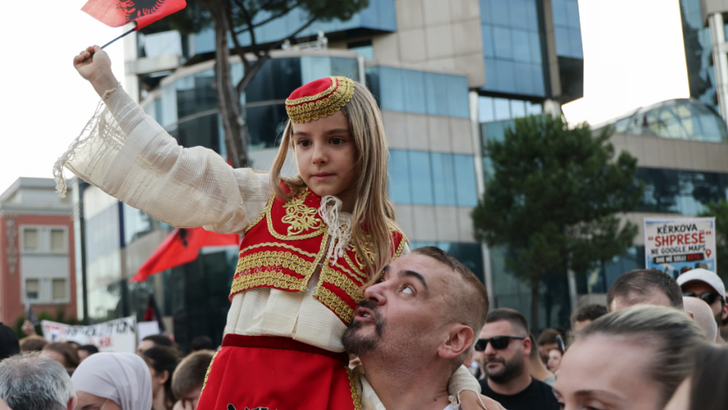
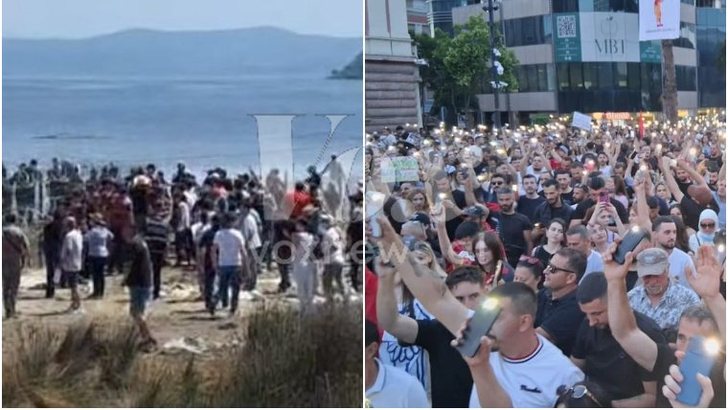
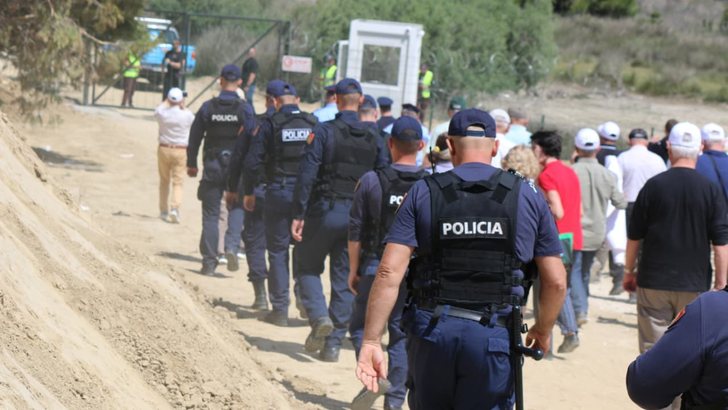
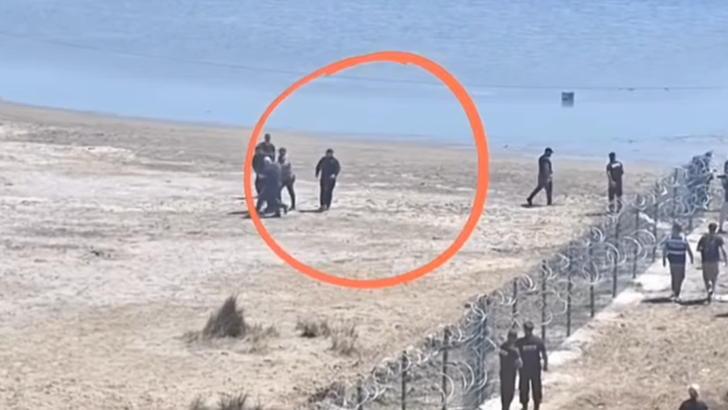
This also explains part of today's debate about Zvërnec. Of course, citizens have the right to express concerns even before the completion of a project, especially in conditions when institutional trust is very low. But in such conditions, the logical demand would be for transparency, information and public debate with the government, which is not happening. We see that the protest about Zvërnec within a very short time went through several stages of development.
The first phase focused mainly on the request for the cancellation of the project. A bit paradoxical because how can one request the cancellation of a project that has not yet been fully presented? How can one finally judge something that has not yet been made public in all its details?
Then the second transformation occurred. From a local and environmental cause, the protest began to be presented as a national issue, more precisely, of national betrayal. Elements of declarative nationalism and identity emerged in the protest that went far beyond the environmental debate. “Albania is not for sale” was the main slogan of the protesters, which certainly served to mobilize many other citizens. It was at this moment that the debate began to move away from the concrete project and acquire the dimensions of a symbolic cause.
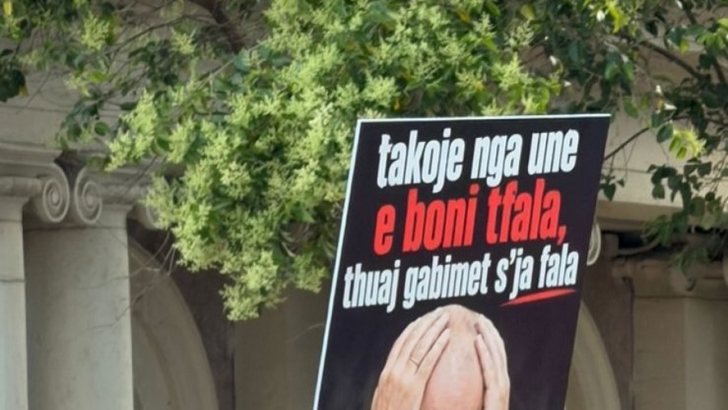
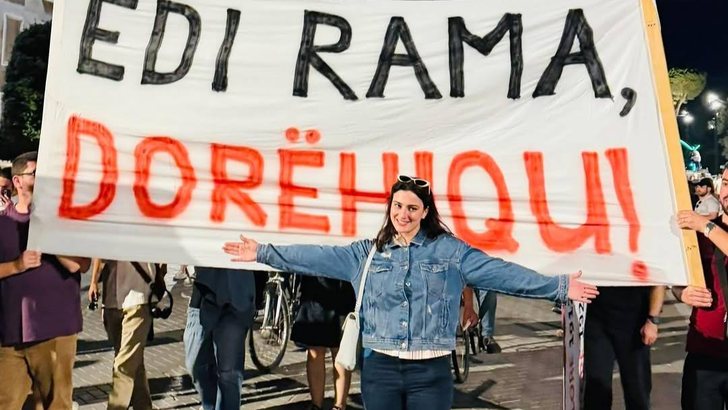
The third transformation was even more significant. Slogans against the political class as a whole began to appear in the protest, and the protesters' demands were no longer directly related to the project under discussion. From the debate over Zvërnec, the focus shifted to the system and the need for general political change.
History shows that spontaneous movements can mobilize discontent and create public pressure. But when they claim to produce political transformation, they must have a program, identifiable direction, representation, and public accountability.
Unfortunately, in Albania it has become a habit to always attribute the country's failures to politicians, as if the rest of society is outside this process. This is a comfortable way to free oneself from civic responsibility. Albanian politics was not created in a vacuum nor was it imposed from above. It is a product of this society. Moreover, many of the phenomena that are criticized in politics are not exclusively political. The culture of favoritism, clientelism, personal connections, the search for honors and interventions, the avoidance of rules when they conflict with individual interest or the expectation of privileges are not only political phenomena. They are phenomena that are encountered on a large scale in the daily life of society.
Don't get me wrong, I am not relativizing the responsibility of politics for combating these phenomena. Politicians bear the greatest responsibility, since they exercise public power and make decisions that affect the lives of citizens. But a serious analysis of Albanian reality cannot be based on the simple division between a virtuous people and a caste of corrupt politicians. I invite the reader to reflect honestly on this phenomenon.
Most movements that were born out of dissatisfaction have faded as soon as the cause that brought them into being has faded. Others have been absorbed and manipulated by the political class and have gradually lost their identity. Even in our protest, there has been no lack of attempts by political actors to interpret or appropriate it in the service of their own interests.
So far, the protest has shown its ability to mobilize people, to attract the attention of public opinion and to impose a national debate. But at the same time, it has also highlighted its limits. It has produced strong nationalist emotions, which need to be managed very carefully, but it has not yet revealed a clear vision. It has raised serious accusations and concerns, but it has not yet managed to transform them into a clear platform of arguments and alternatives.
Above all, it remains a movement without an identifiable decision-making center. This is precisely what makes it difficult to understand where it aims to go. Who speaks on its behalf? Who takes responsibility for its positions? Who negotiates if the moment for dialogue comes? Who takes responsibility if its demands turn into political demands?
These are not trivial questions, but they are ones that have determined the fate of many political movements throughout history.
If the goal is environmental protection, then the debate must return to the project, to transparency, to studies, to facts and to concrete consequences. If the goal is political change, then there must be clarity on the alternative being proposed. And finally, if the goal is revolution, then history teaches us that no revolution has ever been made just by throwing nationalist slogans, exploiting the anger of a group of citizens and directing it into anonymity.
Perhaps the case of Zvërnec is interesting not so much for what it tells us about a major tourist project, but for what it reveals about our political culture. Here lies the paradox of this whole story. A project that has not yet been made public in all its details turned into a “national danger” in a few days. The amplification that this issue found in various media outside Albania is a phenomenon that deserves a separate analysis. On the other hand, a protest without a declared leader, without a program and without any clear organizational structure began to talk about revolution and a new Albania.
This does not mean that the concerns raised are invalid. Of course, they deserve to be heard and responded to. But the development of events shows something else. In Albania, there continues to be a tendency to move very quickly from concrete debate to major battles.
This is not the first time this has happened in Albania. We have seen movements that have often started with the claim that they are laying the foundations of a new era. Some have changed governments, others have changed systems, but changing the political culture itself has proven much more difficult.
Therefore, perhaps the most important question is not whether Albania needs another revolution, but whether we have learned anything from previous revolutions. The history of this country shows that institutions can be built and destroyed, laws can be changed, and powers can be replaced. What is more difficult is to change the way Albanian society thinks, acts, understands, respects, and loves the state.