Is this police force professional and capable of handling violen...
/ 2026-10-16 18:54:07Focus



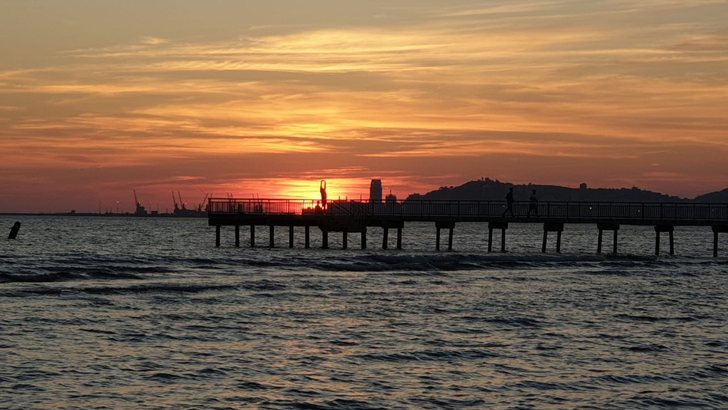
In theory, development brings prosperity and hope, but in practice, its advancement logically also encounters obstacles. Albania, as such, in the case of Zvërnec presents us with a typical contemporary conflict between economic development, environmental protection and private property rights. Tourist construction and investment projects in the Narta area have recently highlighted a deep tension between private capital, local communities and environmental actors who seek to preserve public access and the ecosystem.
This case, beyond seeing it from the legal prism of ownership, which greatly narrows the conflict, needs a broader economic-political analysis. And today, the theory of the French economist Thomas Piketty on the distribution of wealth and European governance practices provide a broader framework of interpretation. A clearer model of how states can intervene to mitigate extreme inequality while also protecting social cohesion. Piketty's theory and European practices provide an alternative model of capitalism, known as the "European Social Model".
According to Piketty, capitalism has a tendency to concentrate wealth in a few hands, especially when the return or benefit from the investment made exceeds economic growth. In other words, those who own land, property or investments have the opportunity to accumulate more wealth than those who base their livelihood on work. This situation undoubtedly leads to an unequal distribution of economic development. And this should not surprise us, because we are the ones who have “fought” for this neo-liberalism.
In the case of Zvërnec, it is precisely the land and the coast that are transformed into economic capital through tourism and investment, raising the question: who really benefits from this project?
On the other hand, one of the main misconceptions in public debates is the idea that private property is absolute. But the truth is that private property is limited only by the public interest. And it is precisely the state that carries a role here, that of preserving essential competences through territorial planning, environmental legislation, the system of building permits or the protection of ecologically sensitive areas.
So, the conflict in Zvërnec is not simply a conflict between the state and the private sector, but an issue of how the state manages to regulate the use of private capital in spaces of public importance.
And since Albania has had its eyes on Europe for decades, and is now even closer than ever before, the European model should be seen as a promising example for resolving the current situation.
The key point of the EU is sustainable development and territorial development should also flow from it. Specifically, the balancing of the three dimensions: economic, social and environmental. In this context, even when the land is private, its urban development is not allowed without public consultations, environmental impact assessments and regional planning.
Thus, Europe does not necessarily show us only that the state has no control over property, but that it must be in control of the logic of its use.
The main problem in cases like Zvërnec is not the lack of private property law, but its application and long-term planning. Albania has suffered enormously from lack of infrastructural planning, where the change of systems was accompanied by a collective chaos and where the law of the “jungle” prevailed more than the institutional one. Coupled with the fragmentation of public decision-making and the lack of transparency from institutions, private capital has moved much faster and more powerfully than public regulation, bringing about precisely this structural imbalance between economic and public interest.
But who benefits from development?
One possible scenario, without falling prey to prejudice, could be that the project's profits could even be concentrated in the hands of owners and investors, while the local community benefits little from economic growth. Then it is worth recalling Thomas Piketty's theory; the fear of uneven economic development.
This does not necessarily mean that investments are wrong in a developing society, but the concentration of wealth they bring should focus on how it is distributed. On the benefits and costs of development.
The case of Zvërnec is not simply a debate on construction on the coast, but a deep wound of our country that has created tension between private capital, the state and the public interest. Th. Piketty's theory helps us understand the concentration of wealth, while the European model attached to it shows us that the solution does not lie in limiting private property, but in strengthening institutions oriented towards the public interest.
In the end, the question is not whether there should be a development property, but how this development can be controlled so that it is not concentrated in just a few hands. And this does not lead to the loss of the public good.