Is this police force professional and capable of handling violen...
/ 2026-10-16 18:54:07Focus


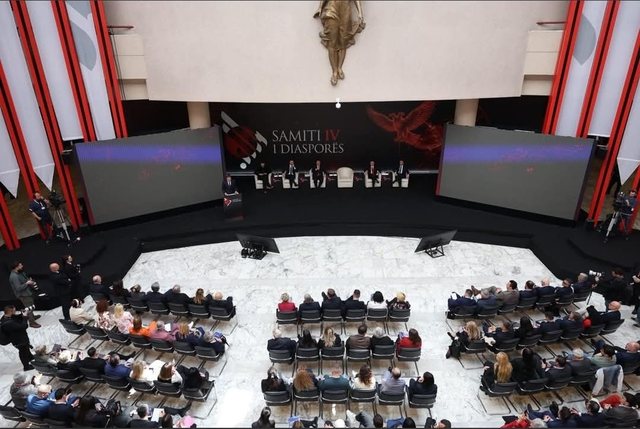
On the second day of the Diaspora Summit, Prime Minister Edi Rama addressed Albanians who have built their lives abroad with messages of courage, strength and sacrifice. He emphasized that they have managed to build careers and earn respect, overcoming stereotypes and proving with work the place they deserve in the societies where they live. A clear assessment of the individual success of the diaspora, accompanied by an equally clear subtext: Albania is ready to welcome them.
But this is where the tension between message and reality begins. What was described as success stories abroad are in fact the product of a lack of opportunities within the country that the prime minister designs as a country with standards now. It is precisely the most qualified, the most capable and the most enterprising who have chosen to leave, not because they do not believe in their country, but because they have not found real space for professional development either for themselves or for the future of their children. The increase in emigration in this category is not a coincidence, but an indicator of a lasting gap between the governing narrative and the bitter experience of this community.
This gap between the government's electoral propaganda and reality reveals the first paradox. A discourse that praises the success of the diaspora, but that overlooks the reasons why this success was built externally and not internally. An invitation to return that does not address the conditions that produced the departure but simply emphasizes the invitation to return. However, the problem is not the lack of positive words, but the lack of correspondence between them and reality.
The second paradox is even deeper. In the hall there was an open solidarity with the bitter truth that was articulated by one of the participants. The same reaction was also reflected on social networks. A solidarity of the public with the lady in the hall, clearly highlighting the difference between what is said and what is experienced in everyday life. However, this solidarity does not translate into a protest vote. On the contrary, in the elections of May 11, 2025, a significant part of the diaspora produced a vote of support for the government. So, the same diaspora that identifies with criticism, at the electoral moment legitimizes the object of what it criticizes and has pushed it to build a career in a country far from Albania. It is precisely in this space that propaganda continues to function not because it is completely believed, but because it is not really challenged.
In this sense, the problem is not only political, but also structural. When electoral choice is divorced from real experience, the system gains a kind of immunity to criticism. It can produce discontent without endangering power. This is perhaps the most durable form of the status quo, not one that relies on persuasion, but one that survives through a combination of disillusionment, lack of alternatives, and adaptation to the same reality that is criticized.
In the end, the question is not whether the diaspora understands reality, since it knows it very well, but why this understanding does not translate into an attitude. Because when a society manages to coexist simultaneously with the departure of the best and the legitimization of the conditions that drive them away, the problem is no longer propaganda, but its normalization. And this is perhaps the most serious alarm: not that people are leaving, but that the reason why they are leaving does not change.