Is this police force professional and capable of handling violen...
/ 2026-10-16 18:54:07Focus


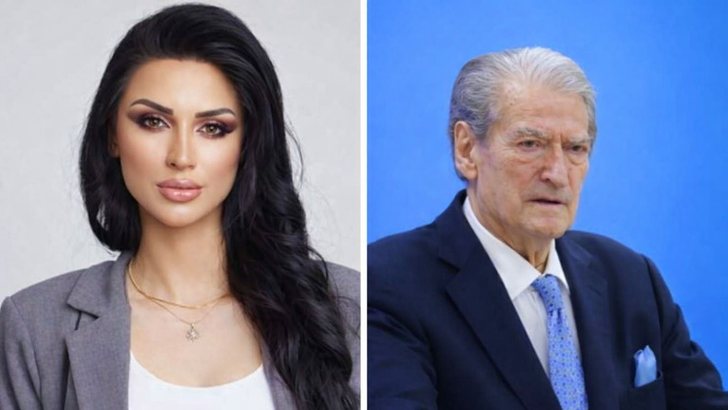
There is a reaction from Shkodra MP, Marjana Koçeku, after the debates that spread on social networks regarding the use of the Gheg dialect in her speeches in Parliament, instead of the standard language.
"I will never let go of my grudge," is the motto with which she has chosen to respond to all those who have mocked or criticized her.
There has been an old debate in Albania since the 1972 Orthography Congress. Should public officials adhere to the standard language in state institutions or is there room for dialects as cultural assets?
Two comparative examples of how this works in other countries:
The German-speaking Swiss are the most extreme example. On the street and at home they speak “Schwiizerdütsch” (the Swiss dialect), which is very different from the German spoken in Germany. But in institutions they use “Hochdeutsch” (standard German) for official documents.
However, in the Swiss Parliament it is perfectly normal for an MP to give a speech in the dialect of their region. They see dialect as a sign of freedom and independence.
France is the other side of the coin. Since the French Revolution, the state has fought fiercely against every dialect (Breton, Provençal, etc.) to impose Parisian French as the sole language of the nation. In the French Parliament, the use of dialect is almost unthinkable and is viewed with irony or disdain by the political elite.
We are neither Switzerland nor France. In our country, there is an attempt to present the use of the Greek language as a form of intellectual or cultural rebellion against a standard that, according to critics, has somewhat overshadowed its richness.
It is true that the Gegnish language carries an extraordinary historical and literary weight. Think of Fishta or Mjeda.
But on the other hand, there is a practical need for a standard language. The standard is not the enemy of dialect, but a functional tool that enables official communication, unified education, and state documentation.
When a member of parliament speaks in Ghegnish in Parliament, he defies this official norm. True, freedom of expression suggests that every representative of the people should feel free to communicate naturally. But official ethics require that institutions maintain a certain level of formality that transcends provincial boundaries.
Moreover, beyond the linguistic garb and debates over norms or dialects, what is screaming in the Assembly hall is, first of all, the extreme poverty of thought. Before there is a crisis of “how”, Parliament suffers from a chronic anemia of “what”. It is impossible not to notice the frightening emptiness of articulation, not only political.
However, state institutions have the obligation to use the standard language to guarantee national unity and full understanding for all Albanians, regardless of region.
Outside of institutions, the language is a living organism that breathes freely. Today, Ghegnish is dominating the music industry, youth culture, proving once again that dialectal wealth is the flesh and blood of Albanian, while the standard is the skeleton. The challenge is how to find a balance where the standard evolves by feeding on the juice of dialects, without losing the clarity that a modern state requires.
The banality of the trenches of "us or them", "mine or yours" is a dead end. We are a nation that beats with two hearts of one language, through two wonderful dialects that complement each other./ Gazeta DITA