Is this police force professional and capable of handling violen...
/ 2026-10-16 18:54:07Focus


By Federico Rampini – Corriere della Sera
Is Iran setting up an indirect clash between the United States and China? It is doing too little, too late. This is one of the main criticisms leveled at Donald Trump about his policy towards Iran. A president who is usually criticized for his arrogant and threatening behavior is today accused of the opposite: that he promised support for Iranian protesters, but that American aid never arrived in time.
Meanwhile, under a repression unprecedented in its brutality and determination, Iranians who took to the streets in protest have been killed by the thousands, perhaps tens of thousands. The regime has bloodily suppressed any sign of rebellion.
However, the American response, if it happens, is moving at a slow pace. There is a good reason for this: Iran has managed to rebuild a very powerful conventional arsenal, with thousands of missiles and drones. The US has several military bases in the Middle East, but these bases are also potential targets for Iranian retaliation.
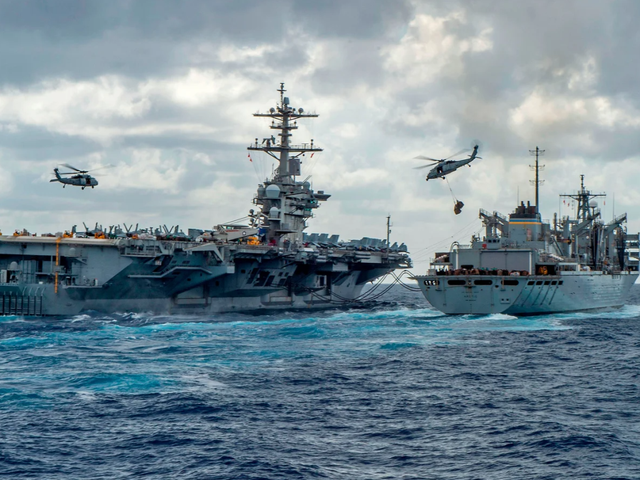
That's why Washington has decided to move the aircraft carrier USS Lincoln, along with its accompanying fleet, from the Indo-Pacific to the Middle East. The naval group has advanced defense systems that could help protect against Iranian attacks. But the armada's long journey has slowed any military decisions.
To understand how Iran managed to rebuild its arsenal so quickly, one must follow the trail that leads to Beijing. On June 21, 2025, when the United States struck Iranian nuclear facilities, China and Russia showed their helplessness: they remained passive and failed to help their strategic ally. This time, Xi Jinping seems determined not to repeat that humiliation.
This is especially so because the recent purges in the leadership of the Chinese People's Liberation Army, the dismissal of many generals, have damaged the image and credibility of the Chinese military. While Xi is rebuilding military authority at home, he is also seeking success abroad. Aid to Iran is part of this global challenge against the US.
This is where the Iranian paradox arises that today guides the calculations of Washington, Tel Aviv, and America's Arab allies (Saudi Arabia, the United Arab Emirates, Qatar). After the massacres of its own population, Iran is politically weaker than before, but militarily it remains dangerous enough to make any attack an adventure with serious consequences.
According to US intelligence assessments, the Islamic Republic is going through a rare period of internal weakness, perhaps the most severe since the 1979 revolution. The protests of recent months have not only been outbreaks in large cities or among the educated elite. They have also spread to areas that the regime considered safe and loyal to the Supreme Leader. This has directly hit the regime's myth that it enjoys popular support.
The political crisis is compounded by an economic one. Sanctions, mismanagement, corruption, financial isolation, and geopolitical costs have impoverished society. Iran is not a mass famine, but it is a tired, disillusioned, and angry country. A young, educated population sees its expectations shattered. The regime is increasingly unable to provide social peace and increasingly relies on violence.
However, weakness does not necessarily mean collapse. The Iranian system is built to survive legitimacy crises. The security apparatus, the Revolutionary Guards (Pasdarans), and the religious and economic networks have weathered many storms. The religious leadership is particularly ruthless: Supreme Leader Ali Khamenei, called by opponents “the Extreme Leader,” has ordered massacres without hesitation, convinced that his rule is sacred and divine. Militarily, Iran cannot match the US in technology or aviation. But it has built an asymmetric strategy: it does not need to win the war, it is enough to make the enemy pay a very high price.
The core of this strategy is the missile arsenal. Estimates suggest thousands of missiles, including about 2,000 medium-range missiles that can strike Israel, as well as shorter-range missiles for US bases in the Persian Gulf, Iraq and the Strait of Hormuz. Added to these are drones, anti-ship missiles and fast armed naval craft, an arsenal for regional warfare.
The 12-day war with Israel last summer severely damaged Iran, especially its mobile missile launchers. But it did not destroy it. Iran adapted quickly: it used simpler systems, concealed them better, and changed its attack tactics to make it harder for its adversaries to intercept its air defenses.
A key, but less obvious, element is that missile defense is not infinite. Each intercepted missile is expensive and difficult to replace. In a short conflict, the US and its allies can afford it. In a long conflict, reserves become a strategic problem. Iran does not need to hit everything. The targets are numerous: US bases in the Middle East, the energy infrastructure of US-allied Arab countries, and oil shipping lanes. Even a few successful strikes could shake the global economy.
This is where China comes in. Beijing does not provide Iran with ready-made missiles because it does not want a direct confrontation with the US. Its role is more covert: it helps Iran keep its missile industry alive. China supplies essential chemicals for rocket fuel, industrial equipment, electronics and technology. A concrete example is the supply of sodium perchlorate, essential for ballistic missiles. It is not a weapon, but without it there is no production. Also, the use of the Chinese BeiDou satellite system gives Iran an alternative to Western GPS and increases the accuracy of weapons.
There have also been reports of numerous flights of Chinese military aircraft to Iran, but this information is not always verifiable. China's motive is clear: it does not want a regional war, because it would damage its oil supply, but it cannot allow Iran to be destroyed. For Beijing, Iran is an energy partner and a strategic place against American influence.
For the US, this creates a complicated situation. Iran is weak internally, but still dangerous externally. A military strike seems politically easier today, but strategically it remains very dangerous, because it could ignite a regional war. That is why allies like Saudi Arabia, Turkey and others are also exerting pressure for restraint, even though they support Trump's policies on many issues.