Is this police force professional and capable of handling violen...
/ 2026-10-16 18:54:07Focus


Edward Wong – New York Times
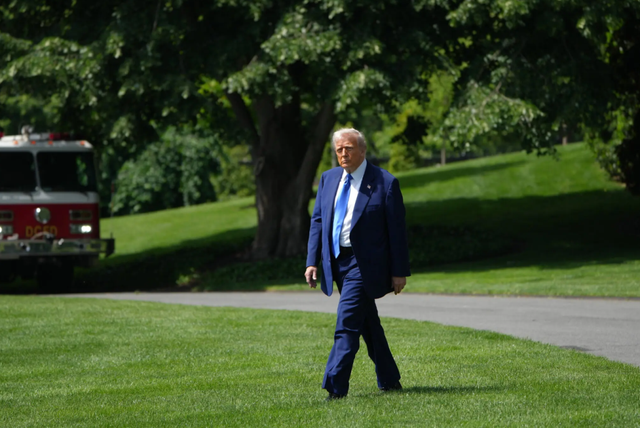
President Trump's recent actions and statements suggest that he may want an agreement where the United States, China, and Russia each dominate their own sphere of influence.
For President Trump, any time is a good time to make deals, but never more so than now with the leaders of China and Russia.
Last week, Mr. Trump said he wanted to normalize trade with Russia, appearing to ease pressure on Moscow to resolve its war with Ukraine. And he is trying to limit the fallout from his global trade war by asking China’s leaders to call him.
“We all want to make deals,” Mr. Trump said in a recent interview with Time magazine. “But I am this giant store. It’s a giant, beautiful store, and everyone wants to go shopping there.”
Mr. Trump may have something even bigger in mind, involving Russia and China, and it would be the ultimate deal.
His actions and statements suggest he may be envisioning a world in which each of the three so-called great powers – the United States, China and Russia – dominates its own part of the globe, some foreign policy analysts say.
It would be a return to the style of 19th-century imperial rule.
Mr. Trump has said he wants to take Greenland from Denmark, annex Canada and restore American control of the Panama Canal. These efforts to expand U.S. dominance in the Western Hemisphere are the clearest signs yet of his desire to create a sphere of influence in the country’s backyard.
He has criticized allies and spoken of withdrawing American troops from around the world. This could benefit Russia and China, which are seeking to reduce the American security presence in Europe and Asia.
Mr. Trump often praises President Vladimir V. Putin of Russia and Xi Jinping, the leader of China, as strong, smart men who are his close friends. To that end, Mr. Trump has tried to formalize Russian control of part of Ukrainian territory — and American access to Ukrainian minerals — as part of a potential peace deal that critics say would effectively carve up Ukraine, similar to what great powers did in the age of empires. Mr. Trump and Mr. Putin discussed Ukraine in a two-hour phone call last week.
"The tone and spirit of the conversation were excellent," Mr. Trump wrote on social media.
Monica Duffy Toft, a professor of international politics at Tufts University's Fletcher School, said the leaders of the United States, Russia and China are all striving for "an imaginary past that was freer and more glorious."
“The command and expansion of spheres of influence seem to restore a faded sense of grandeur,” she wrote in a new essay in the journal Foreign Affairs. The term “spheres of influence” originated at the Berlin Conference of 1884-1885, at which European powers adopted a formal plan to carve up Africa.
Some close observers of Mr. Trump, including officials from his first administration, caution against thinking that his actions and statements are strategic. While Mr. Trump may have strong and consistent positions on a small number of issues, notably immigration and trade, he lacks a vision for a world order, they argue.
However, there are signs that Mr. Trump and perhaps some of his aides are thinking the way emperors once did when they conceived of spheres of influence.
“The best evidence is Trump’s desire to expand America’s open sphere of influence in the Western Hemisphere,” said Stephen Wertheim, a historian of U.S. foreign policy at the Carnegie Endowment for International Peace.
But creating a sphere of influence in the post-imperial era is not easy, even for a superpower.
Last month, Canadians elected an anti-Trump prime minister, Mark Carney, whose Liberal Party seemed destined to lose the election as Mr. Trump spoke aggressively about Canada. The leaders of Greenland, an autonomous territory of Denmark, have rejected the idea of U.S. control. Chinese officials are threatening to block a Hong Kong company from selling its business that runs two ports in the Panama Canal to American investors.
"China will not give up its stakes in the Western Hemisphere so easily without war," said Yun Sun, a China analyst at the Stimson Center in Washington.
Yet Mr. Trump and his aides continue to try to exert greater American influence from the Arctic Circle to the Patagonia region of South America. When Mr. Carney told Mr. Trump this month in the Oval Office that Canada was “not for sale,” Mr. Trump replied: “Never say never.”
In March, Vice President JD Vance visited a US military base in Greenland to reiterate Mr Trump's desire to take over the territory.
And it's no coincidence that Secretary of State Marco Rubio's two most important trips since taking office have been to Latin America and the Caribbean.
Në El Salvador, zoti Rubio negocioi me Nayib Bukele, udhëheqësin e fortë, që kombi të burgosë emigrantët e deportuar nga qeveria e SHBA-ve, duke krijuar atë që është në fakt një koloni penale amerikane. Zoti Rubio gjithashtu ushtroi presion mbi Panamanë për portet e saj. Si senator që përfaqësonte Floridën, Z. Rubio tha në një seancë dëgjimore në korrik 2022 se përqendrimi më i afërt në Hemisferën Perëndimore ishte “kritik për sigurinë tonë kombëtare dhe interesat tona ekonomike kombëtare”.
“Gjeografia ka rëndësi”, tha ai, sepse “afërsia ka rëndësi”.
Gjatë një vizite në fund të marsit në Suriname, Z. Rubio u pyet nga një gazetar nëse zyrtarët e administratës kishin diskutuar krijimin e sferave të ndikimit, gjë që do të përfshinte negocimin e kufizimeve për gjurmën e secilës superfuqi, përfshirë Azinë.
Z. Rubio, i cili ka pikëpamje më konvencionale të politikës së jashtme sesa Z. Trump, pohoi se Shtetet e Bashkuara do të ruanin aleancat e tyre ushtarake në Azi. Këto aleanca i lejojnë asaj të vendosë trupa në të gjithë rajonin.
“Ne nuk flasim për sfera ndikimi”, tha ai. “Shtetet e Bashkuara janë një komb Indo-Paqësor. Ne kemi marrëdhënie me Japoninë, Korenë e Jugut, Filipinet. Ne do t’i vazhdojmë këto marrëdhënie”.
Disa analistë thonë se qasja e Z. Trump ndaj luftës në Ukrainë është në përputhje me konceptin e sferave të ndikimit. Shtetet e Bashkuara po bisedojnë me një fuqi tjetër të madhe – Rusinë – se si të përcaktojnë kufijtë e një vendi më të vogël dhe vetë po përpiqet të kontrollojë burimet natyrore.
Z. Trump ka propozuar kushte për një zgjidhje që do t’i sillte më shumë dobi Rusisë, duke përfshirë njohjen nga SHBA-të të sovranitetit rus mbi Krimenë dhe pranimin e pushtimit rus të sipërfaqeve të mëdha të Ukrainës lindore. Javën e kaluar, z. Trump madje duket se u tërhoq nga kërkesa e tij që Rusia të binte dakord për një armëpushim të menjëhershëm me Ukrainën. Më parë, ai e bindi Ukrainën të nënshkruante një marrëveshje për t’u dhënë kompanive amerikane akses në mineralet e vendit.
Mbështetësit e propozimit të zgjidhjes së z. Trump thonë se ajo pasqyron realitetin në terren, ndërsa Ukraina përpiqet të largojë pushtuesit rusë.
Por lavdërimet e z. Trump për z. Putin dhe për Rusinë, si dhe skepticizmi i tij i vazhdueshëm për rolin e Amerikës në Organizatën e Traktatit të Atlantikut të Veriut, kanë ndezur ankthet midis kombeve evropiane për një prani potencialisht në rënie të SHBA-ve në sferën e tyre gjeografike.
E njëjta gjë vlen edhe për sigurinë e Tajvanit dhe Azisë. Z. Trump ka shprehur mjaftueshëm kritika për ishullin gjatë viteve dhe ka dhënë mjaftueshëm lëvdata për Z. Xi, udhëheqësin e Kinës, saqë zyrtarët tajvanezë dhe amerikanë pyesin veten nëse ai do të lëkundej në mbështetjen amerikane për armët e Tajvanit, e cila është e mandatuar nga një akt i Kongresit.
Mr. Trump says he wants to reach a deal with China. Whether that would go beyond tariffs to address issues such as Taiwan and the US military presence in Asia is an open question.
“Beijing would very much like to have a grand agreement with the US on spheres of influence,” Ms. Sun said, and “its first and most important focus will be Taiwan.”
Trump administration officials have not detailed how far the United States would go to defend Taiwan in the event of a Chinese invasion. At his confirmation hearing, Elbridge A. Colby, the undersecretary of defense for policy, was asked by Senator Tom Cotton, Republican of Arkansas, why Mr. Colby’s stance on defending Taiwan seemed to have “softened” recently. Mr. Colby said Taiwan was not “an existential interest” for the United States and asserted an ambiguous commitment to Asia: “It is very important that the core American interest is to deny China’s regional hegemony.”