Is this police force professional and capable of handling violen...
/ 2026-10-16 18:54:07Focus


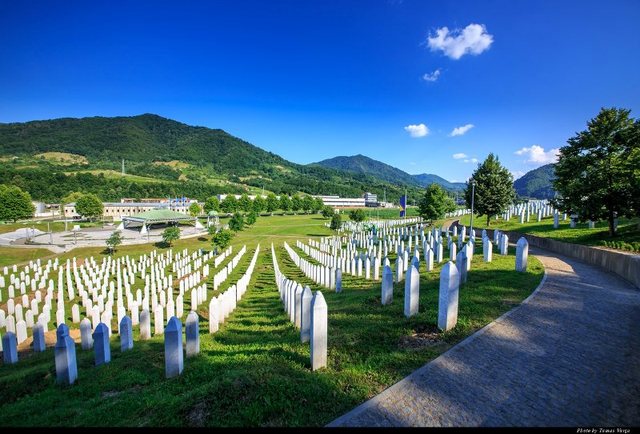
On July 11, 1995, Bosnian Serb troops killed more than 8,000 Bosniaks. It was genocide and the worst crime in Europe since 1945. The world saw the events, but they have not been properly explained.
When the troops of Bosnian Serb General Ratko Mladić committed genocide against Bosniaks from the then-enclave and UN-protected area of Srebrenica in July 1995, images of horror and international failure almost immediately spread around the world: images of thousands of helpless refugees at the UN base in Potocari, images of the separation of women, children and men, images of the humiliated Dutch commander of UNPROFOR toasting Mladić.
In the days before the genocide, desperate messages came from amateur radio operators in Srebrenica. Even during the mass killings, the first surviving witnesses of the death march reported on the pursuit of people and the horrors in the forests around Srebrenica.
Although the exact dimensions of the crime in terms of the number of people killed had not yet been determined in July 1995, it was already clear that Srebrenica marked the horrific climax of the Serbian policy of ethnic cleansing in Bosnia and Herzegovina. And that one of the worst crimes since the Holocaust was committed there. A crime which, it must be admitted, was not committed with the full knowledge of the representatives of the international community. But they did nothing – at a time when the motto of the European culture of memory was: “Never again!”
Another suffering
On July 11th of this year, the day of the genocide commemoration, tens of thousands of people are expected to gather at the Potočar Memorial Center near Srebrenica – more than ever before, on the occasion of the 30th anniversary. Opened in 2003, the Srebrenica Memorial Center is a poignant but dignified place of remembrance.
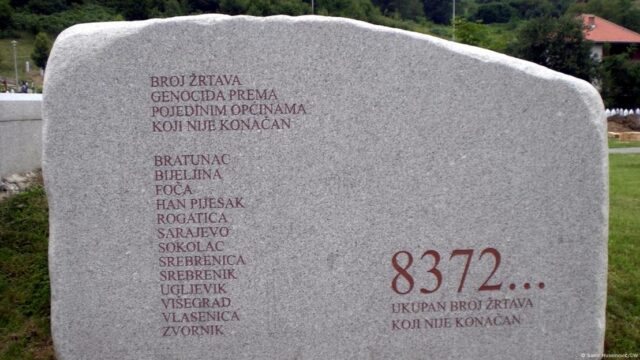
The remains of approximately 7,000 of the 8,372 victims of the genocide whose names have been identified so far are buried in the cemetery. It is the most important place of remembrance for survivors. However, the dignity of memory is mixed with bitterness because of the many things that happened after the crime itself. This is something that can be called a second suffering.
The name of the town, Srebrenica, became synonymous with the crime itself. There is a broad international consensus that it was genocide, as the International Criminal Tribunal for the former Yugoslavia (ICTY) defined this and documented it extensively in several decisions.
In 2024, the UN General Assembly declared July 11 as Srebrenica Genocide Remembrance Day, reaffirming the genocidal nature of the crime.
Denial and relativization
However, in Serbia and Republika Srpska, which were responsible for planning and carrying out the genocide, denial and strong relativization of the crime are now state policy.
In 2010, the Serbian parliament adopted a statement apologizing for the crime in Srebrenica, but without using the word “genocide.” Since then, Serbian politics under President Aleksandar Vučić has deteriorated significantly and distanced itself from this gesture.
Vučić was information minister under dictator Slobodan Milošević in 1995, and on July 20, 1995, while the genocide was still ongoing, he declared in the Belgrade parliament that “for every Serb killed, a hundred (Bosnian) Muslims would be killed,” a statement for which he has yet to apologize.
Today Vučić spreads the narrative that "all sides suffered" in the Yugoslav wars, but that only Serbs are not recognized as victims.
War criminal Mladic – a hero for many Serbs
In Republika Srpska, President Milorad Dodik convened a commission, led by Israeli Holocaust expert Gideon Greif, which in 2021 published a report denying the genocide and casting serious doubts over the number of victims.
The face of Ratko Mladic, convicted as a war criminal, can now be seen in numerous graffiti, murals, posters and photographs in Republika Srpska and Serbia – many Serbs consider him a hero.
Every year, on various Serbian holidays and commemorative days, Serbian nationalists pass by the monument in caravans, blowing horns or playing loud nationalist music.
In the first funeral ceremonies since the turn of the millennium, survivors burying their loved ones were spat on by Serbian nationalists, without police intervention. The Serb mayors of Srebrenica after 1995 denied the genocide in one way or another.
The current mayor, Miloš Vučić, sees his election victory in October 2024 as “a response to the UN resolution” adopted a few months ago.
Law against genocide denial
Viktor Orbán's Hungary has also joined the ranks of genocide deniers: Along with Serbia and Russia, Hungary was the only EU member state to vote against the UN resolution on Srebrenica in July 2024.
In July 2021, the then High Representative of the international community for Bosnia and Herzegovina, Valentin Inzko, passed a law against genocide denial in Srebrenica. However, it took almost four years for the first decision against genocide deniers to be issued in May 2025.
Just a sincere apology
The international community has only offered one sincere apology for its co-responsibility for Srebrenica: in July 2022 from the Dutch government.
The government apologized to all victims and survivors of the genocide for the "failure of the international community to provide adequate assistance to the people of Srebrenica."
Although it has certainly not been proven, it is highly likely that the international community knew about concrete plans for ethnic cleansing in eastern Bosnia in the summer of 1995 and tacitly accepted them as a price for the success of the peace negotiations. There is no acknowledgement of this – even if at the time perhaps no one at the international level could have thought it was genocide.
The culture of memory is missing.
For Bosniaks, the commemoration of the Srebrenica genocide is a fundamental component of their national identity and a key moment for their country.
However, the awareness of many representatives of the Bosnian state usually does not go beyond the mandatory presence at the Memorial Center in Potocari every July 11th.
Most genocide survivors live in modest, sometimes very poor and marginalized conditions. Only women who have survived the genocide and who have no surviving male relatives receive state support.
All others do not have the legal status of survivors and have never received assistance from the state, neither material nor psychological.
Perhaps most difficult for survivors is that even 30 years after the genocide and despite the 2024 UN Resolution, Srebrenica still does not have a permanent place in the European culture of remembrance.
An example of this is the European Day of Remembrance for the Victims of All Totalitarian and Authoritarian Regimes. Since 2009, this day has been celebrated in the EU on 23 August, the day on which the Hitler-Stalin Pact was signed in 1939.
The European Commission publishes a statement on that day every year. Srebrenica has not been mentioned in it so far. /DW