Is this police force professional and capable of handling violen...
/ 2026-10-16 18:54:07Focus


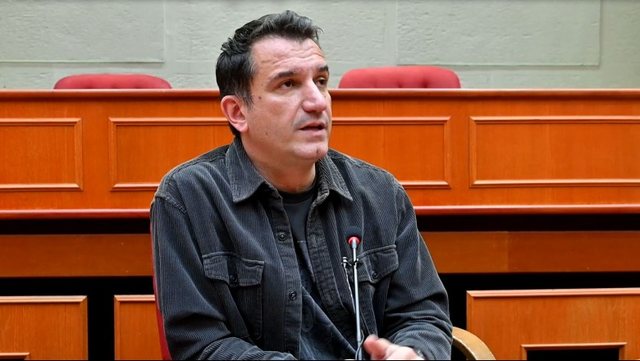
The Mayor of Tirana, Erion Veliaj, has filed with the Constitutional Court objections to the objections filed by the Special Prosecution Office against Corruption and Organized Crime (SPAK) regarding the security measure against him.
In the submitted document, the mayor's legal defense presents its legal arguments on the imposed measure, while the case is expected to be reviewed by the Constitutional Court.
Request:
The prosecution's denials present deeply problematic arguments for the rule of law and the functioning of democratic institutions.
1. In an unprecedented manner, the prosecution argues that the very democratic authority of a local elected official constitutes a risk to the criminal investigation. In its objections, it states that: “Even without direct intervention, the restored authority itself creates objective pressure on subordinates, violating the spontaneity and freedom of testimony.” According to this logic, the democratic legitimacy of an elected official is not treated as an expression of the sovereignty of citizens, but as a factor of procedural pressure that must be neutralized through detention. Such an approach constitutes an institutional attack on democracy and a democratic mandate confirmed as such by the Constitutional Court itself.
2. Equally worrying is the prosecution’s other argument: that an active and fully constitutional defense by Erion Veliaj constitutes a reason for continuing his detention. The prosecution considers the filing by Erion Veliaj and the Municipality of Tirana of an administrative lawsuit to verify the legality of the mandate of one of the prosecutors in the case to be an attack on the investigation. According to it, the very request for this judicial review justifies the continuation of the detention. This means that the constitutional right to access the court and to judicial verification of the mandate of a public official turns into a reason to keep the person who exercises this right in prison. In this logic, the exercise of constitutional rights by citizens would turn from a guarantee of protection into an aggravating circumstance for personal freedom.
3. Equally unfounded is the claim that the filing of this administrative lawsuit constitutes an attempt to create institutional conflict by using the Municipality of Tirana. Erion Veliaj is the Mayor of Tirana, confirmed as such by the Constitutional Court. In this capacity, he is the legal representative of the institution. The security measure against the head of this institution has produced direct consequences in the functioning of the Municipality of Tirana, consequences that the citizens of the capital observe every day. Consequently, the institution itself has a direct and legitimate active interest in verifying the legality of the mandate of a prosecutor, whose activity has produced direct consequences for the Municipality of Tirana by effectively suspending its elected mayor from exercising his duties.
The truth is the opposite of what is claimed. The institutional conflict has been created by the Special Prosecution Office itself, which is intervening institutionally to protect a prosecutor whose mandate is currently under review before the administrative court. A serious institution should await the court's decision and avoid any action that could be interpreted as an attempt to influence an ongoing judicial process. The very fact that the mandate of prosecutor Olsi Dado is under judicial review should be an institutional concern for every organ of the justice system. In such a situation, the legal standard would require respect for the judicial process and institutional non-interference (the defendant is the person Olsi Dado, not the institution) until the final court decision.
4. The objections filed with the Constitutional Court also emphasize that Erion Veliaj's indefinite detention has exceeded any standard of proportionality and any standard set by the Venice Commission for local elected officials. The detention cannot be extended indefinitely on the same initial grounds and without new concrete circumstances to justify it, especially since this measure is burdening the good governance of the capital and it concerns a local elected official who the law itself does not allow to be suspended from office.
In a state of law, detention cannot be used as an instrument to neutralize the democratic authority of an elected official, to punish the exercise of constitutional rights of defense, or to abolish in practice the citizen's right to self-government.
For this reason, the Constitutional Court has been asked to assess whether in this case we are dealing with a simple security measure, or with the creation of a precedent that jeopardizes the constitutional standards of due process, the right to defense and the normal functioning of democratic institutions.