Details of the storm in the administration, here's who will resi...
/ 2026-10-22 22:25:00Focus


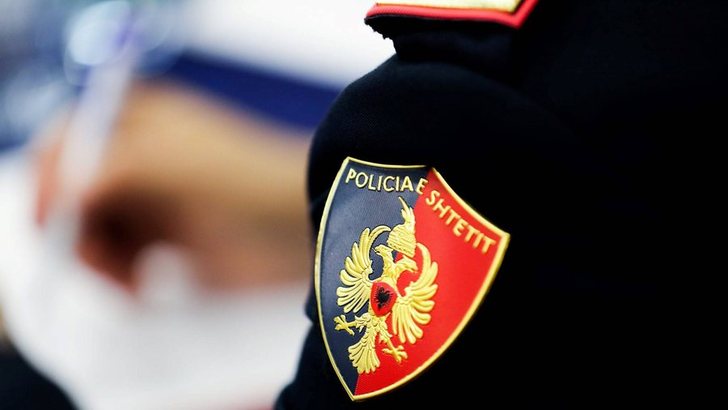
The 37-year-old Aldi Zonja is one of the persons arrested by the State Police , at the request of SPAK in connection with an international anti-drug operation that took place yesterday evening in Tirana, Durrës and Nikël.
SPAK hit a group that trafficked drugs from Latin America , which they hid in cattle skins and then processed in our country to be trafficked to the EU .

From the investigations, it has been found that Aldi Zonja is one of the main " heads " of the financing and organization of this scheme.
The lady had traveled to Latin America on a tourist visa and was then stranded there due to the pandemic.
During his stay in America, the 37-year-old Larine made acquaintances with drug traffickers, thus setting the stage for drug trafficking.
We remind you that a sophisticated laboratory for the processing of cocaine was discovered in the village of Qerekë, Fushë Krujë, while controls in Tirana and Durrës identified auxiliary facilities, where significant quantities of raw material were seized where narcotics are suspected to have been mixed and hidden. quantities of cocaine, chemical mixtures, specialized facilities for hiding drugs, laboratory equipment, sums of money and means of transport used for criminal activity.
Albanian citizens arrested in the SPAK operation:
1- Geis Sejfullai, 42 years old, resident in Tirana
2- Klajd Birçe, 40 years old, resident in Tirana
3- A.Ç., 37 years old, resident in Tirana
4- Endi Sejdini, 25 years old, resident of Kruja
5- Aldi Zonja, 37 years old, resident in Tirana
6- IA, 51 years old, resident of Shkodër
7- Baki Huqi, 57 years old, resident of Durrës
Foreign nationals arrested in SPAK operation:
1- Hiëlen Ledezma Narvaez, 41 years old, Colombian citizen
2- Joze Ramon Zacarias Vasquez, 35 years old, Venezuelan citizen
3- Samuel Alfonso Moreno Serrano, 42 years old, Venezuelan citizen
How raw drugs came to Albania and how this criminal group operated
From the investigative data, it appears that this group acts as an international criminal network, collaborating with criminal organizations in Latin America to traffic cocaine to Albania and European Union countries.
On site, they used a laboratory and ancillary facilities to extract the drug from "salted cowhide", processing it before it was trafficked to the intended markets.
The structure of the group included nationals from several cities in the country, well-defined roles, including financiers, transporters, processors, and distributors.
This network featured an efficient cooperation between experienced foreign experts and well-organized local elements, creating a functional and multidimensional mechanism of criminal activity.
One of the most special aspects of this network was the inclusion of experts from Latin America.
The Colombians and Venezuelans, known for their deep expertise in the handling and processing of cocaine, were the "experts" who guaranteed the technical success of the operation.
Their ability to extract cocaine from organic materials, such as "cattle hides" turned the raw drug into a ready-made, high-quality product for the Albanian and European markets.
This cooperation shows not only the international size of the group, but also its intentions to operate at high levels of organization and the use of advanced technology in drug processing.
The laboratory set up in Qereke in Fushë Krujë and the auxiliary facilities in Tirana and Durrës were located in strategic points of the national infrastructure.
Close to the country's largest airport, and the port of Durrës, these areas made it difficult to monitor from the air by law enforcement agencies, and in turn facilitated the rapid transport of drugs and chemical compounds, ensuring quick access to national and international markets.
The selection of these locations clearly shows careful planning, where close proximity to major national logistics hubs was a key factor in the uninterrupted operation of this criminal network.
The network operated in a synchronized manner, with each link defined in detail. Foreign experts focused on technical processing processes, using their skills to set up drug processing laboratories.
Meanwhile, Albanian financiers provided investments, equipment and chemical components.
Transporters and local processors played their part in ensuring the safe movement of drugs and equipment, while distributors were tasked with getting the drugs into their intended markets.