Is this police force professional and capable of handling violen...
/ 2026-10-16 18:54:07Focus


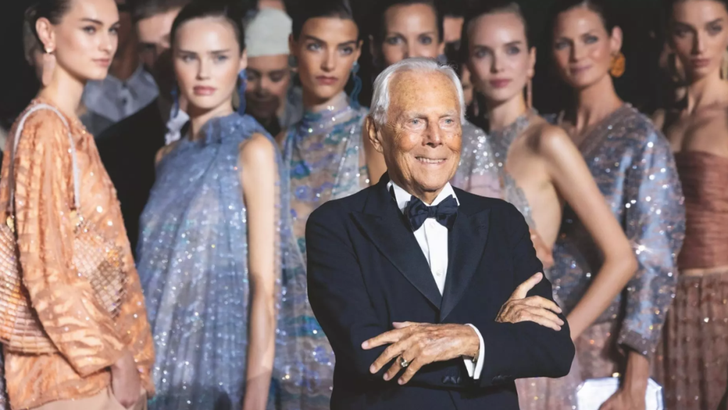
Giorgio Armani created one of the world's most popular fashion brands over the past five decades, and his death raises questions about the future of an Italian company whose independence he valued.
Giorgio Armani, who died on Thursday at the age of 91, was the sole major shareholder of the company he founded with his late partner Sergio Galeotti in the 1970s and over which he maintained firm control, both of the creative and managerial aspects, until the end.

He left no children to inherit the business, which generated relatively stable revenues of 2.3 billion euros in 2024, but whose profits had shrunk due to an industry-wide recession.
Despite the slowdown, the company remains extremely attractive, say industry experts such as Mario Ortelli, managing partner of luxury advisory firm Ortelli&Co.
"Could Giorgio Armani be an interesting target? The answer is absolutely yes, it is one of the most recognized brands in the world, with a clearly defined and uniquely stylistic vision," said Ortelli, adding, however, that a deal in the medium term would be impossible.
Over the years, the maker of popular unstructured suits took several approaches, including one in 2021 from John Elkann, a descendant of Italy's Agnelli family, and another from luxury brand Gucci, when Maurizio Gucci was still at the helm.
Armani, who industry experts say was particularly wary of French rivals, consistently ruled out any potential deal that would have weakened his control and refused to list his group on the stock exchange.
He put measures in place to ensure continuity and independence for his business, which he ran with trusted family members and a network of old colleagues.
He leaves behind a younger sister, Rosanna, two nieces, Silvana and Roberta, and a nephew, Andrea Camerana, with the nieces and nephew all occupying important roles in the group. His right-hand man, Pantaleo Dell'Orco, is also considered a member of the family and all five of them are potential heirs.
More clarity on his plans may emerge in the coming weeks, when Armani's will is opened.
Securing his legacy through a foundation
Giorgio Armani began thinking about a plan to guarantee a smooth legacy and preserve the company's independence more than a decade ago, which led him to create a foundation in 2016.
Its stated purpose was to “protect the governance” of the Armani Group’s assets and ensure that they remained in line with principles that were “particularly important” to it.
The designer told Italian daily Corriere della Sera in 2017 that such a mechanism was necessary to help his heirs get along and avoid the group being bought out or split up by others.
The foundation currently holds a symbolic 0.1% stake in the Milan-based group, but after his death it was expected to receive a larger share, along with other heirs, he said in the same interview.
He also said that three candidates he had nominated would run the foundation.
Armani also drafted a new company statute that will take effect after his death, which will set out future governing principles for those who inherit the group.
The shareholders call for a “prudent approach to acquisitions” and divide the company’s share capital into several categories with different voting rights and powers. It is not clear from the document how the different blocks of shares will be distributed.
They also state that any potential listing on the stock exchange would require the support of a majority of directors and could only occur “after the fifth year after the entry into force of this statute.”
Commenting on past financial results, Giorgio Armani underlined his determination to continue developing a business that is relatively small in scale compared to French giant LVMH and other rivals such as Kering, owner of Gucci and Italian luxury house Prada.
"In each case I chose to invest in projects of great symbolic and practical importance, which are essential for the future of the company," he said in the results statement in July.
These investments included the renovation of flagship stores such as its Madison Avenue building in New York and Emporio Armani in Milan, as well as spending on the new Palazzo Armani in Paris and taking over e-commerce management.
Europe generates almost half of Armani Group's revenue, a much higher percentage than for other luxury brands, with the Americas and Asia Pacific accounting for around a fifth each.
The group had 570 million euros in net cash at the end of 2024 after increased investments.
His confidants will gradually take over.
In his latest interview with the Financial Times, Giorgio Armani said he wanted a gradual handover of duties to his closest associates and family.
"My succession plans consist of a gradual transition of the responsibilities I have always held to those closest to me... such as Leo Dell'Orco, members of my family and the entire work team," he told the FT's "How To Spend 'It" column.
At a managerial level, the group will need to fill the roles of chairman and CEO that were held by Giorgio Armani himself, with long-term veterans such as Giuseppe Marsocci and Daniele Ballestrazzi among the possible options.
Choosing the right creative structure can be more complicated.
Armani's niece, Silvana, worked alongside her uncle on designing the women's collections, while Dell'Orco collaborated with him on the men's collections.
"Will the company have a single creative director? Or will there be several creative leaders or specific line directors? This is something that Giorgio Armani has probably outlined in the guidelines that the foundation will implement," Ortelli said.