"We are drowning..." - From Lisbon, Milan to Tirana, "The Guardi...
/ 2026-10-18 23:13:32Focus


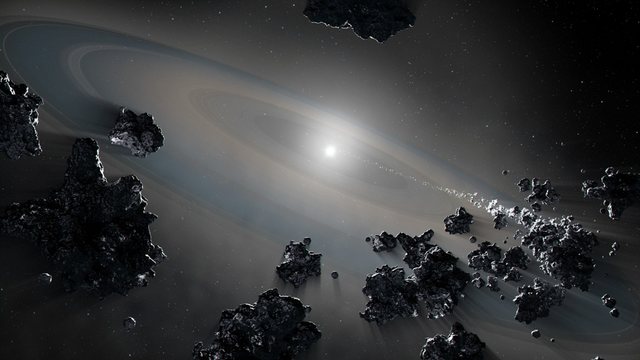
Science has predicted many ways the universe could end. But now, physicists have put forward one of the most devastating possible scenarios: the theory of what's called "false vacuum collapse," which they consider a kind of internal self-destruct button for the universe.
The universe is thought to be in a “false vacuum,” meaning it is not in the most stable possible state. Like coal, which has a lot of hidden energy (and can be burned), the universe may contain high potential energy. Once that energy is released, the system goes to a lower, more stable state, a “true vacuum.”
According to the theory, if any part of the universe reached this true vacuum, it would create a bubble that would expand at the speed of light, wiping out everything in its path: stars, planets, and the very fabric of reality.
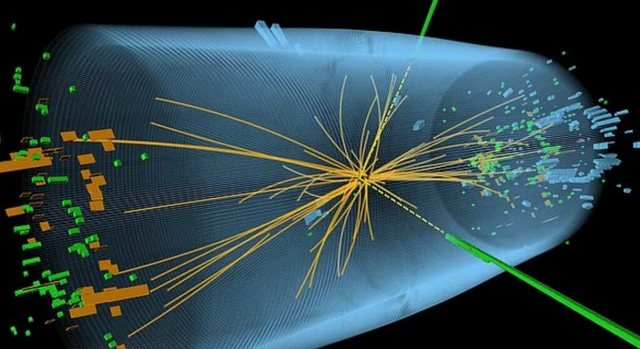
Scientists believe that the Higgs field, responsible for the mass of elementary particles, may currently be trapped in a false vacuum. If it were to move into a true vacuum, it would cause a massive and universal "phase transition" that would change the fundamental parameters of physics.
This means that elementary particles would change mass. As a result, atoms would no longer form and nothing we know of, stars, planets, or life, would be able to exist.
Can this happen?
For this to happen, it would require an extreme concentration of energy in a very small point, like what happened in the first moments of the Big Bang. Scientists suspect that black holes formed in the first seconds of the universe may have been such catalysts.
Some theories suggest that one of these black holes is enough to start the process of total destruction.
One of the scariest aspects of this theory is that if a real vacuum bubble were to start somewhere in the universe, it could be traveling towards us at the speed of light and we would never see it coming.
However, as scientists explain, the fact that we still exist may be proof that this process did not happen or will not happen at all.
We also don't yet know what role dark matter and dark energy might play in this process. There are theories that suggest these mysterious forces could keep the universe stable, writes the Daily Mail.
As long as this bubble hasn't hit us, we remain in a calm but uncertain wait. The end may never come, or it may happen at any moment.