Is this police force professional and capable of handling violen...
/ 2026-10-16 18:54:07Focus


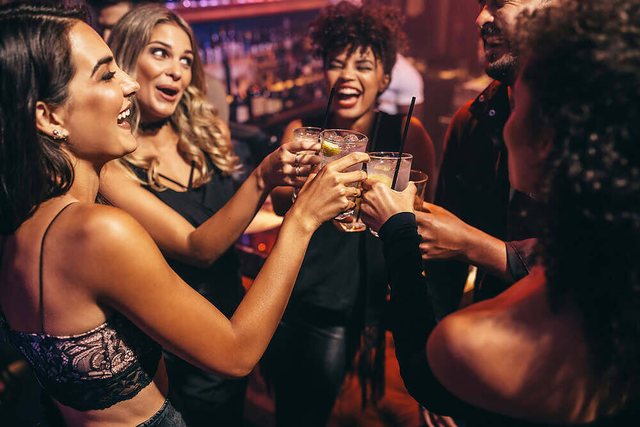
The alcoholic beverage market in Albania is facing changes resulting from the decrease in consumption by locals, especially young people, their preference for non-alcoholic beverages, the increase in the weight of tourists, and the challenge of production costs from the increase in excise duty. How is the industry adapting to these trends to remain competitive?
Bars and nightclubs, once filled with local youth, are today facing a decline in alcohol consumption, a change in the age groups that frequent them, and an increasing dependence on foreign consumers who come to Albania for tourism.
Redi, owner and bartender of “Radio-Bar Tirana” in the former Blloku area, says that the younger generation hardly consumes alcohol during nightlife, but has a tendency towards drug use. He emphasizes that since the Covid-19 pandemic, the way of entertainment and the habits of consuming alcoholic beverages in nightlife in Tirana have undergone significant changes.
According to him, the main factors behind the decline in consumption, especially among young people, who are the main frequenters of nightclubs, include: legal restrictions on the withdrawal of licenses in the event of alcohol consumption, night patrols by the police, and the emigration of young people.
"The 20 to 30 year old group usually consumes only one drink in the pub, mainly of the sparkling type, and then goes to other bars, spending their time mainly taking photos for social media."
"The use of social networks is very high, but on the other hand, there is a trend towards the consumption of various drugs. While the age group over 40 consumes more alcohol, their outings are rarer, usually two to three times a month," he says.
Redi says that currently the demand for alcoholic beverages for both age groups has dropped by 30–40% compared to the period before the Covid-19 pandemic.
For young people, according to him, several factors have influenced the reduction in alcohol consumption, including policies for the removal of licenses, the ban on smoking inside bars and clubs, and the ban on music after 12:00 at night.
"For almost 10 years, there has been a noticeable lack of party organization in nightclubs, where young people in particular tend to organize parties in villas or private settings."
Without tourism, our industry would go bankrupt. With young people not consuming alcohol like previous generations and with purchasing power declining due to economic difficulties, so with only local demand, bars and clubs in Tirana would go bankrupt.
This is also evident in the change in attendance. If previously, the period October-March was the boom period for nightclubs, now from November to March, clubs are mainly sustained by tourist attendance.”
Behavior according to age groups
The age group from 20 to 30 years old usually consumes only one drink in the pub, mainly of the spumante type, and then they go to other bars, spending their time mainly taking photos for social networks. The use of social networks is very high, but on the other hand, a tendency for the consumption of various drugs is observed. While the age group over 40 years old consumes more alcohol, but their outings are less frequent, usually two to three times a month
Raki production peaks during the Covid-19 pandemic
Customs data shows that the production of raki in Albania has marked a historic increase during 2020, which coincides with the beginning of the COVID-19 pandemic. While in 2019 around 353 thousand liters were produced, in 2020, the production of domestic raki tripled.
Industry experts explain that this increase may be related to changes in consumption and production during the period of isolation and movement restrictions, when demand for home-produced brandy and domestic consumption increased significantly.
Data shows that after 2020, raki production has declined significantly. In 2021, an amount of about 600 thousand liters was produced, or 53% less than in 2020.
This phenomenon shows the extraordinary impact that the Covid-19 pandemic has had on the rakia industry, changing not only the volume of production, but also consumption trends in the country.
Meanwhile, in the period January-November 2025, a quantity of 358.5 thousand liters of raki was produced. Compared to January-November 2024, raki production decreased by 5.2%.
Consumption of non-alcoholic beer, another trend
According to producers, beer consumption trends in Albania are changing significantly, especially among young people. Young consumers are more aware of the dangers of alcohol and prefer quality and diverse products. Energy drinks and non-alcoholic beers are gaining ground, bringing changes in the way the beer sector must adapt to market demands.
Ardian Kostaqi, administrator of the “Korça” beer factory, says that young people, in general, tend towards quality rather than quantity. According to him, this is putting producers before the necessity to continuously offer high-quality products, acceptable and appreciated by this category of consumers.
"Young people prefer a variety of beer flavors, often enriched with aromas that better suit their tastes and inclinations."
The work done by state institutions to raise awareness among young people about the risks of alcohol consumption has contributed to a decrease in the quantitative consumption of alcoholic beverages.
Energy drinks have marked a growing trend among young people and constitute direct competition for alcoholic beverages.
Another growing trend is the consumption of non-alcoholic beer, which is respected by certain religious groups, as well as preferred by young people aware of the dangers of driving under the influence of alcohol.
In this context, it is necessary for us to identify and strengthen the points that connect us with the consumer, such as: product quality; variety of offer; presence in all HoReCa and retail networks; keeping costs under control; fighting against uncontrolled entries by various entities, especially in border areas, where the problem is not only related to the quantity of products placed on the market, but also to non-payment of taxes, which enables these entities to offer lower prices and harms regular taxpayers", he claims. / Taken with abbreviations from Monitor.al