Is this police force professional and capable of handling violen...
/ 2026-10-16 18:54:07Focus


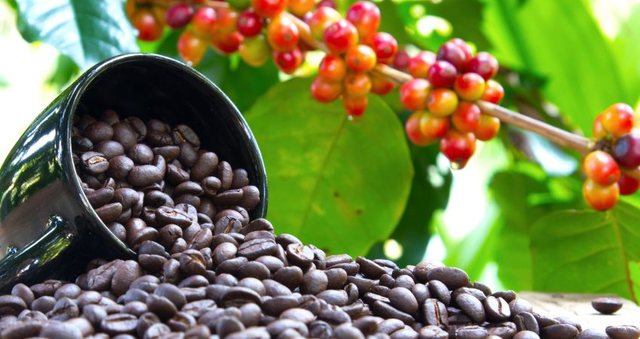
A longer-than-normal dry season, blamed on climate change, caused damage to crops this year. Everyone agrees on the fact that if the weather conditions are not right and the production is not going to be right.
Higher production costs can lead to coffee price inflation and they have to pay more for this product in the future as prices rise to record levels. Coffee experts also signal that prices may remain higher for longer, as factors such as climate change reduce the global supply of coffee.
The International Coffee Organization – ICO, an intergovernmental organization founded in 1963 with the support of the United Nations, reported last month that the price of the ICO composite index – a key benchmark for the global coffee industry – reached an all-time high in 13 years, at an average price of 226.83 cents or about $2.27 per pound.
Coffee connoisseurs often say that when Brazil 'sneezes', the rest of the world 'colds' – a reference to its status as the number one producer of Arabica, the high-quality coffee variety that accounts for over 60% of total coffee production .
So when an unusually hard frost destroyed its crop in the summer of 2021, the coffee market suffered an immediate supply shock, as US coffee futures, which track Arabica, hit an all-time high of 260 cents per pound.
The US Department of Agriculture reported in May that Vietnam, the main producer of Robusta, suffered several years of unfavorable weather conditions that saw export levels drop by 7%.
Despite rising prices, there's one thing experts can be sure of: Demand for coffee isn't going down anytime soon.