"The fate of the homeland is in our hands" - An appeal by Ismail...
/ 2026-10-18 16:09:54Focus


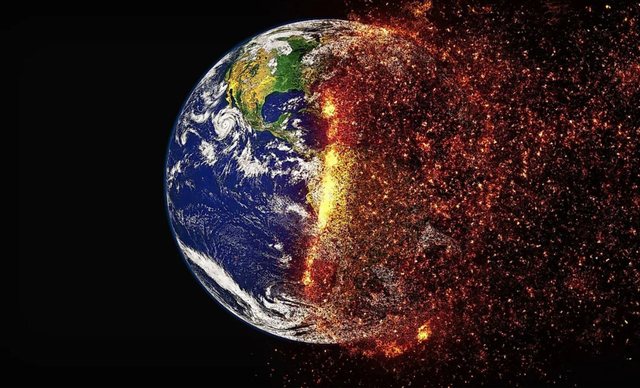
The "Doomsday Clock" is approaching midnight like never before, a symbolic indicator that the Bulletin of the Atomic Scientists has used for decades to measure the risk of global catastrophe.
Tensions between the United States and China, threats of nuclear conflict, the climate crisis, and uncontrolled developments in artificial intelligence create a dangerous backdrop. However, even if humanity manages to avoid these scenarios, life on Earth has an inevitable end.
According to a new study published in Nature Geoscience, Earth's durability is more limited than previously thought. Researchers Kazumi Ozaki and Christopher T. Reinhard estimate that the planet's atmosphere will cease to be friendly to life much earlier than previously predicted.
Until recently, scientists believed that Earth would remain habitable for about two billion years, due to the gradual increase in the brightness of the Sun. However, new data reduces this period to about one billion years. A key role in this process is played by oxygen and its history on the planet. About 2.5 billion years ago, the Great Oxidation Event occurred, when oxygen-producing microorganisms radically changed the atmosphere, eliminating many forms of life, but creating the conditions for complex organisms.
Today, the biosphere relies on a balance where the atmosphere contains about 20% oxygen. But scientists warn that this balance is not permanent.
Over time, the Sun will become hotter and brighter. This will cause water to evaporate and changes in the atmosphere, leading to a drastic drop in oxygen and making Earth unsuitable for life.
However, researchers emphasize that there is no reason for immediate concern, since this is a period of a billion years. If humanity manages to overcome the current challenges, it is not excluded that future civilizations will develop technologies to adapt or move to other planets. Meanwhile, NASA research programs, such as the LUVOIR project, aim to study distant worlds, helping to understand the processes associated with the birth and end of life in the universe.