How Belinda Balluku is fabricating the rumor about Top Channel's...
/ 2026-10-19 16:19:00Focus


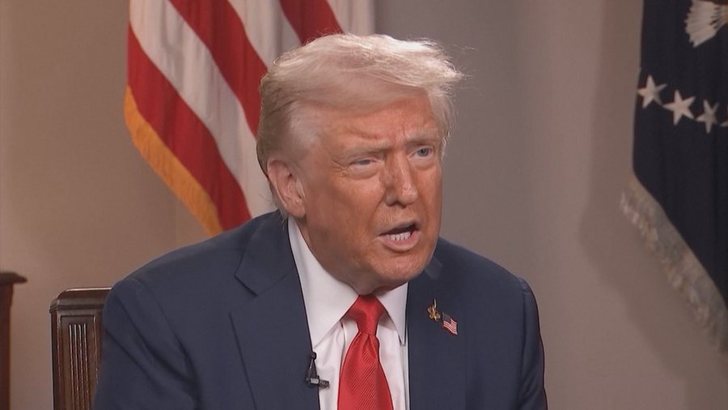
On the evening of October 4, US President Donald Trump called Israeli Prime Minister Benjamin Netanyahu to deliver a clear message: the war in Gaza was over.
According to TIME magazine, Trump announced that his envoys had reached a peace deal with mediators from Qatar, Egypt and Turkey, to end two years of bombing and bloodshed.
“On Monday we will announce the deal – and you must accept it,” he told Netanyahu. “Bibi, you cannot fight the world. You may win individual battles, but the world is against you.”
Netanyahu tried to resist, but Trump would not allow any objections. In a conversation laden with harsh tones, he reminded the Israeli prime minister of everything he had done for Israel during his presidency – from moving the US Embassy to Jerusalem and recognizing sovereignty over the Golan Heights, to the Abraham Accords and joint strikes against Iranian targets.
"I stopped him because he was going to continue across the border," Trump stressed.
“It was a very direct statement about Bibi,” said Steve Witkoff, Trump’s special envoy for the Middle East. “The president had no tolerance for anything other than that.”
At the end of the call, Netanyahu accepted a two-stage deal, which includes a ceasefire between Israel and Hamas, the exchange of Israeli hostages for Palestinian prisoners, the allowing of humanitarian aid, the gradual withdrawal of the Israeli Army from Gaza, and the start of negotiations for a final agreement.
If its implementation works, the agreement will end the longest war in Israel's history, which has caused about 2,000 Israeli casualties and nearly 70,000 Palestinians killed.
The development marks another step in Trump’s strategy to reshape the Middle East. Over the past nine months, the US has struck Iran’s nuclear infrastructure and contributed to the decline of Tehran’s influence in the region. The fallout from these attacks has led to the fall of the Assad regime in Syria, while new governments in Damascus and Beirut have signaled openness to Washington.
Trump has used a typical "dealmaker" approach, combining pressure with seduction, to bring two sworn enemies, Hamas and Netanyahu, to the table.
“He is upending all the traditional principles of Middle East diplomacy,” said historian and former Israeli ambassador to the U.S. Michael Oren. “Trump is restoring American hegemony in the region — and so far, he has succeeded.”
According to the President himself, success stems from the use of American military force. He recalls the assassination of Iranian General Qasem Soleimani during his first term and last spring's attacks on three Iranian nuclear facilities. "No President has been willing to do this. I was. And because of that, we have a different Middle East," Trump said.
However, the ceasefire remains fragile. Hamas has not yet handed over the bodies of all Israeli hostages, prompting Israel to close the Rafah crossing and restrict aid. Online videos show armed clashes and executions in Gaza. On October 19, Israel accused Hamas of violating the ceasefire after several attacks on its troops. To prevent the agreement from collapsing, Trump sent Vice President JD Vance to the region.
The second phase of the process involves defining the boundaries of the Israeli withdrawal, disarming Hamas, and deploying a peacekeeping force, as well as determining the governance of Gaza after the war. Former US ambassador Dan Shapiro warns that the situation could degenerate into a “frozen conflict”, with Israel controlling half of Gaza and Hamas the other, with no real reconstruction.
Despite all the doubts, Trump's foreign policy has broken traditional expectations. The "America First" doctrine, once synonymous with isolationism, has transformed into a personal and pragmatic diplomacy.
While allowing Russia to strengthen its influence in Europe and China in the Indo-Pacific, Trump has restored American power in the Middle East, strengthening ties with Saudi Arabia, the United Arab Emirates and Qatar. He expects Riyadh to normalize relations with Israel and join the Abraham Accords within this year.
Trump has even announced a visit to Gaza as the US and its allies prepare a plan to rebuild the territory. He has a vision of an economically integrated Middle East, with rail lines from the Mediterranean to the Persian Gulf, free trade agreements and a new regional energy grid.
Trump also warned that Israel would lose the full support of the United States if it decides to annex the West Bank, occupied territories that are considered illegal under international law.
"It's not going to happen," Trump told the American magazine "Time," emphasizing that he had given his word to Arab leaders that the territory would not be annexed.
"Israel would lose all support from the US if this were to happen," he added.
In the end, Trump emphasizes that the secret to his success is himself.
“The most important thing,” he told TIME, “is that they have to respect the President of the United States. The Middle East has to understand that. It’s almost more the President than the country itself.”