Protests highlight trauma crisis, operating rooms under reconstr...
/ 2026-10-15 18:35:16Focus


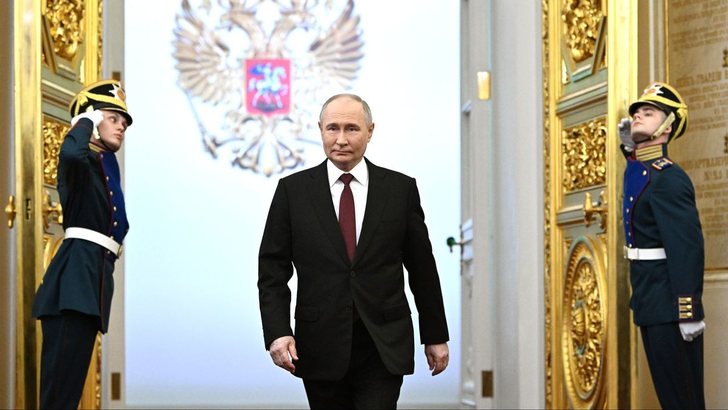
Officials in Moscow have announced a new record victory for President Vladimir Putin 's United Russia party in what the European Union called a "farcical election" on September 21.
The Central Election Commission said United Russia received nearly 58 percent of the vote, winning 355 of the 450 seats in the State Duma, in the first elections for this institution since Russia launched its full-scale invasion of Ukraine in 2022.
In a tightly managed process on September 18-20, voters could choose between several parties, all of which are approved by the Kremlin and fully support Putin. The results showed that dozens of military veterans of the war in Ukraine will now be deputies.
The only party opposing the war in Ukraine, Yabloko, was excluded from the election. Its leader, Nikolai Rybakov, wrote “for peace” on his ballot with a bright marker and posed with it for photographers at a polling station in St. Petersburg.
"A blow to Russian democracy"
Most of Russia's political opposition is now in prison or exile. Dmitry Gudkov, who is part of the second group, told Current Time that "they didn't let anyone [from the opposition] run, they expelled election observers, there was clearly widespread vote fraud."
Gudkov is a member of the Russian Democratic Forces, an opposition group in exile in the Parliamentary Assembly of the Council of Europe (PACE). He said he believed it would soon declare the Duma elections illegal.
EU foreign policy chief Kaja Kallas has already described them as such, noting, among other things, that the vote also took place in areas of Ukraine occupied by Russia.
“The so-called Duma elections marked another major blow to Russian democracy,” she wrote in a social media post on September 21. “The facade of democracy is the only thing left in Russia. I have proposed measures against those who enable these farcical elections in the occupied Ukrainian territories.”
Turnout was reported at 59.32 percent, an increase compared to previous years, which the head of the Election Commission, Ella Pamfilova, highlighted.
The last time, in 2021, turnout was 51.7 percent, while in 2011 – when allegations of election fraud led to large opposition protests in Moscow, which were brutally suppressed by security forces – the figure was 60.2 percent.
However, the reliability of official figures has been widely questioned, with examples such as Chechnya – where the region's longtime leader, Ramzan Kadyrov, was reported to have received 99.85 percent of the vote – seen as particularly notable.
“In Chechnya, there is no question of massive falsification. Nobody counts the votes at all,” Maksim Glikin, editor-in-chief of the exiled publication Mozhem Obyasnit, told Current Time. “They simply write down the required figures and publish them.”
In any case, the elections have once again produced a Duma that will mechanically approve legislation introduced by the Kremlin – as was generally expected. Attention now returns to the war in Ukraine.
In the weeks leading up to the elections, there was widespread speculation that they would be followed by a new wave of mobilization, to bolster the ranks of the army, which is reported to be suffering around 30,000 casualties each month.
" Ukrainian intelligence has warned that the Kremlin plans to use the parliamentary elections as a managed show of public support to launch a new wave of mobilization ," Dominika Hajdu, director for policy and programs at GLOBSEC, a think tank, told REL.
"The mobilization would help Russia maintain offensive pressure, given its willingness to take heavy losses, but its impact on the battlefield is likely to be limited, as recent fighting has been largely determined by drones and airstrike capabilities, and not just by troop numbers," she added.
Fighting continued with Russian attacks on a university, a shopping mall and other facilities, wounding six people in Zaporizhia, according to Ukrainian emergency services on September 21.
Kremlin spokesman Dmitry Peskov said Russia was ready to reopen trilateral peace talks, but that "we are continuing the special military operation" - the preferred term officials use to describe the invasion.
Meanwhile, Ukrainian President Volodymyr Zelensky said late on September 20 that he had spoken with US President Donald Trump, and that the two would meet at the UN General Assembly this week.
In a post on social media, Zelensky said the meeting "could change a lot of things" and that he and Trump "went through a lot together" during their discussion./ rel