Protests, violence, curfews: From France to Albania, why Europe'...
/ 2026-10-20 23:47:20Focus


Over a thousand drones and 200 missiles: Iran is doing its best to push the United Arab Emirates into extreme stress. Pressure is also being put on Bahrain, Doha and Riyadh. The Emirates have paid billions to Trump, but under the influence of bombs, major artificial intelligence projects are failing.
Federico Fubini – Corriere della Sera
Khalaf Ahmad Al-Habtoor is not a keyboard lion, but an Emirati establishment billionaire. He is not an opponent of Donald Trump, but a former diplomat who believed he could do even more business with the US president.
However, on Thursday, March 5, he published a letter in which he addresses a series of questions and sharp remarks to the White House tycoon: "Did you calculate the collateral damage before you fired? You have put the Gulf countries at the heart of a danger they did not choose."
And further: “Your Peace Board initiatives are funded by the Gulf states,” Al-Habtoor writes, thinking about the billion dollars the administration has asked each of them to sit at the table: “Where did this money end up?”
Al-Habtoor's letter closes by reminding us that "true leadership is not measured by war decisions, but by wisdom, respect for others, and the drive towards achieving peace."
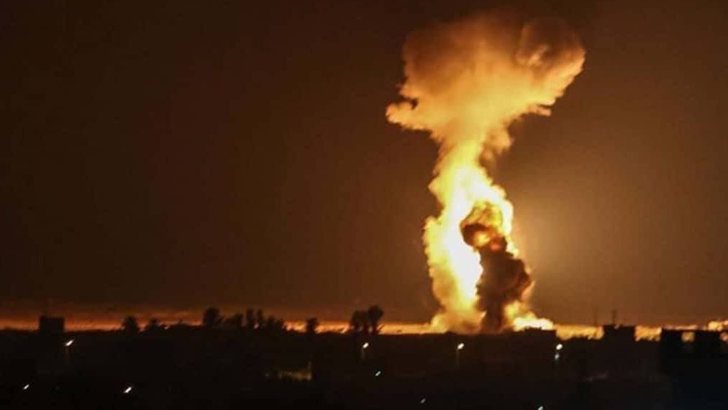
All this bitterness is understandable. Recent estimates show that the United Arab Emirates, which has denied the United States the use of its bases to attack Iran, has been hit by Tehran's forces with about two hundred missiles and 1,072 drones; twenty missiles and about seventy drones have bypassed air defenses, hitting, among other things, Dubai airport, several major hotels, two Amazon Web Services data centers and a major desalination center (the process of removing salt and minerals from seawater to make it drinkable).
In comparison, other Gulf hubs have been hit less often. Bahrain, home to the US Fifth Fleet, has suffered about 75 missiles and 130 drones. Qatar, home to the largest US base in the region, has received about a hundred missiles and forty drones. Saudi Arabia does not publish data on attacks, but although its main refinery has been hit twice, it appears to have been targeted less frequently.
There is a method to these relentless attacks. The Emirates are the Iranians’ main target not only because, with the Abraham Accords, they recognize Israel. Bahrain does so too, but is comparatively spared. Rather, it seems that the Dubai model is Tehran’s real target, the symbol of the Gulf Arabs’ blasphemous integration into the global money elite. And perhaps what the Iranian Revolutionary Guard wants is precisely the kind of response from Al-Habtoor, the Emirati billionaire who is now accusing Trump.
In Israel, there is something called the “Samson Option,” the idea of toppling the temple pillars over itself and over its Philistine enemies, i.e. activating the atomic weapon in an existential challenge with Iran. Iran itself may be experimenting with something along the same lines. It wants to push the stress of its Arab neighbors in the Persian Gulf to the extreme, even at the risk of their retaliation, just to push them towards a revolt against Trump.
It is not difficult to imagine the thoughts of the absolute monarchs of Abu Dhabi, Doha or Riyadh these days. Al-Habtoor’s question about the fate of the funds for the Peace Board once again says it all. The Gulf rulers have poured billions of petrodollars into Trump and his cronies. They thought they had the tycoon under control, that they would do business with him, but not even the vast amount of money accumulated thanks to the power of the White House can mitigate his unpredictability. The Gulf kings have enriched Trump in the hope of controlling him. In return, they have received Iranian missiles and drones from a war they never wanted.
Yet they had paid. Qatar has provided Trump with a $400 million jet. A Saudi sovereign wealth fund has poured $2 billion into Jared Kushner's Miami hedge fund Affinity Partners, and so have Qatar and Abu Dhabi's Prince Sheikh Tahnoon bin Zayed Al Nahyan, each with hundreds of millions, always in favor of Trump's son-in-law.
The most serious case in terms of consequences is related to the government of the United Arab Emirates. In January of last year, it invested half a billion for 49% of a new cryptocurrency platform just launched by Trump with his factotum Steve Witkoff (the company's managers are the children of both of them).
The Trump family directly received $187 million, Witkoff $31 million. Shortly thereafter, in his role as president of the United States, the tycoon gave the Emirates access to some of the most advanced American-made semiconductors for artificial intelligence from Nvidia.
This is one of the key points of the ongoing bombings. The Gulf today is a colossal bet on artificial intelligence, with projects worth hundreds of billions of dollars from oil monarchies through American Big Tech. But Iran chooses its targets with symbolic care and destabilizing skills. The three drones that fell on data centers (two in the Emirates, the third in Bahrain, still belonging to Amazon Web Services) generate uncertainty throughout the area. It would not be the right moment: the Emirates are launching Stargate, a $ 500 billion project with American giants such as OpenAI, Nvidia and Oracle; Microsoft has its own gigantic plan. Saudi Arabia and Qatar also have similar colossal plans. For all of them, this is the future, when oil and gas will be less important or less abundant. But the threat of Tehran's drones has the effect of a paralyzing poison.
The Arab rulers will discuss this with Kushner, Witkoff and Trump at the Future of Investment Initiative, a business conference taking place in Miami in twenty days. They will express their anger. They will demand, once again, guarantees. But they already know that Trump is unpredictable, not even to his family and his partners in politics and business. Then it is possible that the Gulf masters will turn to another guarantor, to control any future reaction of Iran after this war. They will call on the potential winner of this geopolitical earthquake: Xi Jinping's China.