Protests, violence, curfews: From France to Albania, why Europe'...
/ 2026-10-20 23:47:20Focus


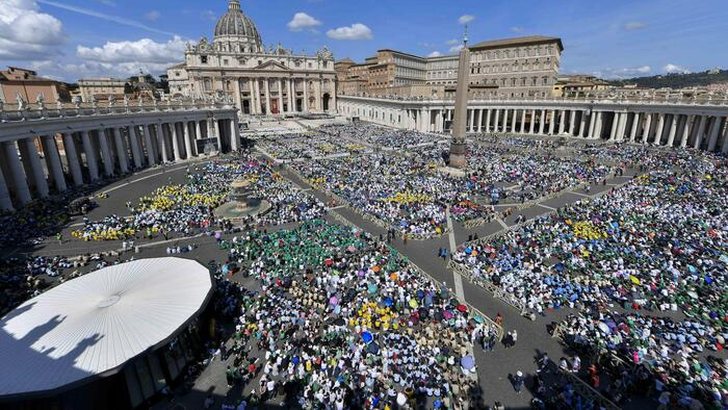
The cardinals are expected to decide on the date of the conclave to elect the new Pope. The meeting will be held today at 10:00. Dozens of "Princes of the Church" from around the world are participating in this meeting at the Vatican, with the aim of determining the next procedures for electing Bergoglio's successor and the next Papacy of the Roman Catholic Church.
How the secret election of the Pope is done
For centuries, the leader of the Catholic Church has been chosen in a conclave, a highly secretive process. Cardinals are tasked with choosing the next pope, which follows a unique process that has its roots in the Middle Ages.
The procedure followed is, for the most part, determined by the 1996 Apostolic Constitution, a product of John Paul II known as "Universi Dominici Gregis", with some further adaptations by Benedict XVI.
Once the date is set, the cardinal electors go to the home of the Conclave - the Vatican's Sistine Chapel. A two-thirds majority is needed to be elected. But what are the next steps?
Next steps
The process of electing a new Pope usually begins between 15 and 20 days after the death of the Pope. The Camerlengo is a cardinal chosen by the Pope and is responsible for organizing the electoral process of the Conclave. The current Camerlengo is Cardinal Kevin Farrell, an Irish-American priest who has held the position since 2019.
Any Catholic man can become Pope - although in practice, the new Pope has been elected by the College of Cardinals since 1379. While there are currently more than 250 cardinals worldwide, only those under 80 "on the day the Apostolic See becomes vacant" are allowed to vote. So, the number of cardinals who are actually eligible to vote is 135. It is worth noting that, before the papal conclave, the cardinals hold daily meetings.
What happens on the first day of the Conclave?
On the first day of the conclave, the cardinals gather for a special Mass in St. Peter's Basilica, which usually takes place in the morning. In the afternoon, the cardinals gather in St. Paul's Chapel in
choir robes, before walking to the Sistine Chapel to sing "The Creator."
Oath of confidentiality
The first order of business is for the cardinals to take an oath of secrecy. Then, the Papal Master of Liturgical Ceremonies gives the signal “Extra omnes.” The phrase means “all out” and is pronounced in Latin by the master of ceremonies (currently Archbishop Diego Ravelli) for everyone to leave the Sistine Chapel, except the electors, before the voting begins.
This is the last time we see the cardinals until a new pope is elected. The cardinals sleep and eat in a specially built guesthouse, Casa Santa Martha, near the Sistine Chapel, where Pope Francis has lived for the past 12 years.
Voting process
The ballot is secret and was introduced in 1621 by Gregory XV. Cardinals vote individually for their preferred candidate until a winner is determined, a process that can take several days. In previous centuries, the vote could last weeks or months.
However, it should be noted that some cardinals have also died during conclaves. The only indication of how the elections are going is the smoke that rises twice a day from the burning of the cardinals' ballot papers. Black smoke signals the failure of the elections. The traditional white smoke signals the election of a new Pope.
How is the decision on the new Pope made public?
After the white smoke rises, the new Pope is normally expected to appear within an hour on the balcony overlooking St. Peter's Square. The senior cardinal participating in the conclave will announce the decision with the words "Habemus Papam" which means "we have a Pope."
He will then present the new Pope with the papal name he has chosen, which may not be his original name. For example, Pope Francis was baptized Jorge Mario Bergoglio, but chose a different name when he was proclaimed Pope in honor of Saint Francis of Assisi, a saint of the Catholic Church and founder of the Franciscan Order.