"The fate of the homeland is in our hands" - An appeal by Ismail...
/ 2026-10-18 16:09:54Focus


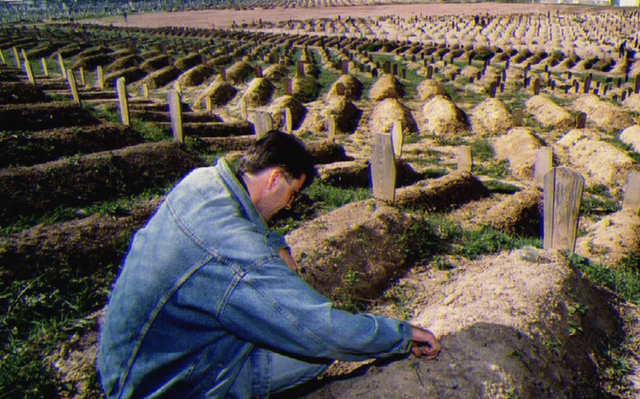
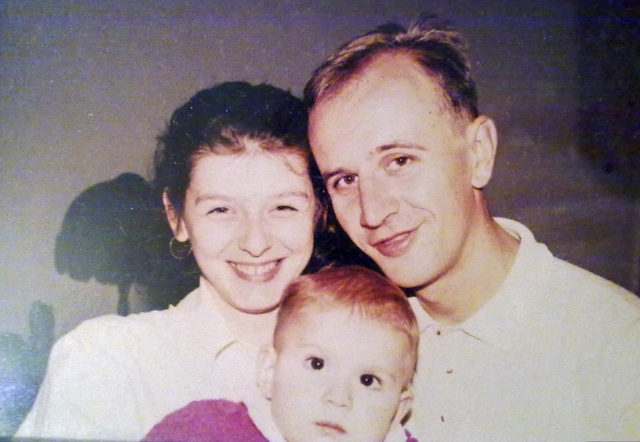
Irina Cisic celebrated her first birthday on October 8, 1993. Four days later, she was killed by a sniper's bullet on the streets of the Bosnian capital, Sarajevo.
"Since Irina had just learned to walk, my wife Stana held her hand. We never understood why someone would shoot at a target 50-60 centimeters tall - the size of a one-year-old girl - instead of a much larger target, like my wife, who would be easier to hit," Irina's father, Samir Čišić, told Radio Free Europe/Radio Liberty's (REL) Balkan Service.
For three decades, the parents of the murdered girl have been searching for an answer: did their daughter kill herself just to cause more pain and suffering? In recent days, their pain has been rekindled by Italian media reports of an investigation underway in Milan into the so-called "weekend snipers."
According to the newspapers Il Giorno, La Repubblica and the ANSA agency, prosecutors are investigating allegations that during the war in Bosnia and Herzegovina (1992–1995), wealthy foreigners paid "large sums of money" to shoot civilians "for fun" in besieged Sarajevo.
The Milan prosecutor's office did not respond to Radio Free Europe's question about how far the investigation has progressed, or against whom it may have been launched.
An Olympic city under sniper fire
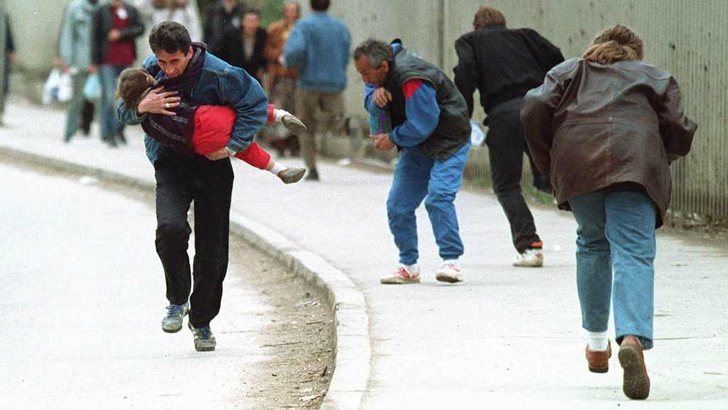
Sarajevo was besieged by the Army of Republika Srpska from 1992 to 1995. The siege, which lasted 1,425 days, was one of the longest in modern European history.
More than 1,600 children were killed and 14,000 were injured.
According to data from victims' associations and UN court rulings, every tenth child killed in the city that hosted the 1984 Olympic Games was shot by snipers.
However, no sniper has been held personally accountable, either before Bosnian or international courts.
In sentencing top Republika Srpska officials, the International Criminal Tribunal for the former Yugoslavia (ICTY) found that the sniper campaign had a single purpose: “to terrorize civilians.”
Florence Hartmann, former spokesperson for the ICTY Office of the Prosecutor, told REL that they were “aware” of so-called “death tourism expeditions.”
"We knew they existed. We didn't know how they were organized. It is extremely important that a judicial investigation has been launched and that those who organized it are identified," she said.
“Hunting in Sarajevo”
Benjamina Karić, the mayor of Sarajevo, was one year old when the war began. After the documentary “Sarajevo Safari” was shown in 2022, she filed a criminal complaint with the Prosecutor’s Office of Bosnia and Herzegovina, and later with the Italian authorities.
"The arrival of rich people in Sarajevo over the weekend to kill our children is the darkest thing you can imagine," Karic told REL.
She did not receive a response until mid-2025. In August, through the Italian Embassy in Bosnia and Herzegovina, she filed an additional complaint with new information provided by Italian journalist Ezio Gavazzeni.
Gavazzeni, with the help of former judge Guido Salvini, contacted prosecutors in Milan, but neither he nor Salvini responded to REL's questions.
"Everything that's been happening recently gives a glimmer of hope that at least some justice will be served," Karic said.
In several ICTY decisions, the court emphasized that the sniper campaign was designed to “terrorize civilians.”
“Sarajevo civilians were shot by snipers as they went to fetch water. Snipers shot children playing in front of their houses, walking with their parents, returning from school or riding their bicycles,” said Judge O-Gon Kwon during the reading of the verdict against Radovan Karadzic, the wartime president of Republika Srpska, who was sentenced to life imprisonment in 2019.
At the trial of Dragomir Milosevic - the commander of the Sarajevo-Romanian Corps, sentenced to 29 years in prison in 2007 - American firefighter John Jordan testified, speaking of foreigners who paid to come to Sarajevo and shoot civilians from Serbian positions.
“The locals carried certain weapons, and when a guy showed up with a gun who looked like he should be hunting wild boar in the Black Forest [in Germany], not in urban warfare in the Balkans — and when you saw him not even knowing how to move among the rubble, you knew right away,” Jordan said in February 2007.
According to the criminal complaint filed with the Milan Prosecutor's Office, it is said that there was a "price list" for the so-called "Sarajevo Safari" for wealthy foreigners - among them Americans, Canadians, Russians and Italians.
Children were the most expensive targets, followed by women, then men; while the elderly could be killed for free, according to ANSA.
Italian media also report that during the war, Bosnian intelligence services, based on the way the operation was organized, believed that Serbia's State Security Service (SDB) and its former chief Jovica Stanisic, later sentenced to 15 years in prison by the ICTY for war crimes, were behind it.
"Verification of allegations"
If prosecutors in Milan file indictments and prove guilt, it would be the first time that sniper killings of civilians in Bosnia would be dealt with in a court of law.
In May 2021, the Bosnian Prosecutor's Office opened a case after the publication of a video - the authenticity of which has not been confirmed by REL - in which a sniper from the Army of Republika Srpska boasted that he had "shot someone straight in the head."
"On April 2, 2025, the Bosnian State Prosecution transferred the case to the Sarajevo Cantonal Prosecution for sniper activities in Sarajevo. The designated prosecutor is taking active steps to verify the allegations in the report," spokeswoman Azra Bavčič told REL.
According to the Bosnian High Judicial and Prosecutorial Council, more than 3,200 war crimes cases remain unsolved in the country; over 2,900 are still “in the initial phase,” meaning no suspects have been identified or the crimes have not been fully investigated.
More than 150 suspects are outside Bosnia, mainly in Serbia and Croatia. These two countries do not extradite their citizens and can only try them within their own jurisdictions.
Sarajevo law professor Enver Iseric told REL that the Bosnian Prosecutor's Office has not even prosecuted people on the so-called "A list" issued by the UN tribunal, "which should have been a priority."
"Therefore, no Bosnian war criminal has been prosecuted for the sniper killing of children or for paying to come to Bosnia and kill for animal pleasure. Thirty years after the war, hundreds of criminals still walk free, while their victims are seen on the streets," he added./ REL