Protests, violence, curfews: From France to Albania, why Europe'...
/ 2026-10-20 23:47:20Focus


From Politico.eu
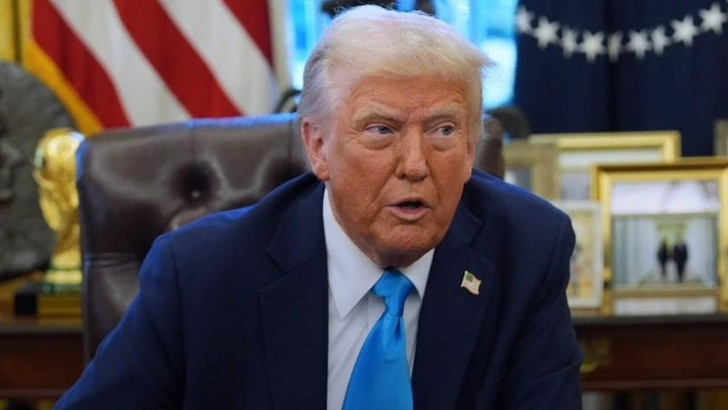
Giorgia Meloni finally has the opportunity to show that friendship with Donald Trump is worth it.
As she flies to Washington this week, the Italian prime minister will try to persuade US President Donald Trump not to impose new tariffs that would deal a severe economic blow to Europe - and be potentially deadly for Italian exporters.
Meloni's personal engagement with Trump has raised nerves in other EU capitals. But as the bloc faces a potentially devastating trade war, even her most cautious counterparts are coming around to the idea that she may be the only European leader he is willing to listen to.
Now, the European Union has three months to convince Trump not to impose 20 percent tariffs on all its exports to the United States, after he halted the punitive “reciprocal” tariffs he unveiled on April 2. The EU is still subject to Trump’s base tariff of 10 percent, plus 25 percent duties on steel, aluminum and cars.
Previous attempts by other European leaders to sway the president – through flattery, threats or promises to buy more American gas – have led nowhere.
Meloni's visit on Thursday is an opportunity to demonstrate that Europeans can still do business with Trump.
Just a day after meeting with Trump, the Italian leader will return to Rome to host Vice President JD Vance for a state visit. Vance, on his last visit to Europe in January, launched a broad backlash against the bloc, accusing its leaders of failing to protect free speech or stop illegal migration.
"Having Trump's attention is an asset for the entire European Union," said an Italian official, speaking on condition of anonymity.
In part, Meloni’s actions reflect Italy’s terror at the prospect of losing its historically close ties with the United States, which it sees as a safeguard against the Franco-German axis that dominates EU affairs. Unlike other European leaders, she believes Trump can still be reasoned with and that his trade threats are little more than a brazen negotiating tactic, according to two Italian officials familiar with the government’s foreign policy stance.
Meloni also wants to show that he can get concessions from Trump and that "if we are less hysterical, we can work with Washington," one of the officials said.
At nearly 40 billion euros, Italy's trade surplus with the US is the third largest among EU countries - after Germany and Ireland. Its main exports are machinery, pharmaceuticals, vehicles, fashion and food and drinks. It's no wonder that Meloni is under pressure from Italian exporters to spare them from Trump's tariffs.
Some European leaders, notably French President Emmanuel Macron, warn that Trump's goal is to divide EU countries and push them to negotiate bilateral agreements with the US administration.
To them, Meloni's trip seems particularly suspicious, as she frustrated European allies with her muted opposition to bloc-wide plans to rearm, while Trump began withdrawing support for Ukraine's defense against Russia's three-year war of aggression.
French Industry Minister Marc Ferracci reacted angrily last week to news that Meloni was heading to Washington, saying that Europe needed to stay united. But Paris appears to have since calmed down and stopped publicly criticizing her mission. And Meloni has already contacted Ursula von der Leyen, the head of the European Commission, to discuss the trip, said Commission spokeswoman Arianna Podestà.
With the Commission's direct engagement failing to prevent Trump's trade war, Brussels and other EU countries now appear to be going along with Meloni's game.
They don’t seem particularly concerned that Meloni might try to negotiate a side deal that would benefit only Italy – a breach of solidarity that would raise a major question mark over Italy’s future in the EU single market. That’s because it’s an option that Trump himself has ruled out.
“It is natural for member states to have bilateral interests that they want to promote and no one will stop them from doing so,” said an EU diplomat from another country.
"But when it comes to tariffs that apply to all of us, we trust that she will stick to the agreed EU approach."
German politicians close to the potential next chancellor, Friedrich Merz, are also optimistic.
“Meloni’s trip to Washington is now an important signal,” said Johann Wadephul, from Merz’s Christian Democrats. “The Italian prime minister has a good relationship with US President Trump, whom she can now put at the service of Europe.”
That's not to say Italy's approach is without controversy. For months, Meloni's government has been calling on the EU to adopt a softer approach to Trump and his tariffs.
Just days after Trump was sworn in and even before he launched his trade war, Italian Foreign Minister Antonio Tajani proposed appeasing Trump by offering to buy more American goods. Tajani, whose portfolio also covers trade, was among the first to urge Brussels to delay retaliation against the 25 percent tariffs on steel and aluminum that Trump imposed on March 12.
EU trade chief Maroš Šefčovič traveled to Washington on Monday to present Brussels' offer to cut industrial tariffs to zero on both sides of the Atlantic.
But Meloni's allies are confident she can achieve more than the bloc's chief trade negotiator, whose job is to make deals on behalf of the union's 27 member states.
“Politics, like life, is built on personal relationships,” said Marco Scurria, an Italian senator from Meloni’s Brothers of Italy party.
"It's better when such a complex negotiation is handled by two people who respect each other and can more easily achieve a positive outcome - unlike von der Leyen."