Is this police force professional and capable of handling violen...
/ 2026-10-16 18:54:07Focus


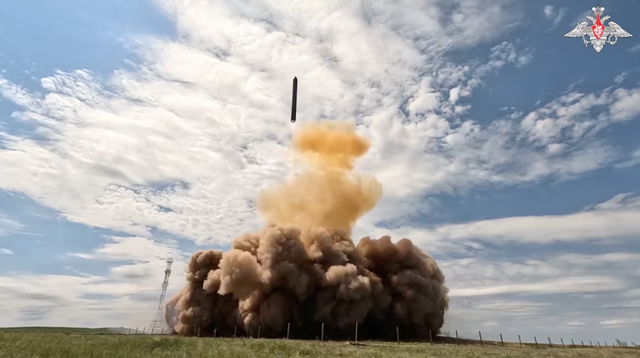
As has happened before during conflict escalations, Vladimir Putin has used the rhetoric of the nuclear arsenal to strengthen his domestic stance and send a signal of intimidation to the West and Kiev's supporters.
The Russian president said that Russia will put into service by the end of the year the new strategic nuclear missile “Sarmat”, which he described as “the most powerful in the world”. He said that this missile is capable of hitting targets thousands of miles away, including the US and Europe, and that it has a destructive capacity several times greater than any Western equivalent, with a range exceeding 35 thousand kilometers.
However, according to Western security analysts, some of Moscow's claims about the capabilities of the new generation of nuclear weapons may be exaggerated, in the context of the military modernization program announced in 2018.
They also recall that the Sarmat missile has had problems in previous tests, including a reported failure in 2024. On the other hand, Russian state television published statements by the commander of the strategic missile forces, who reported a successful test of the Sarmat system and said that its deployment will significantly increase Russia's ability to guarantee strategic strikes and military deterrence.
Since the start of the war in Ukraine in 2022, Putin has repeatedly recalled the power of the Russian nuclear arsenal in statements that the West has interpreted as attempts to deter further intervention in support of Ukraine.
Meanwhile, Ukrainian President Volodymyr Zelensky declared that Ukraine is in one of its strongest positions in recent years and announced the creation of an international coalition for defense against ballistic missiles, after a meeting with security advisers from 13 European countries.
"We must achieve the main goal, which is also our common goal and from which we will not retreat: we will not surrender either our land or our sovereignty," Zelensky said.