Is this police force professional and capable of handling violen...
/ 2026-10-16 18:54:07Focus


The abolition of VAT on basic basket foods was the electoral battle horse of the Socialists in 2013. The sensational promise has been unfulfilled for a decade while Albanians pay for the most expensive foods in Europe. Faktoje verified how the violation of this commitment affects family budgets. Get to know the story of a pensioner who receives 10,000 Lek per month and pays for basic food more expensively than in Italy, where the monthly pension is ten times higher.
"We will no longer ask the ordinary family of this country to pay 20% tax per kg of bread, 20% tax per kg of milk, 20% tax per grain of egg, or oil, flour, rice. We will make the food taxes for the people zero", said the chairman of the SP, at that time candidate for prime minister, Edi Rama in the electoral campaign in 2013.
To the citizens with whom he had a conversation, while revealing the electoral program of the SP, Rama promised that he would give an account to them if he did not fulfill this promise within 4 years.
Albania should have zeroed the food tax at least from 2017.
1 decade after the promise

Agim Rrëshiti, moved from Përmeti to Tirana in 2008. Agim receives a pension of 10,700 new lek and living in the capital seems unaffordable.
"I spend 10,000 old lek on blood pressure medication. Foods are very expensive. With the pension, I only pay for electricity and water. We buy oil, pasta, beans, a can of milk in 2 days, coffee and sugar. Two loaves of meat cost 13 thousand old lek, we rarely buy them. Without the help of children I would not be able to live. The pension is not enough for food!", he tells Faktoje, adding:
"It's been a while since my shower burned down, it costs 150,000 lek (old), I can't buy it. I wash myself with a bowl (bowl) like a sheep."
The sons of Agim have chosen not to emigrate. On the one hand, the elderly person feels good to have them around, but on the other hand, he worries about their future when he sees that the prices increase and become more and more unaffordable.
"If food were cheaper, we would be able to buy more. My life is gone, but even the children are not able to get comfortable and build their families because of the low income".
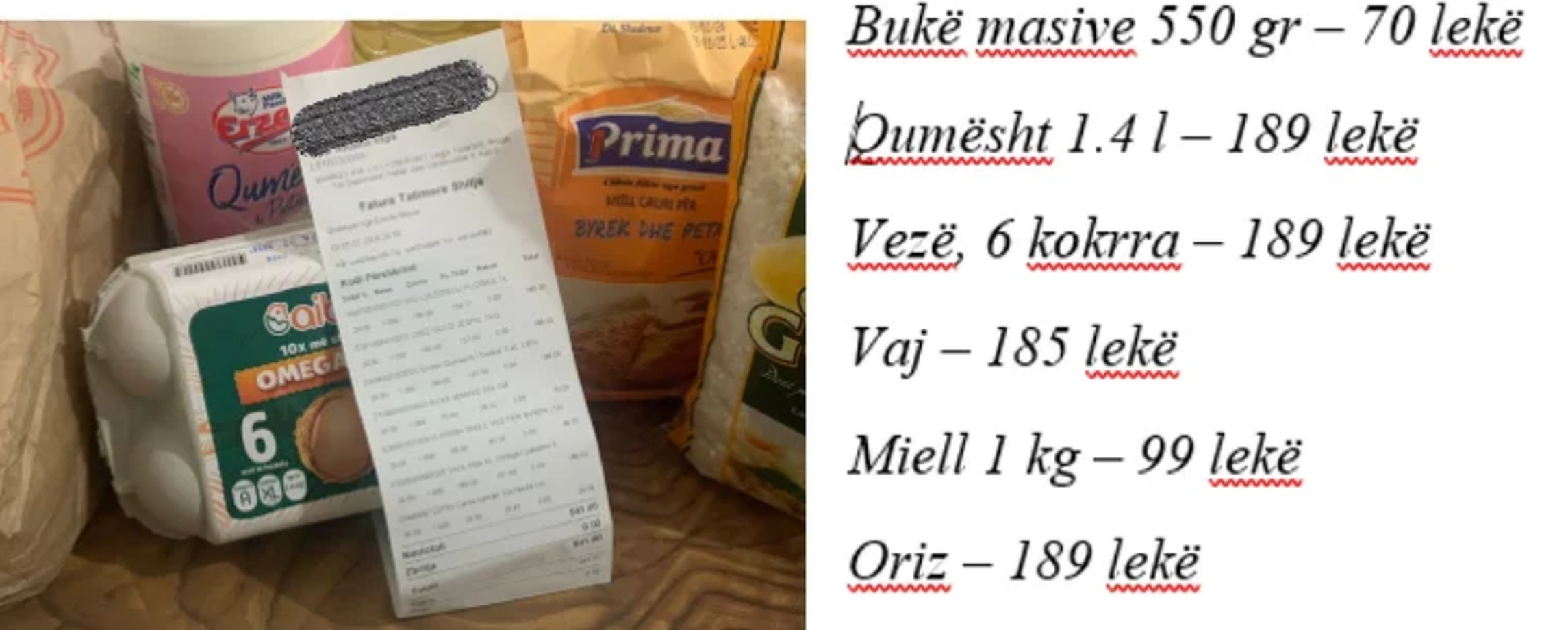
Agimi has to spend a tenth of her pension (941 ALL) for only six food products. If the VAT was zero, he would pay somewhere around 780 ALL. (Which are expensive for the pension you get anyway.)

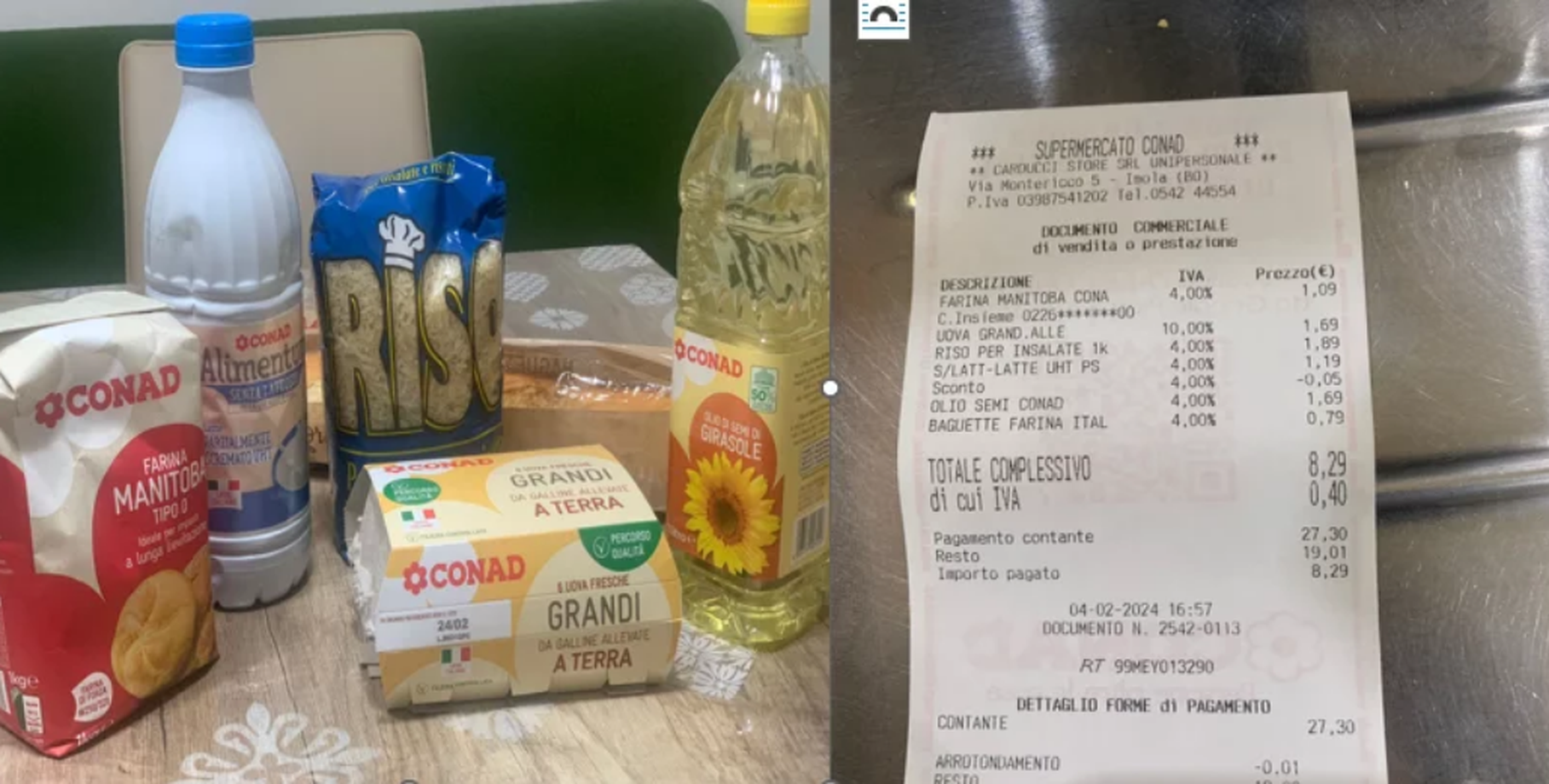
While ironically, in Imola (an area near Bologna) in Italy, where the average pension ranges from 800 to 1100 euros, the same products cost less than in Tirana.
The purchase of six products in Italy cost 8.29 euros (equal to 865 ALL). Furthermore, the VAT for food products in Italy ranges from 4-5%.

Food VAT propaganda
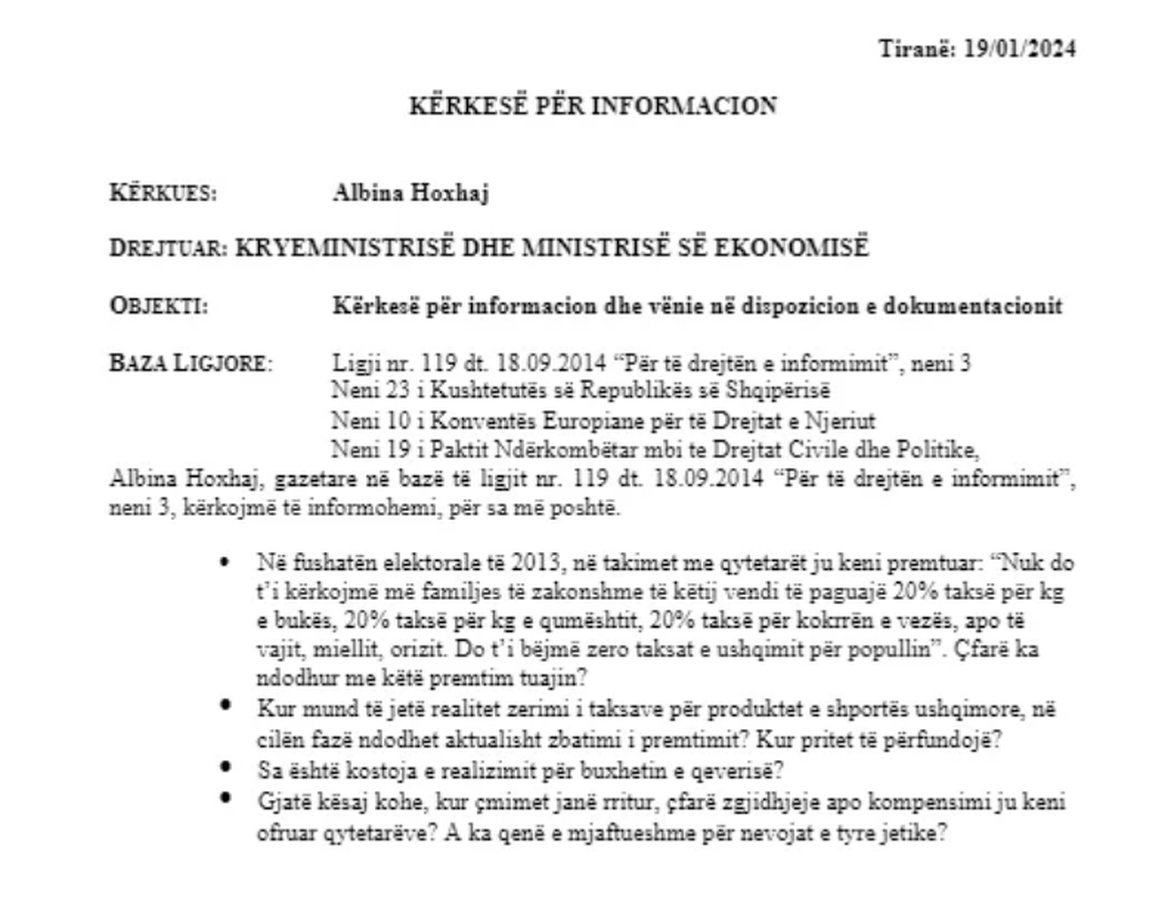
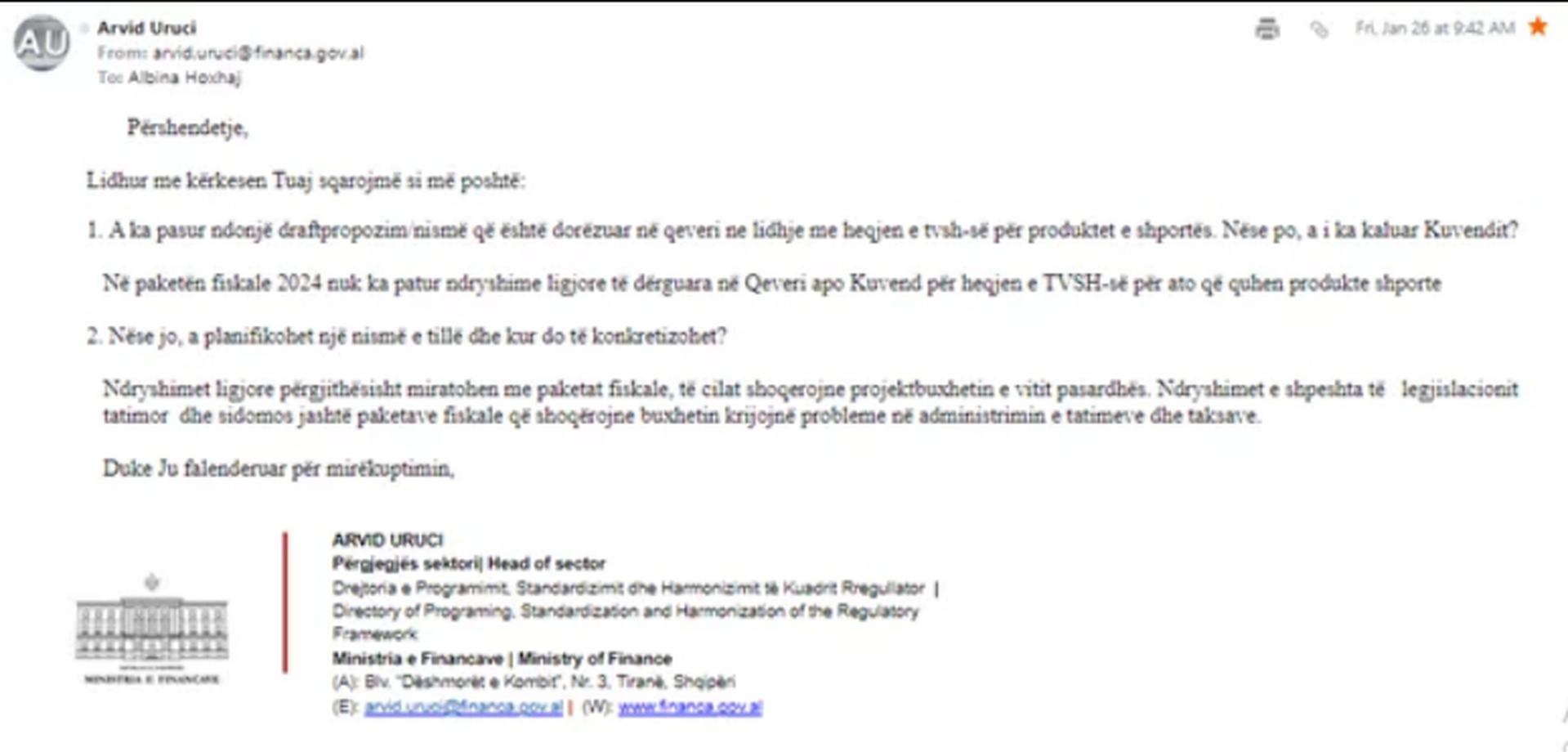
Faktoje addressed a request for information to the Council of Ministers, the Prime Minister and the Ministry of Finance on January 19 to understand if any initiative was ever taken to realize the most sensational promise of 2013.

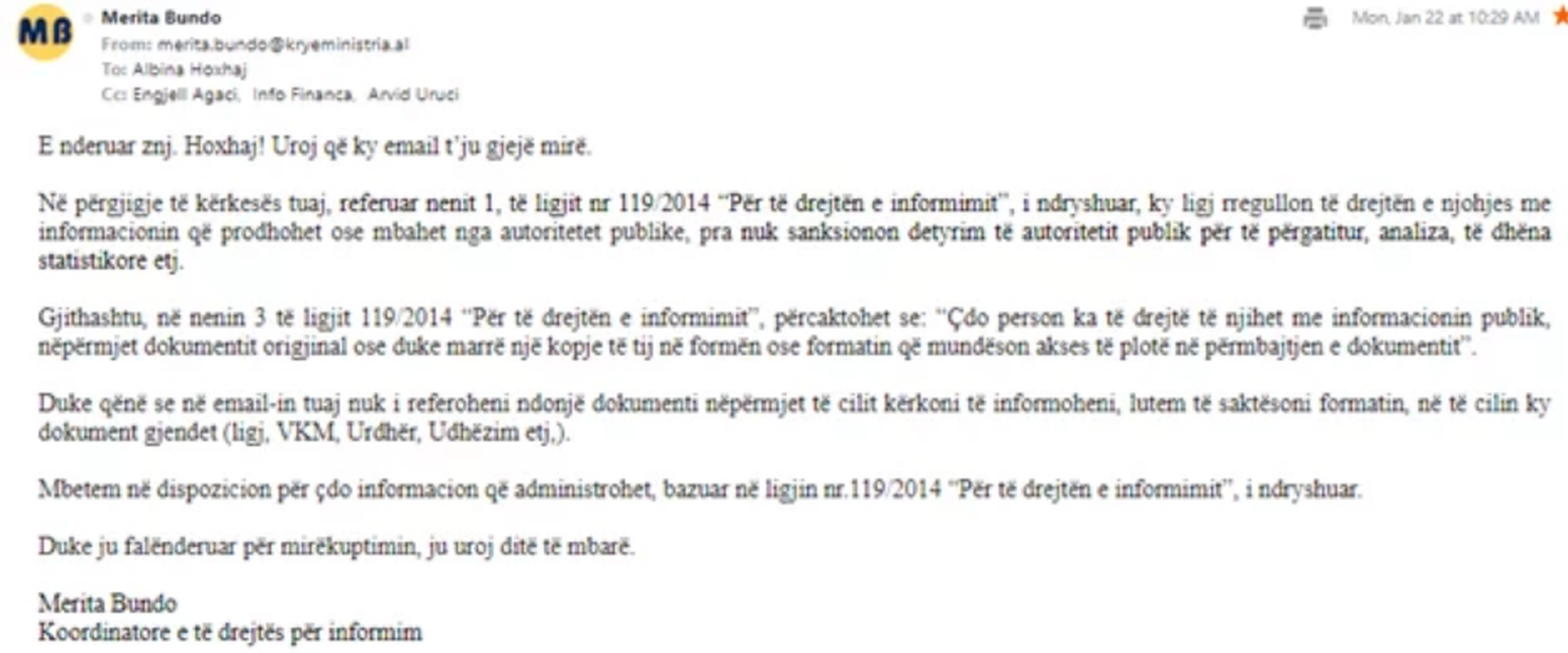
From the press office of the prime minister, we received as an answer a well-known argument when responsibilities are avoided.
"Since in your email you do not refer to any document through which you seek to be informed, please specify the format in which this document is found."
In order to provide an exhaustive answer, we followed the logic of how an electoral promise is implemented.

The program with which the political force came to power had to be analyzed by experts and year after year, its implementation should be carried out. How would the removal of VAT for basket foods become a reality?
The relevant Ministry in cooperation with the Ministry of Finance prepares a draft, which it sends to the Council of Ministers, the draft is discussed, goes to parliamentary committees, then to the Parliament where it is voted on and finally implemented.
Economic affairs expert and former minister, Zef Preçi, explains that none of these steps have taken place.
"There is a missing data on the level of poverty. The experts had to carry out a detailed analysis, then the two ministers should propose a draft to the government for the removal of VAT, where it would be discussed and then passed to the Assembly. This would pave the way for the removal or reduction of the 20% VAT", argues Preçi.
Faktoje addressed the Prime Minister and the Ministry of Finance again, asking in the correct form this time, if there is a draft proposal with the initiative to remove VAT on food and if not, when it is planned to have one. In the official response from the Ministry of Finance, it is emphasized, among other things:
"In the 2024 fiscal package, there were no legal changes sent to the Government or Assembly for the removal of VAT for what are called basket products. Legal changes are generally approved with fiscal packages, which accompany the following year's draft budget. Frequent changes in tax legislation and especially outside the fiscal packages that accompany the budget create problems in the administration of taxes and duties."

We live to eat and still not enough!
Pano Soko, an expert on economic issues, calculates to what extent the 20% VAT affects citizens with medium and low incomes.
"The 20% product tax for middle- and low-income families on every purchase takes 1/5 of their expenses, and this category spends almost 100% of their income on food."
The increase in prices after the pandemic meant that citizens could not even secure basic food on their table.
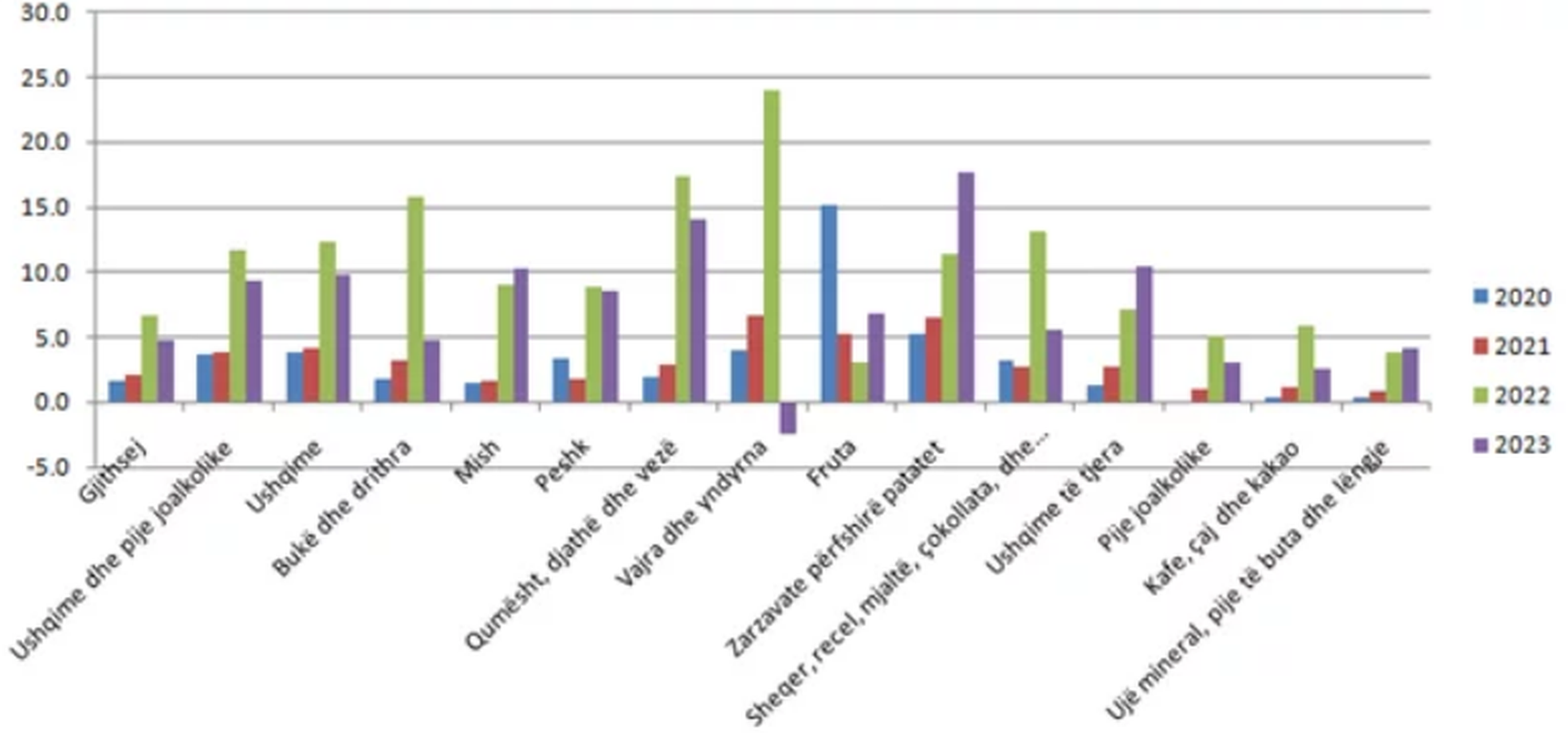
According to INSTAT, the Consumer Price Index in December 2023 reached 115.8 compared to December 2020, which means that the average annual increase in prices in 2023 is 4.8%, while a year ago it was 6.7%.

The reason for this burden, which falls mainly on families in need, according to Sokos, is the great difficulty of institutions to collect taxes. The realization of the electoral promise, the cancellation of taxes would cost the state budget about 100 million euros.
"It is not applied in Albania, due to negligence. It is not that there was an accurate calculation to understand how much it would cost the Albanians, but it could be around 100 million euros for the necessary consumer goods. We are not good at collecting taxes, our institutions fail in collecting them. If it weren't for these consumption taxes, which are the basic VAT, oil taxes or cigarette excise, etc. we find it very difficult to complete the necessary budget that is needed to fulfill the obligations that the Albanian state has", says Soko.
In the absence of VAT reduction, economic expert Klodian Muço suggests:
"VAT differentiation for the products of the consumer basket in our country would be positive, if the control mechanisms by public institutions were efficient. In this way, the price reduction as a result of the VAT reduction will go to the consumers and not remain in the merchants' pockets, as happened when the VAT was removed from educational services or when it was reduced in the hotel industry. These types of policies are implemented in certain moments of crisis or high inflation"
According to him, this enforcement policy should be temporary for two reasons.
"First, private savings (bank deposits) have increased. Savings increased during the pandemic and considering the increase in prices resulting from inflation that is affecting the whole world, the best way to support consumption is to reduce VAT and curb saving. Secondly, Albania is a country with high VAT evasion, its differentiation and reduction for food products will help honest traders as they will sell more", explains Muço.
The only initiative to reduce VAT was dropped in 2022
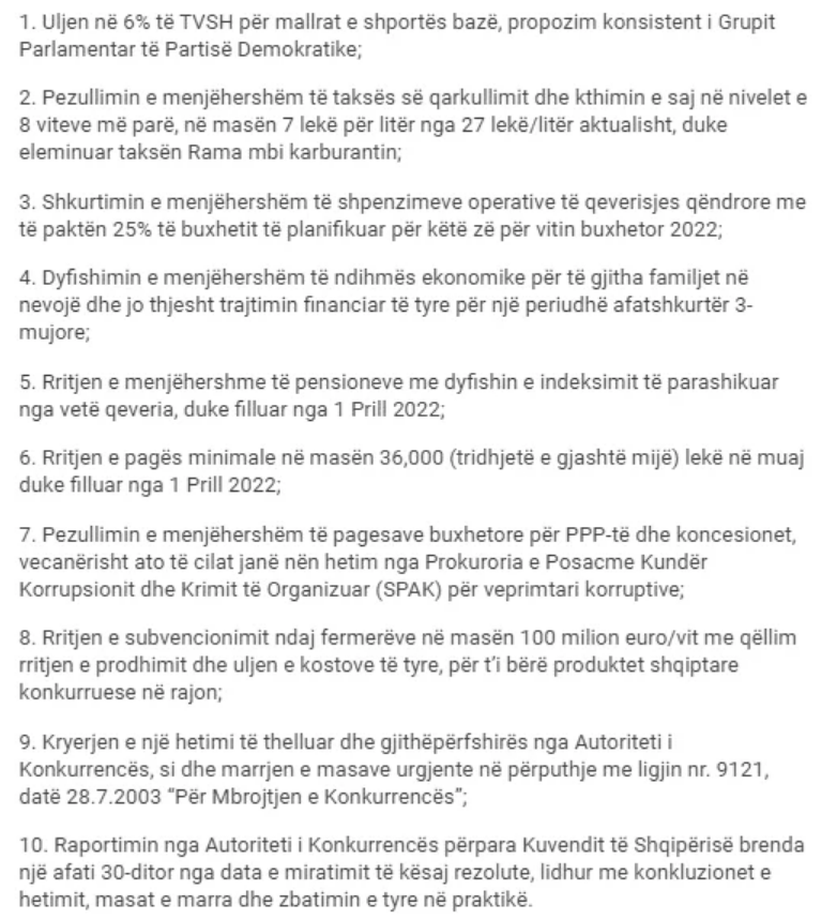
With the failure of the utopian promise of abstinence after coming to power, the opposition presented in 2022 the initiative to reduce the VAT to 6% for basket foods. Presented in the form of a 10-point draft, the DP asked the Assembly for approval, but the initiative was defeated by votes against by the parliamentary majority on March 24 of that year.

INSTAT: 39% of income is spent on food
The INSTAT report for 2022, for food, finds that families spend 39.7%, equal to almost half of the income, which comes with an increase of 0.3% from the previous year.
Europe spent an average of 13.6% of the total budget on food, almost three times less than Albania.
Since 1996, when Albania started applying VAT, the rate has not changed, remaining at the same levels, 20%. In the neighboring countries of the Western Balkans, but also in the EU countries, reduced or temporary rates are applied in order to facilitate the citizens. While the average for food products is 9%. Albania does not apply reduced VAT for Food and Basket Products, thus remaining the country with the highest percentage of VAT for these products in Europe and the Western Balkans.
Meanwhile, Serbia applies a 10% tax on basic items, Kosovo 8%, Montenegro 7%, North Macedonia 5%. Even Bosnia and Herzegovina, which does not apply a reduced rate, has a lower fiscal burden, since the standard rate is 17%, again lower than that of Albania.
"Other countries are no longer institutionally weak and therefore have decided to reduce VAT and shift the fiscal weight from consumption to poor families to capital. This is what countries do when they develop. We have not yet developed, we are not at the level of the countries of the region, because even the countries of the region have escalated the VAT" - explains Soko to Faktoje, the reasons why other countries apply a reduced tax compared to Albania.
cONcluSiON
From the verification carried out and the information collected, we decided to categorize the promise of the 2013 campaign, for reducing the VAT on basic foods, as an Unkept Promise.