Is this police force professional and capable of handling violen...
/ 2026-10-16 18:54:07Focus


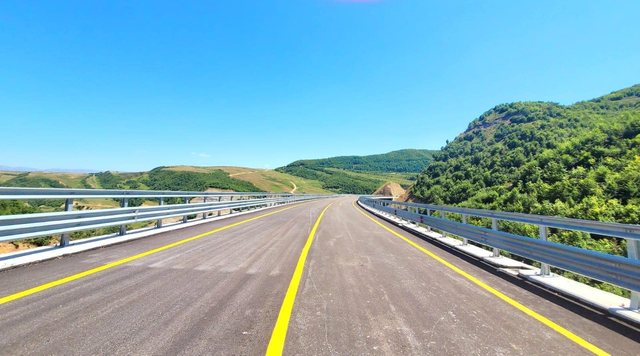
Designed in 2009, the Qukës - Qafë Plloçë road has gone through an odyssey of broken electoral promises from both sides of politics.
The first was Sali Berisha, then prime minister, who promised the construction of the road on the eve of the campaign for the 2009 parliamentary elections. The statement met with objections from the road infrastructure works engineers, with the following arguments:
First, the feasibility study was missing, without which the project could not start.
Secondly, a significant part of the road, 3-4 kilometers, is at 1,300 meters above sea level, which would make this axis impassable during frosts.
Thirdly, the lack of efficiency of the project, an unavoidable condition that, according to experts, is defined in the standards.
For the exit to Korçë, the Qukës - Qafë Plloçë road shortens only 2.5 kilometers of distance, almost negligible if you consider the construction costs. Even in terms of time, this variant will be even longer than the existing road. Despite the objections from the professionals, the former "Berisha" government did not hesitate to cut the electoral ribbon and start the works in 2011, propagandizing that with this project it was fulfilling its commitment to help the mountain villages of Mokra get out of the "isolation".
This propaganda is dismissed by engineers as an absurdity, which is explained by the lack of a full feasibility study. If it was about connecting and getting out of the "isolation" of these villages, it was not necessary to build a road of these staggering parameters and costs, which today has doubled and every day of delay only increases the expenses at the expense of the taxpayers.
Verification on the ground
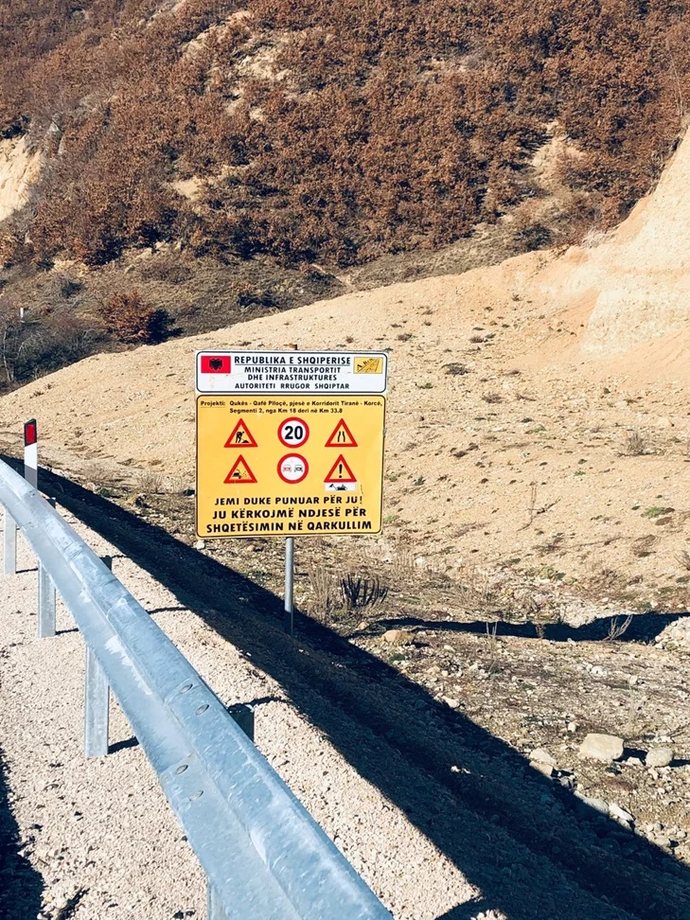
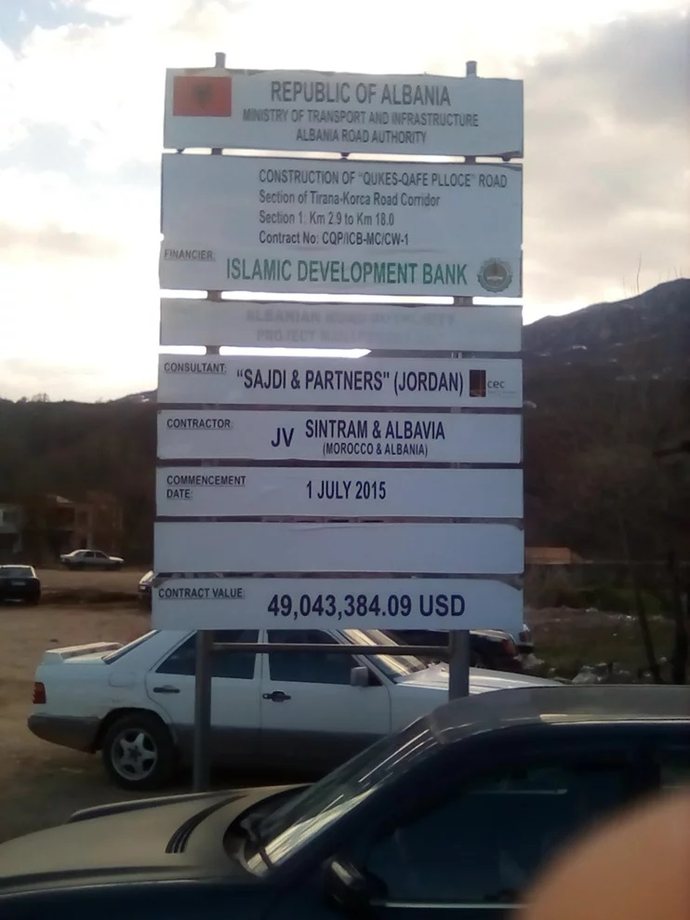
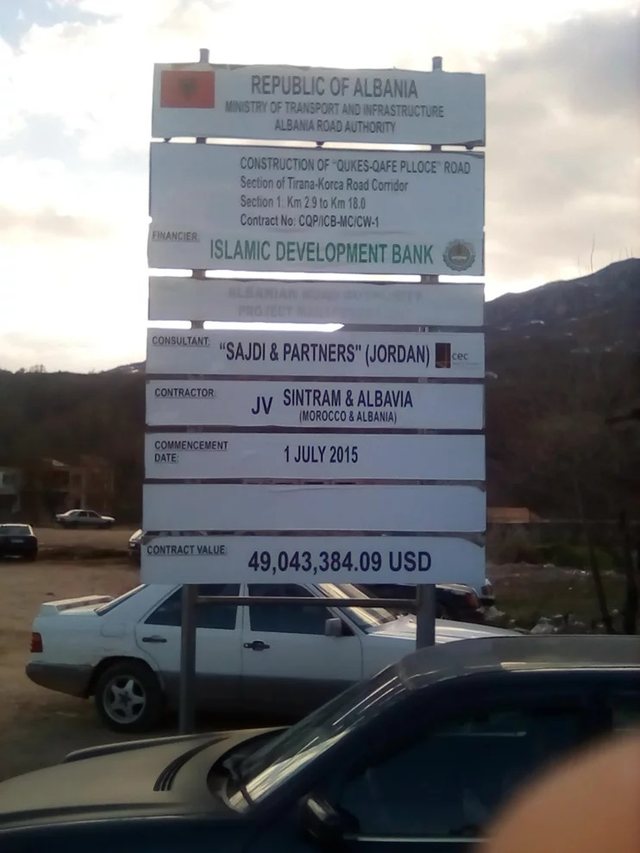
At the end of January 2024, we tried to cross the "new" road that starts at the entrance of the village of Qukes i Librazhdi where the old sign that shows the start of the works in 2015 and the initial value of the project stands as a relic.
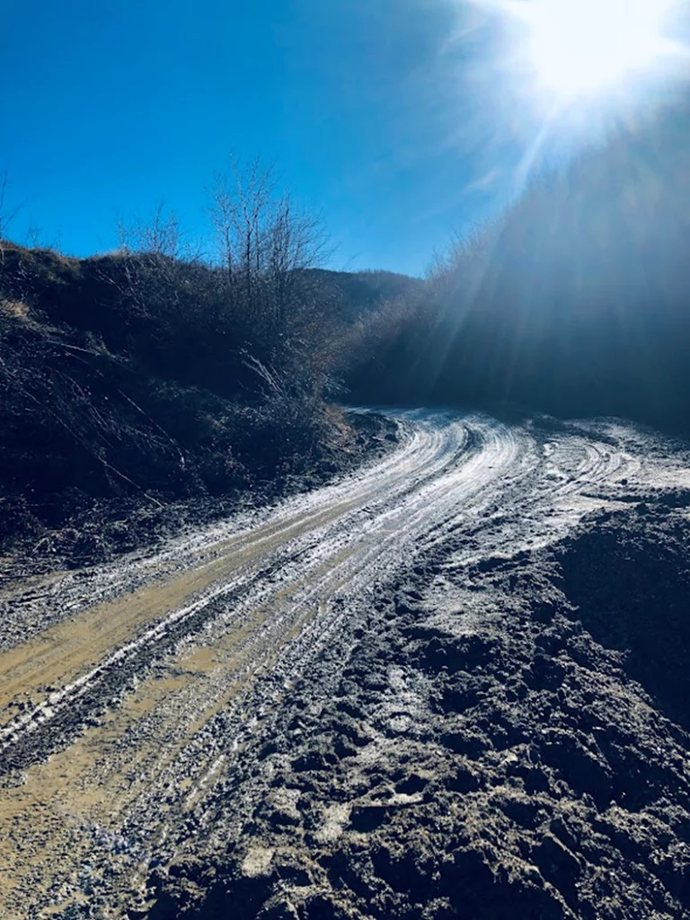
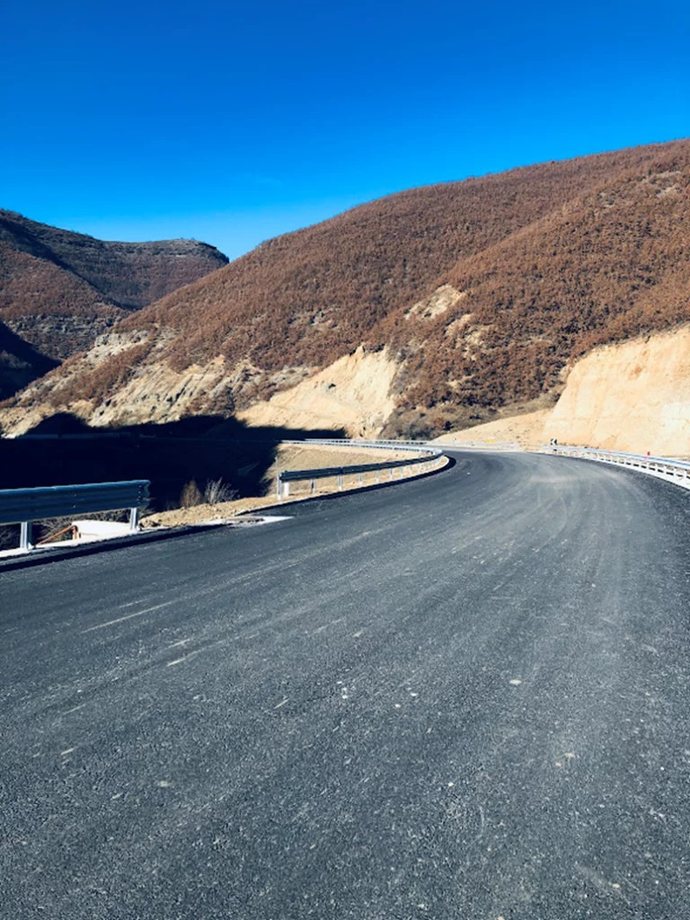
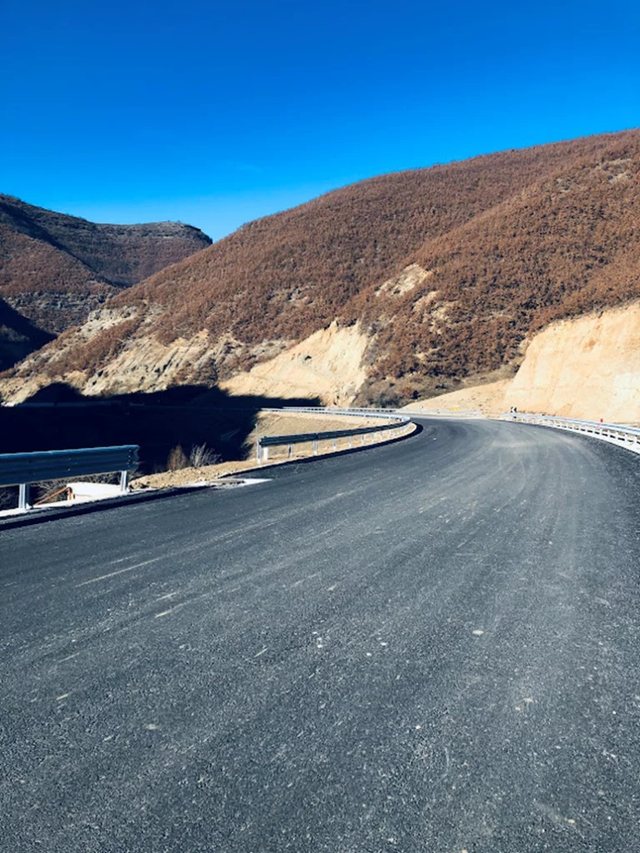
Along the way we encountered irregularly paved segments, part of the first two sections, but not connected continuously to the complete package of this project. The end part, partially open, is completely unbuilt.
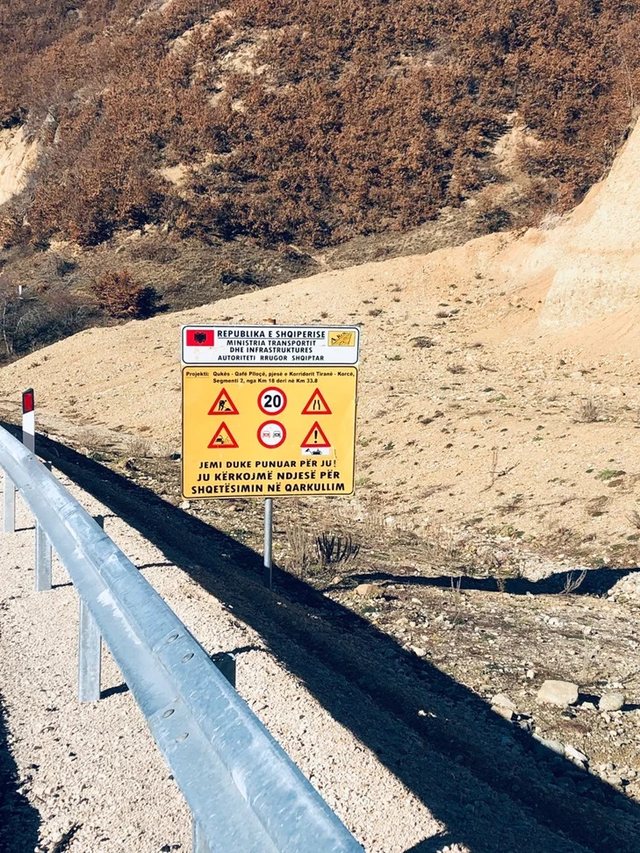
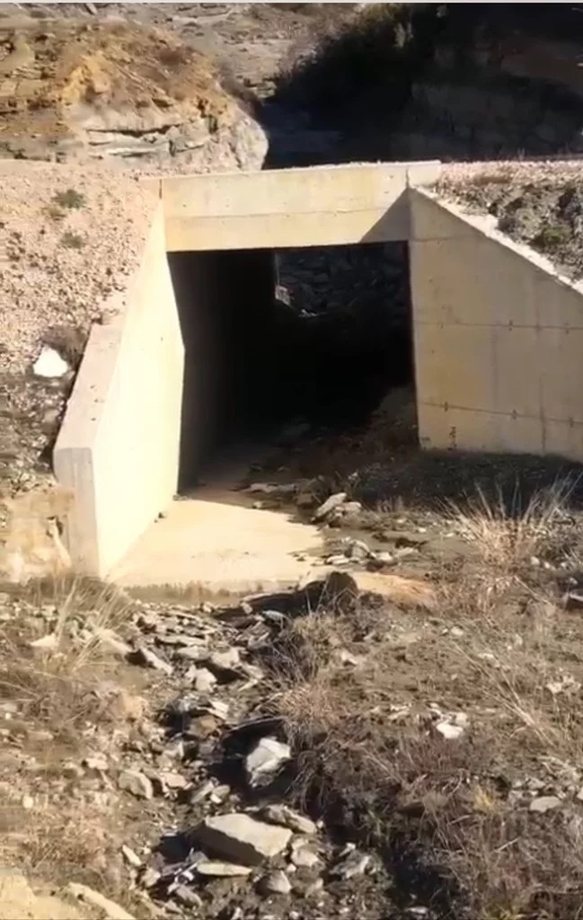
Paved is the segment after the village of Trebinjë of Upper Mokra to the exit of the village of Kalivaç, specifically to the tunnel built under the area known as the "graveyard of the Greeks". Above this tunnel follows the old road, (without any safety standard) that leads to the city of Pogradec and that has no connection with the new artery as foreseen in the project.
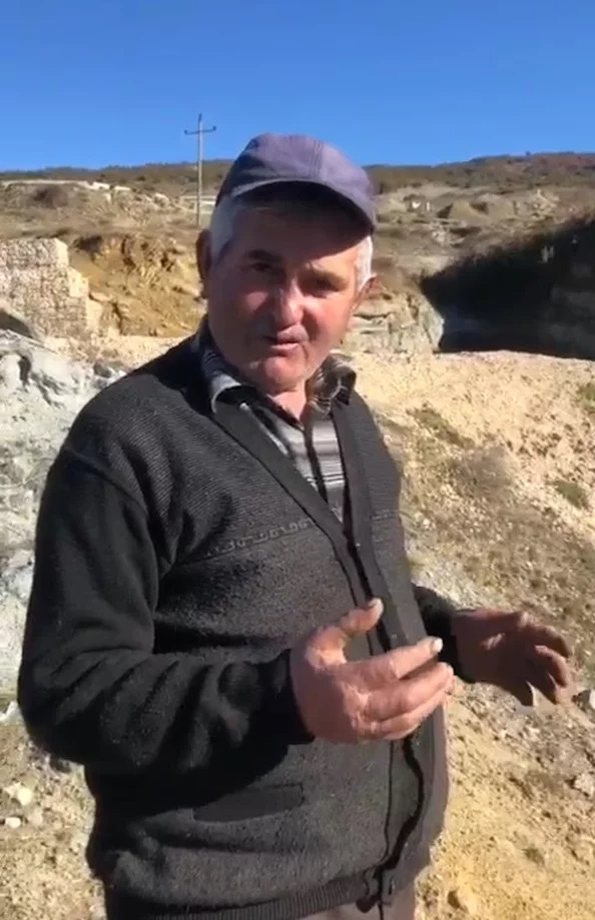
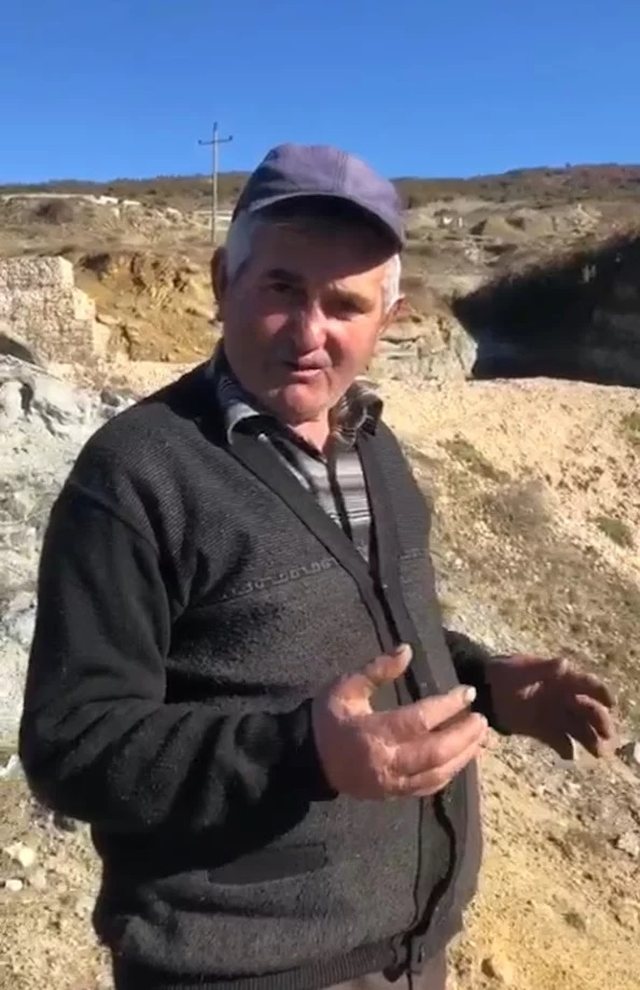
There we meet 65-year-old Josif Sillo, born and raised in the village of Potgozhan in Upper Mokra. Josif and other farmers from the surrounding villages have linked their lives with livestock and for them the main concern is how to cross the cattle, in a work that only allows animals to cross the road in the presence of traffic.
"There is no underpass near our village, we are forced to take the cattle between the villages of Kalivaç to use the underpass. The animals are currently crossing the road as there is no traffic, but when the flow of cars starts, it will happen to us as it happened to them in Labinot", says Josifi.
The authorities are so uninterested in listening to the complaints of the residents, who have dedicated their lives to livestock, that Josifi says:
"We do not ask to put them in a difficult position to build a new underpass for our village, but at least to systematize the land in front of the dry stream (completed as a wide concrete channel for the passage of water), for the passage of cattle in times of drought.
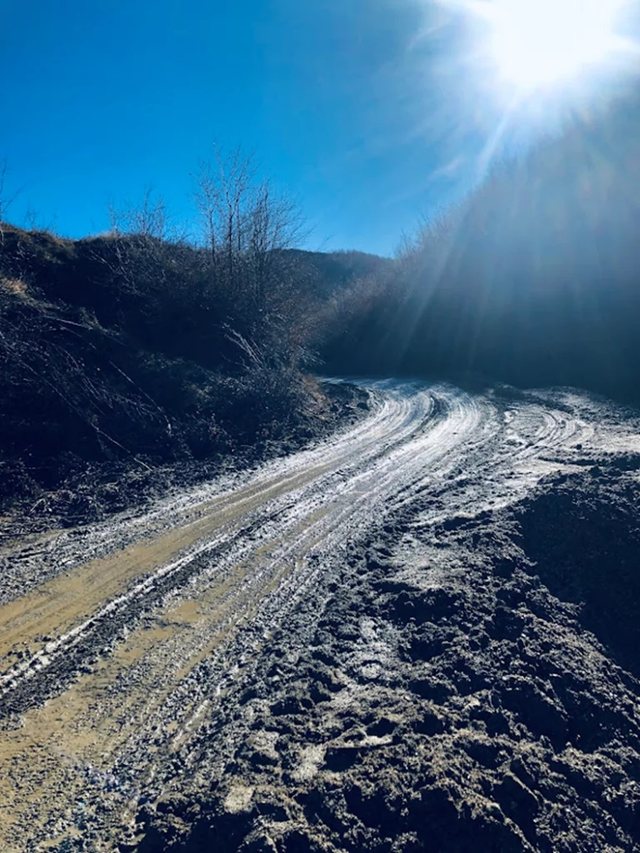
This would be the best and cheapest solution!". After parting with the 65-year-old man from the place known as the "cherry area", we crossed the road to reach the exit tunnel that connects to the third segment of this road. So far, only the opening of the route has been carried out, while the road that will be traversed by the exit tunnels (which will serve for the return from Qafë Plloça towards Qukes) has only been asphalted for a few meters. From now on, the tunnel does not allow any exit. Looking closely at the work on the third lot of the road, it seems almost unfinished, warning that the end is still far away.
The head of ARRSH himself, Evis Berberi, declared last September that 37% of the works had been completed for Lot III and that they were expected to be completed on July 31, 2025.
Meanwhile, an engineer who is closely familiar with the progress of the works on condition of anonymity stated for Faktoje that it will take at least 4-5 years for the construction of this lot: "Only the route has been opened, since only the removal of soil takes up to 30% of the volume of the works. So nothing has been done for the third lot that allows access to Qafë Plloë. The works of this lot cannot be completed until 2025, but at this rate, it will take another 4 to 5 years. Even for the other two lots that are declared to have completed 76% of the works, the segments are without continuity between them".
"Old" project, "new" invoices
In 2013, with the coming to power of the socialists, the road works continued according to the previous government's project, only the subcontracting companies were changed and the invoices were added.
On January 26, 2018, Damian Gjiknuri, the Minister of Infrastructure at the time, while inspecting the works, hastened to declare that the Qukës-Qafë Plloë road would be completed a year later:
"It was one of the inherited projects with many problems, but which is entering the solution path. With the additional funding, we are convinced that within a period of 1 year this road will be completed. The deadline passed and the road did not end.
From a check of the MIE Monitoring report for 2021, in the section "Expenditures for the financing of existing policies for ongoing projects for foreign financing", we learn that the works for the first and second sections of the road would be completed in 2021 .
According to these data, until December 31, 2020, the works were completed to the extent of 68%. The realization of the project is divided into 3 lots with a total cost of 18.2 billion ALL, with foreign and Albanian Road Authority (ARSH) funding. Referring to the data reflected in the MIE Monitoring report, from 2015 to December 31, 2020, 12.2 billion ALL were spent for the construction of 3 lots of the project from the total value of the contract.
For Lot I of the Qukës-Qafë Plloë road, referring to the published data, the contract started in 2015 was worth 5.4 billion ALL, but by the end of 2020, 4.1 billion ALL had been spent, equal to 76 % of the fund. The monitoring report predicted that the works would be completed in 2021.
For Lot II, the value of the works according to the contract that had started to be implemented in 2015 reached 8 billion ALL. By the end of 2020, ALL 5.7 billion had been spent, or 71% of the work progress.
For Lot III, the contract worth 4.6 billion ALL began to be implemented in 2016. Until December 31, 2020, 2.3 billion ALL, equivalent to 51% of the value, had been spent. For this segment, the works were expected to close in 2019.
In violation of all these deadlines, the Qukës - Qafë Plloçë road is still far from completion.
In the interpellation of September 22, 2021, the Minister of Infrastructure and Energy, Belinda Balluku, stated from the floor of the Parliament of Albania, that the deadlines for the completion of Lots I and II, expected to be closed in 2021 (also referred to the monitoring report), were postponed by more than a year, with an additional bill of $106 million (USD). "The change of the project has also been accompanied by additional financial effects for each lot, as well as the postponement of the deadline for the completion of these works, which are April 2021. Although the last disbursement deadline for the first 2 lots is April 30, 2021, ARRSH has requested a postponement of the deadline for the works until December 31, 2022", Minister Balluku declared during the interpellation about this road.
The golden cost of Quka-Qafë Plloë
The deadlines for the completion of the road have been postponed at least 4 times and the additional costs in the budget have been approved at least twice, resulting in the doubling of the initial cost of the project. By the end of December 2022, the financial bill for the construction of the first two sections was estimated at USD 168 million as confirmed by the project managers at ARRSH. In total, the financial bill for the construction of the road, including the additional loan worth 49 million USD from the Saudi Development Fund, has reached 217 million USD.
"Until now, about 73% of the project works have been completed. The road segments completed so far with two asphalt layers are Km 2.9 - Km 10.5 and Km 21.8 - Km 33.5. The sections mentioned above are accessible. But these sections are still in the process of being completed with all the road safety elements. The project is expected to be completed by December 2024", ARRSH emphasized earlier in an official response to Monitor.al.
Engineers anticipate costs multiplying by the time the project is completed. "Until the end of 2022, the cost of the road reached the value of 273 million USD. This project meanwhile was expected to be completed at a cost of 150 USD. So by the end of 2022 the cost is almost double. Until its completion, the cost will reach the value of 400 million USD. So almost quadrupled from what was predicted at the beginning", one of the well-known engineers of infrastructure works declared anonymously for Faktoje.
Road project in letters and numbers
The project for Qukës - Qafë Plloë will have a length of about 43.3 km, divided into 3 lots.
Lot I and II (km 2.9–km 33.8) have been made possible through the financing of the Islamic Development Bank, for Lot 3 (km 33.8 – km 40.5) from the Saudi Development Fund and for Lot 0 (km 0.0 – km 2.9) from the Albanian Government .
For the start of works on Lot III, which is considered the "Achilles' heel" of the axis, the Parliament of Albania ratified on December 19, 2022 the loan agreement for the loan worth 49 million USD. Before the approval in the plenary session of the agreement, the deputy minister of MIE, Mrs. Enkeleda Muçaj stated that the deadline for closing the road works was within 2024.
The road in the first 10 kilometers runs along the Shkumbin River and then continues in the Mokra highlands, an area with steep relief that requires a large number of retaining and retaining walls, over 20 bridges and viaducts as well as a 375 meter long tunnel.
The road will have a width of 12 meters, of which two lanes with a width of 3.75 m each, two paved sidewalks with a width of 1.5 m each and 2 unpaved sidewalks with a width of 1 meter each. The Qukës - Qafë Plloë project has been widely trumpeted as part of the VIII Pan-European Corridor. But for the engineers, the road is considered completely useless, to serve the continuation of the Corridor VIII project that joins the highway coming from Kapshtica, since it does not contain the parameters of a highway. For the engineers, the Qukës - Qafë Plloçë road is only a national axis, which is not known when it will be finished, impassable during the winter season due to frost and which becomes an obstacle for the community of cattle breeders and farmers, who cannot extract animals on a road with vehicle traffic.
Conclusion
Based on the information gathered and field verification, we consider the government's promise to complete the road at the end of July 2025 unrealizable and used for electoral propaganda. The delay of works and the multiplication of costs, as experts argue, remain among the main problems for the realization of this project. The delay of the project is considered as "swallowing" of money from the state budget/ factoje.al