Is this police force professional and capable of handling violen...
/ 2026-10-16 18:54:07Focus


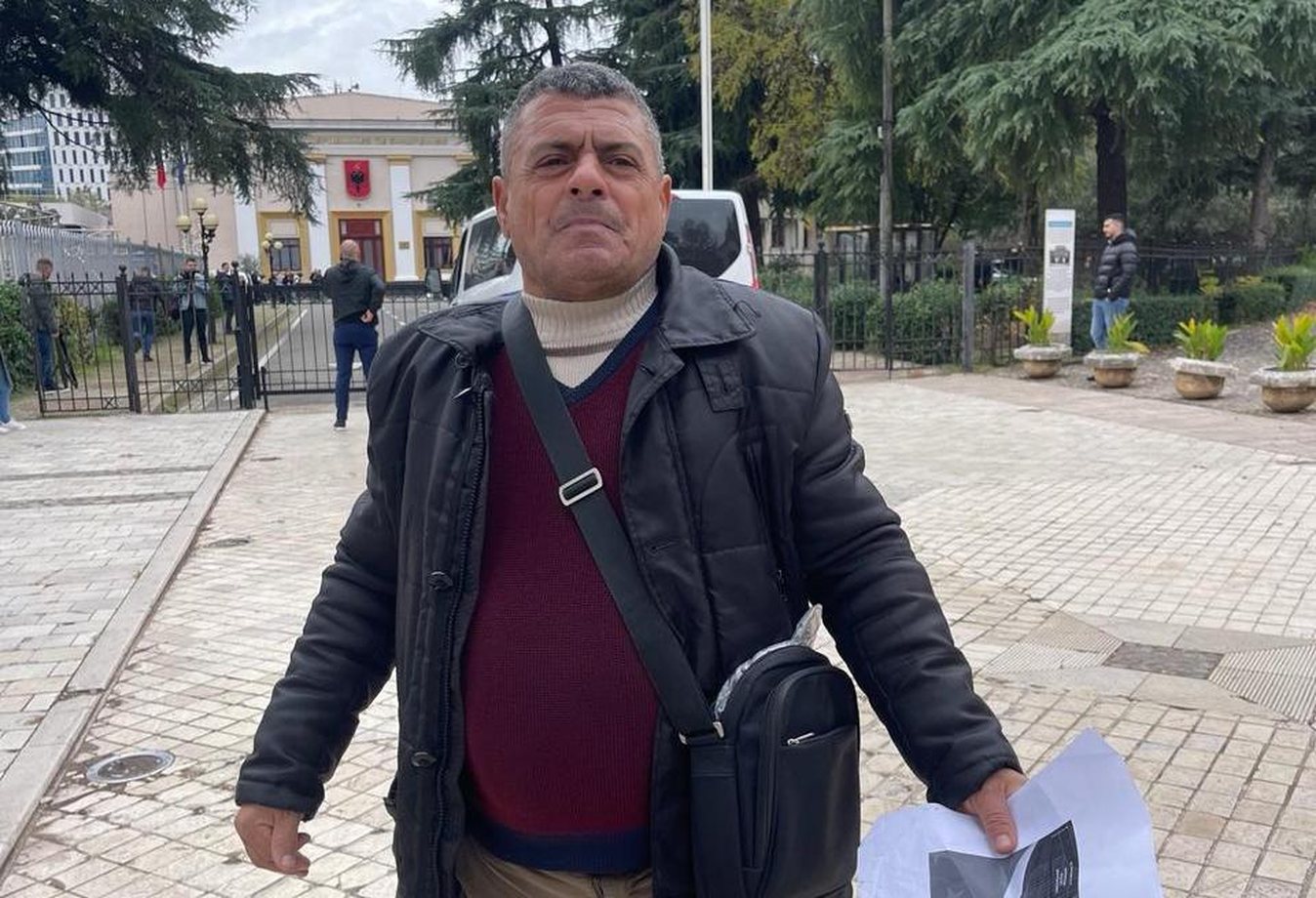
Disappointed that even this Thursday (December 21) he could not meet any of the deputies of the area, Ferik Imeraj sits down to light a cigarette.
" It's the third time I've come (to the Parliament) from Mallakastra, but no one approached me ," says the 50-year-old, who is seeking help for a disability payment.
Like Ferik, dozens of citizens travel on Thursdays from the districts, hoping to meet a member of parliament near the Parliament.

"But where can I find them, in Mallakastër or in Fier?" They do not come to meetings after the elections. They don't answer the phone", complains Imeraj, who rushes to catch the last van to take him home.
The Assembly of Albania decided in 2014 to open 24 deputies' offices in each district center. One office would be at the disposal of the majority and another at the disposal of the opposition, but after 9 years these offices, not only have not been opened throughout the country, but even those that appear officially open, are not at the service of the citizens . Despite the fact that they perform almost no function, they continue to receive millions of Lek every year. On average, the state budget pays about 21 million lek or 200 thousand euros per year only for the salaries of the employees of the deputies' offices, which do not exist. (Average salary 85,000 x 12 months = 1,020,000 ALL x 21 employees = 21,420,000 ALL or 200 thousand euros)
In response to a request for information, the Assembly told INA Media that the opposition does not have an office for the meeting of deputies with voters in Elbasan and Berat districts. In Lezhë, the office for the majority is closed, while in Tirana, the district with the largest number of voters (around 500,000), there is no office of deputies open.
"They have not been opened, for the reason that offices have not been offered by the local government bodies", - explains the Parliament of Albania, while adding that "periodically", the Parliament sends letters to the prefectures, asking them to provide these spaces.
In fact, this institution does not even know the exact addresses of the offices that are functional. The answer that "they are attached to the municipalities in the centers of the districts" was opposed by some of the specialists who are paid by the Assembly to work there.

"We are near the prefecture", - said some of them, but they were not open to give a concrete location over the phone.
"It is in a position that you cannot find easily. It's a bit confused and I can't explain it", said the opposition worker for Dibra district.
"We don't have an office at all. They don't give it to us. They tell us: "Wait". They give it to the majority, but not to us. I work from the party office", said the opposition specialist for the district of Elbasan.
Even the Vlora district employee for the parliamentary minority said that she worked only with one of the opposition MPs and not with all of them. "You can find me only in the personal office of Mr. Bujar Leskaj", she clarified.

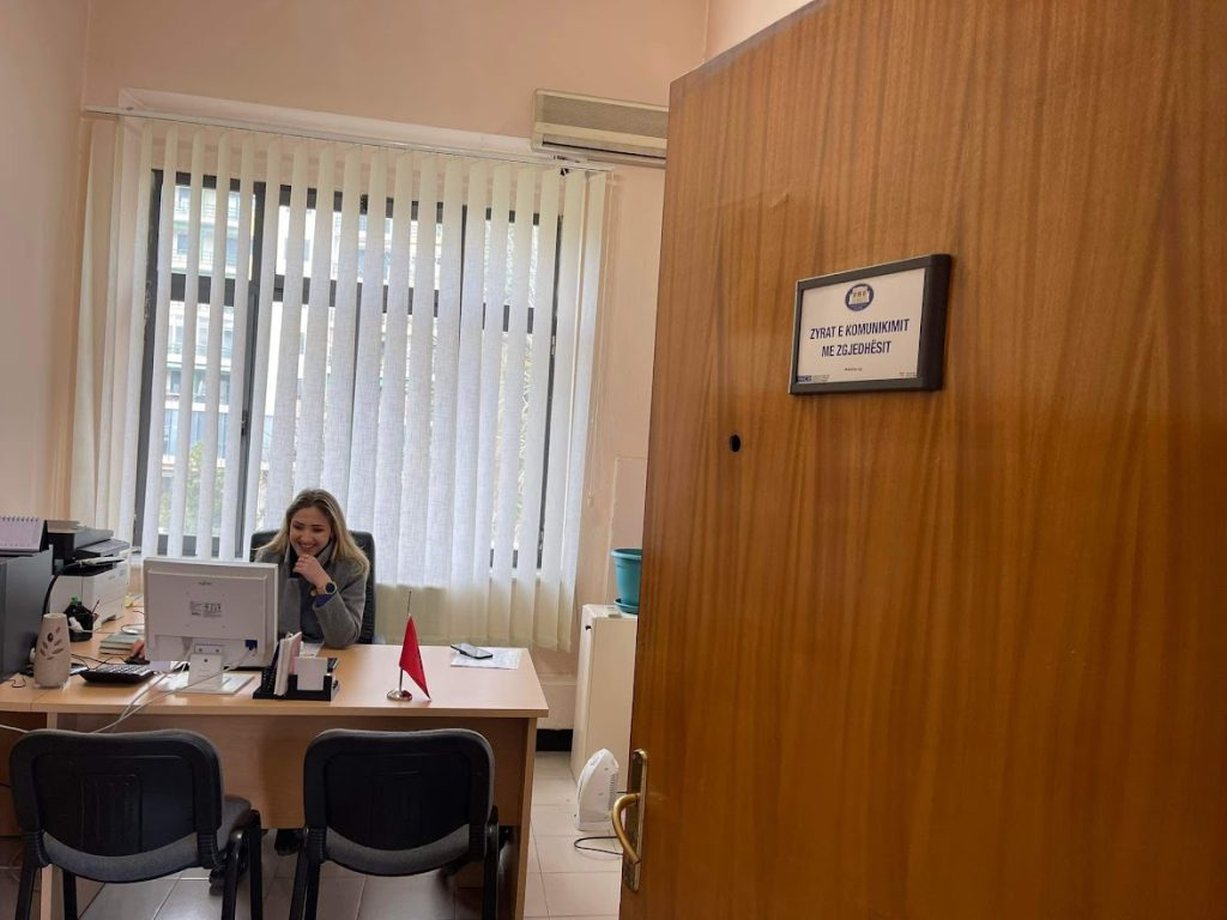
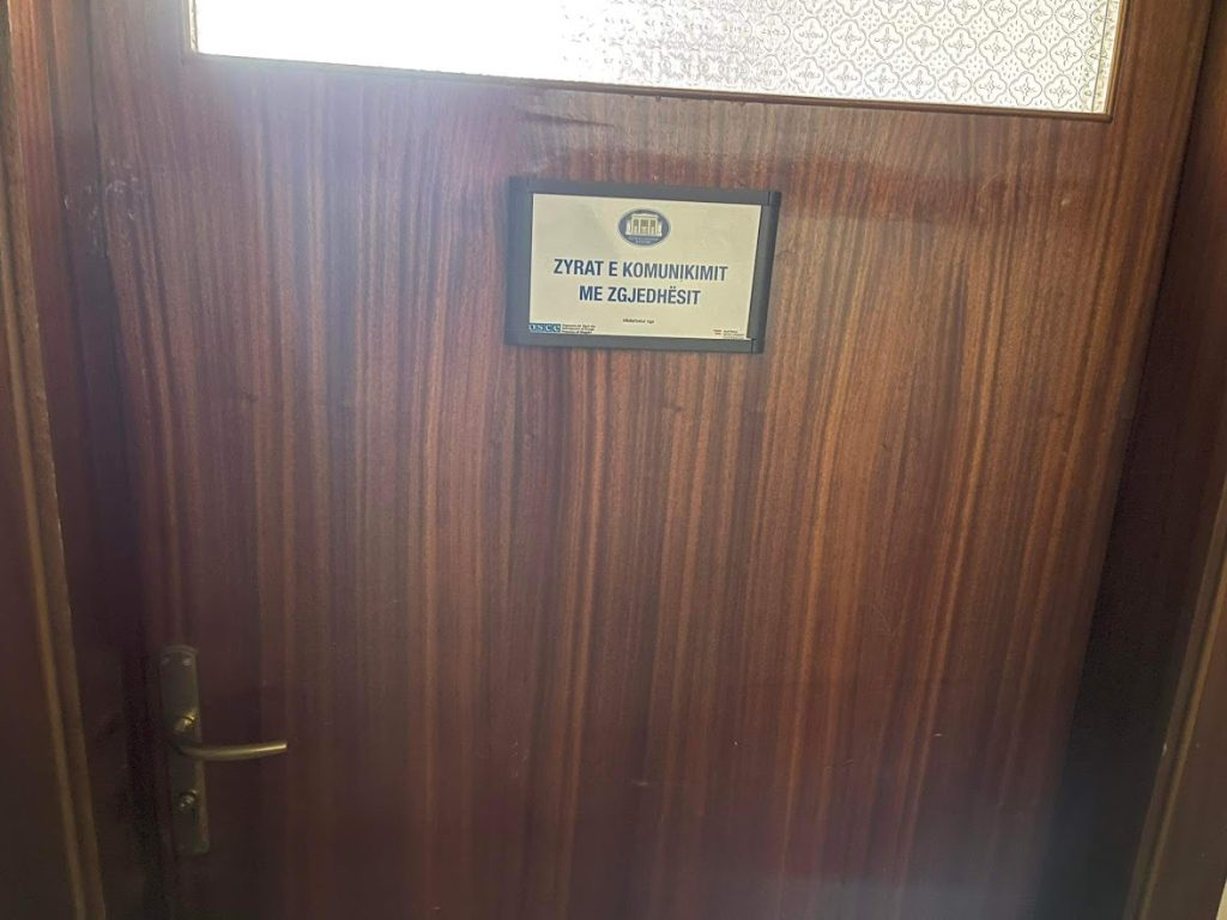
INA Media observed the municipalities, which are the center of the district, but could only find the Kukës and Korçë district offices open. They were visible, with directional signs. In the northern region, both specialists, both the majority and the minority, were at work, while in the Southeast, the office of the opposition was closed.

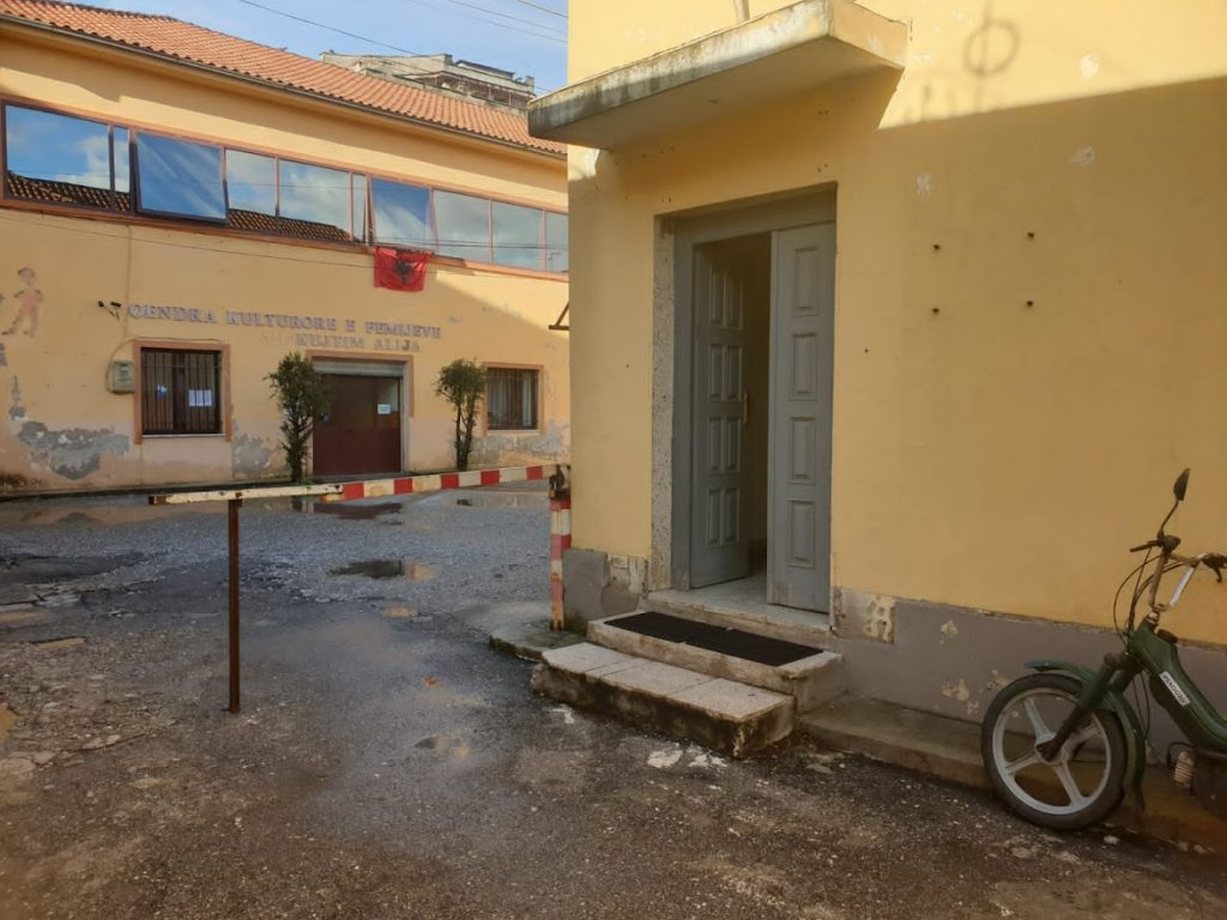
In other districts, it was not possible to find the deputy's office. With difficulty we located the deputy's office in Shkodër, which, as documented by the photos, is in a damp environment and indistinguishable from voters.
In any case, the Parliament has not published, not only the addresses, but also the names and official telephone contacts of the specialists in question.
Neither the two largest parliamentary groups, the Socialist Party and the Democratic Party, made available a list with the correct addresses where voters can find their deputies.
For Afrim Krasniqi, who has been monitoring the Assembly for years as head of the Institute of Political Studies, even though the project of the deputies' office was mainly initiated by the OSCE and had great expectations, "it really doesn't work".
The first reason, according to the researcher, is related to the electoral system, which does not link the MP directly to an electoral district.
"About 20% of deputies, mainly the central figures of politics, move from area to area from one legislature to another, depending on where the political needs of the party are", - argues Krasniqi.
The head of the Institute of Political Studies underlines that the concept of turning these offices into information points for citizens, gathering their complaints or conducting consultations with voters, has also not been fulfilled.
"Deputies have traditionally used their political party offices to perform these functions. Also, the offices are in the center of the district. The deputy of Tropoja, for example, has to travel half a day to go to Kukës, where the district center and the office of the deputy are located", Krasniqi told INA Media.
There is no waiting calendar for citizens
On the source road, INA Media secured the telephone contacts of 21 people that the Assembly pays for the offices of deputies in the districts. Only 16 of them were accessible by phone. They were contacted in the middle of October to ask them in advance if they had scheduled times for the Green Week (October 23-29), where the voters could find the deputies there.
Only the specialist of the opposition in Dibër and that of the majority in Durrës said with certainty a schedule and a precise place where the citizen could meet the deputy during the week dedicated to the voters. Others denied having a calendar or a record kept of the number of citizens they had received and the issues they had presented.
"We don't have a calendar, I only talk to the boss, Minister Kumbaro, who is the political leader of the district, I don't keep in touch with other MPs. You can tell me the concern and I pass it on to the boss. You can find me in the office around 11 o'clock", Kushulle Kore (of the majority) answered over the phone, in Gjirokastër.
Even Anita Doçi from the opposition, in Tirana, affirmed that there were no meetings with a preliminary program.
"Tirana MPs meet the voters themselves, not organized by my office. You understand that the situation in the party also affects it. The deputies have not expressed a desire to organize meetings with the community", she said, clarifying that there was no office, but we could find it near the Assembly.
In the district of Fier, the employee for the majority, Erinda Tahiri, said that the MPs of the area had no scheduled meetings for this Green Week.
"We have never had a preliminary calendar, so that it is announced and people know, so that they can come", she explained.
The opposition specialist for this district, Burhan Misraj, expressed his concern that he did not have an office, but that "he would try to organize a meeting with a deputy".
The absence of an office for the opposition was also raised by Xhoana Mezini from Durrës.
"We have no scheduled meetings. They haven't opened an office for us and you can find us at the headquarters of the DP", she said.
The office of the parliamentary majority in Elbasan also works without a calendar. According to Esmeralda Mallosi, SP also holds meetings during other weeks, so they did not have any plans for this Green Week.
"The MPs are on the ground, but you can tell me the problem, I pass it on to the directors, we don't have to wait for the MPs", she insists.
Even the specialist of the SP in Lezhë tries to take over the solution of the problem, without going to the deputy. "Perhaps I will solve it or take the MP on the phone", says Ervisa Gjoka.
Altin Mema, who helps opposition MPs in Lezhë, interprets that "the MPs are not obliged to hold these meetings". He goes on, requesting that, if it is about a citizen who has a problem, we can explain the situation to him with a message and then, according to the topic, he will address it to the "relevant deputy".
The Assembly of Albania asserts that "the civil servants of the Assembly's administration do not have a fixed calendar of hours, when the deputies wait for the citizens during the Green Week".
Neither the two largest parliamentary groups, that of the Socialist Party and that of the Democratic Party, did not give INA Media any concrete calendar of meetings with voters, nor any comments on why they do not have such a practice.
Erjon Tase from the Academy of Political Studies sees the problem of the electoral system, where the MP has lost his role.
"Only a small number of deputies have traditional ties to their area. These are mainly businessmen, who usually solve the problems of the citizens in a personal way, directly influencing the various directors on the case. They do not deal with the problem in the form of policy-making, in order to benefit other individuals, who may not be able to meet the deputy", Tase told INA Media.
He adds that due to political polarization, the deputies do not feel powerful in front of the government and do not undertake to address problems.
"They choose not to face the executive, they have no guarantee. The Parliament itself has a low controlling and influencing power", - emphasizes Tase from the Academy of Political Studies.
While Rigels Xhemollari from the Civic Center thinks that the relationship between the Parliament and citizens in the 33 years of transition remains far from European standards, as far as the Parliament itself embraces the citizens' causes.
"The relationship between MPs and voters is activated only during the campaign, to fade and become distant later during the legislature", Xhemollari explains.
Green Week or "overseas" week
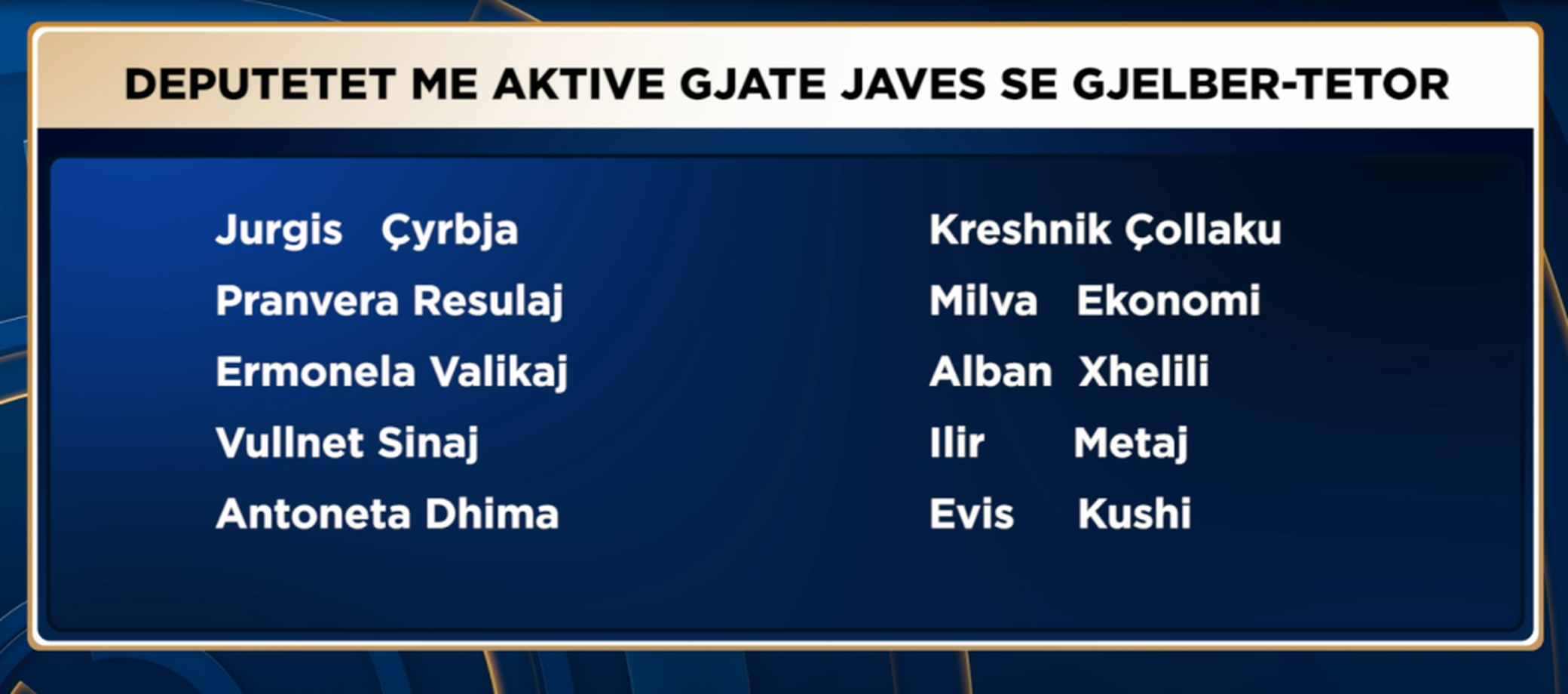
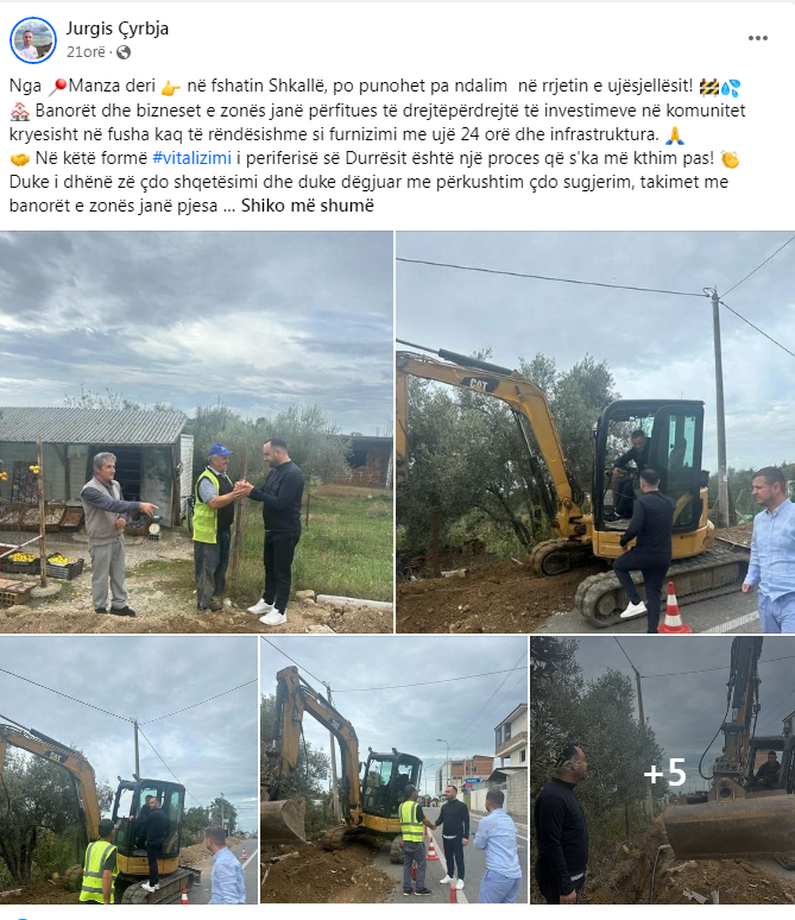
In the same Green Week (October 23-29), in which INA Media asked specialists about the calendar, it also monitored the social networks of 140 deputies, if they had published photos or videos from meetings with their constituents, half of the deputies (70) have not advertised on Facebook, on their official profiles or pages any activity with their direct participation. 27 of them belong to the majority of the Socialist Party and 43 are distributed in different opposition groups.
Only 24 MPs during the Green Week of October organized special meetings with voters on different topics, in small groups, where the legislator is clearly visible, talking and listening to the community.

A broad focus is given to meetings with a background in breast cancer awareness, the vast majority of which are organized by the majority.
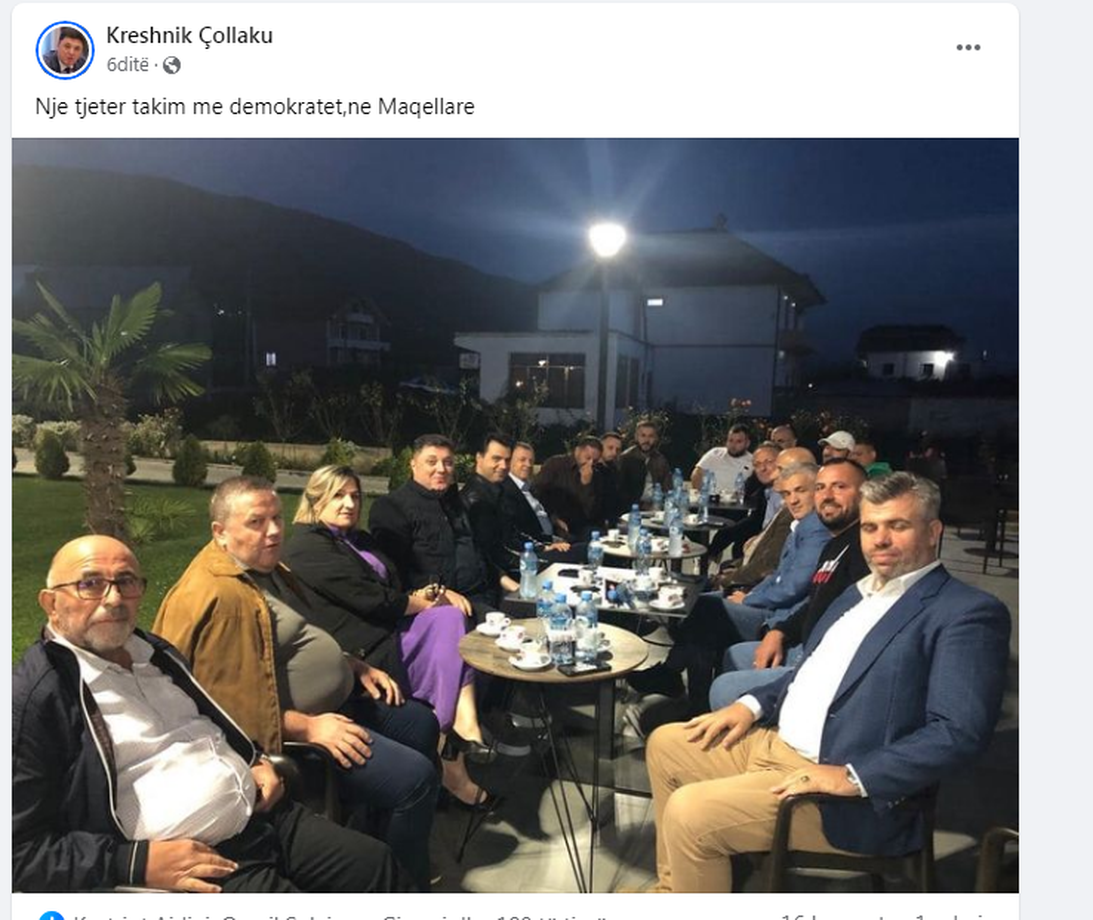
Only 3 members of the opposition have gone to the voters during this week (Lulzim Basha, who has published about 15 different meetings, Kreshnik Çollaku, who has been in his electoral district in Dibër, and Zheni Gjergji, who has undertaken awareness-raising activities in the area her, electoral in Elbasan).

The meetings of the other 9 deputies were focused on the party and not the voters.
Some deputies, mainly from the majority, have had activities, from which it is not clear what the role of the deputy is and cannot be clearly considered as activities with the voters, cases when the deputies accompany the prime minister or ministers in various inspections of government investments.

During the Green Week in October, at least 30 MPs traveled abroad as part of various delegations representing Albania.
The President of the Assembly was in Washington. The entire Commission for Productive Activities conducted an official visit to Rome and 10 MPs participated. Four elected, (Jorida Tabaku, Lavdrim Krashi, Oraldo Rakipi and Arbi Agalliu) from the Commission for European Affairs, visited the Italian senate.
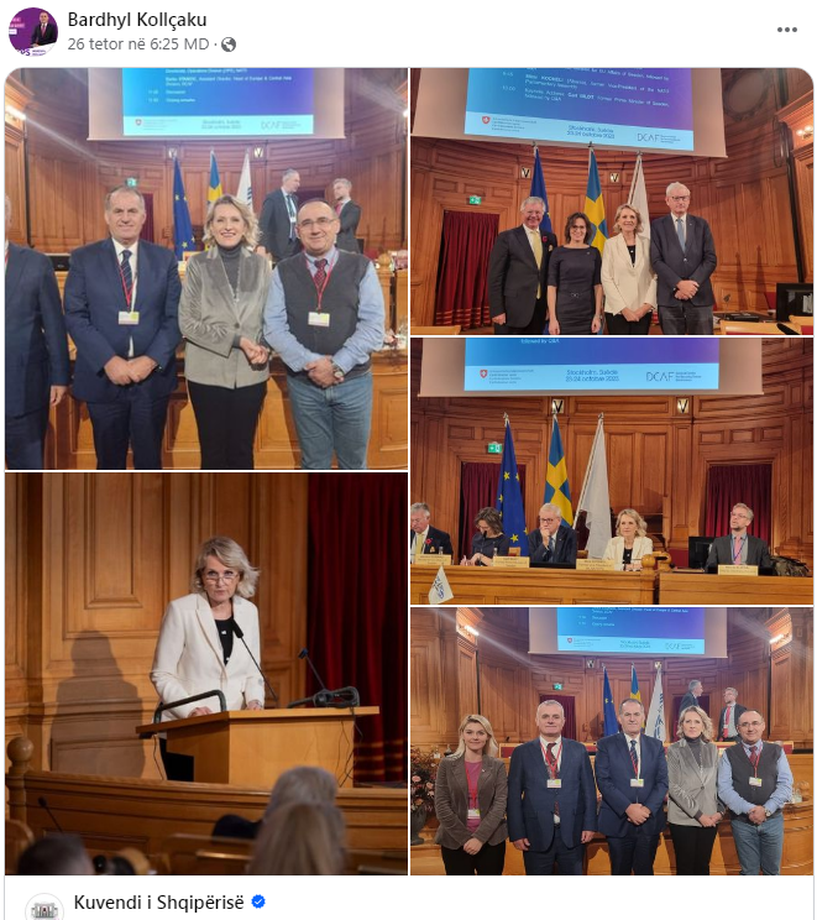
4 deputies (Mimi Kodheli, Bujar Leskaj, Xhemal Qefaliaj, Bardhyl Kollçaku) were in Sweden, in a seminar organized by NATO. 5 others (Blendi Klosi, Florenc Spaho, Ervin Salianji, Xelal Mziu, Bledjon Nallbati) were in Angola at an interparliamentary forum.

Two other legislators (Lavdrim Krashi, Mimi Kodheli) visited Kosovo; Andia Ulliri, European Parliament, Etjen Xhafaj participated in a conference in Prague and Klotinda Bushka was in Skopje. Etilda Gjonaj traveled to Strasbourg.
"At best, only half of the discussions held in the special session are related to the problems of the electorate", said the monitor of the Assembly, Afrim Krasniqi.
The biggest problem, according to him, is that even when voters' problems are raised, no one follows up on their implementation.
"Parliament should normally have a mechanism to address these concerns to the government and the Minister for Relations with the Parliament should return answers to the structures of the Assembly or directly to the MP for these issues; which did not happen", says Krasniqi.
"The Green Week has turned into a platform, where things are simply said, but no solutions are given, losing the sense and the main object to connect the deputy more with his electoral area", - concludes the head of the Institute for Political Studies.
"Fake" sessions, dedicated to voters
After every Green Week, once a month, the Assembly holds a special session for the voters, so that the MPs can bring to the Parliament the problems encountered in the meetings with the citizens.
The Civic Attitude estimates that the special sessions for voters are fake.
"If we look at the sessions after the Green Week, they do not contain information that comes from the field, but the agenda of the Parliament's calendar and the political rhetoric between the constituent forces prevail", - says Rigels Xhemollari.
The Civic Attitude categorizes the Green Week "in practice, a week of rest and fun for MPs" during the normal, political period, despite the campaign period.
INA Media monitored the parliamentary debate for all dedicated sessions in the months of September, October, November and December of 2023.
There it is noted that the legislators have "fought" with each other for their party and political battles, but not for the way of governance or for the concrete problems of the electorate.
The last two sessions of this nature, on October 30 and December 4, lasted only 15 minutes, despite the 4 hours programmed for this type of agenda.
In them, 10 deputies took the floor, only from the majority and none from the opposition. The sessions took place under tension and, of those legislators who spoke, only two of them (Vullnet Sinaj and Ismet Beqiraj) requested the asphalting of two concrete, rural roads in the electoral areas they cover.
Other socialists (Petro Koçi, Pranvera Resulaj, Ismet Beqiraj, Milva Ekonomi, Bujar Çela and Florenc Spaho) have turned on the microphone to retort with the opposition and/or praise the government for its performance.
"Mr. Bardhi, I understand that it is difficult to face a rival like Edi Rama. Strong nerves are needed and you have lost your nerves", - were the words of MP Pranvera Resulaj in one of the sessions.
Only in the plenary session of October 2, a quiet parliamentary debate took place, lasting about 2 hours, where MPs from both sides took the floor and, together with the party rhetoric, raised the concerns of the voters.
No one monitors them
Although the Assembly of Albania pays millions of lek every month for keeping open the regional offices of the deputies, no one monitors whether they are open every day in the official schedule and even less, the deputies are not checked, whether they frequent them or not.
"Civil servants of the Assembly do not have as part of their activity to monitor the open keeping of the offices of deputies in the districts, as far as the reception of citizens and meetings of deputies with their constituents is concerned", - says the General Secretary of the Assembly, Genci Gjonçaj .
The Parliament does not have reports on the number of citizens who have gone to these offices, nor any data on the problems they have expressed. In fact, the Assembly does not even take over the control of going to work or not of the specialists, which it itself pays.

"The specialists work in cooperation with the deputies of their political force. They are selected by the proposal of the chairman of the respective parliamentary group", - explains the Assembly in response to INA Media's interest.
All the specialists, who must keep the deputies' offices open, are paid by the Assembly of Albania with a monthly salary of 80-95 thousand ALL per month.
The Assembly makes this payment without any confirmation or control, whether these individuals show up for work or not.
In fact, this institution told INA Media that it is also paying those specialists who have been appointed, but who do not have work offices, with the argument that the law allows it.
Not taking into consideration the immeasurable costs of electricity, internet and other office materials, the function of these offices costs the state budget about 21 million Lek per year and no official document or report is found for their performance and efficiency.
In addition to this expense, MPs are paid a monthly fee for fuel and telephone, in order for them to keep in constant contact with their constituents.
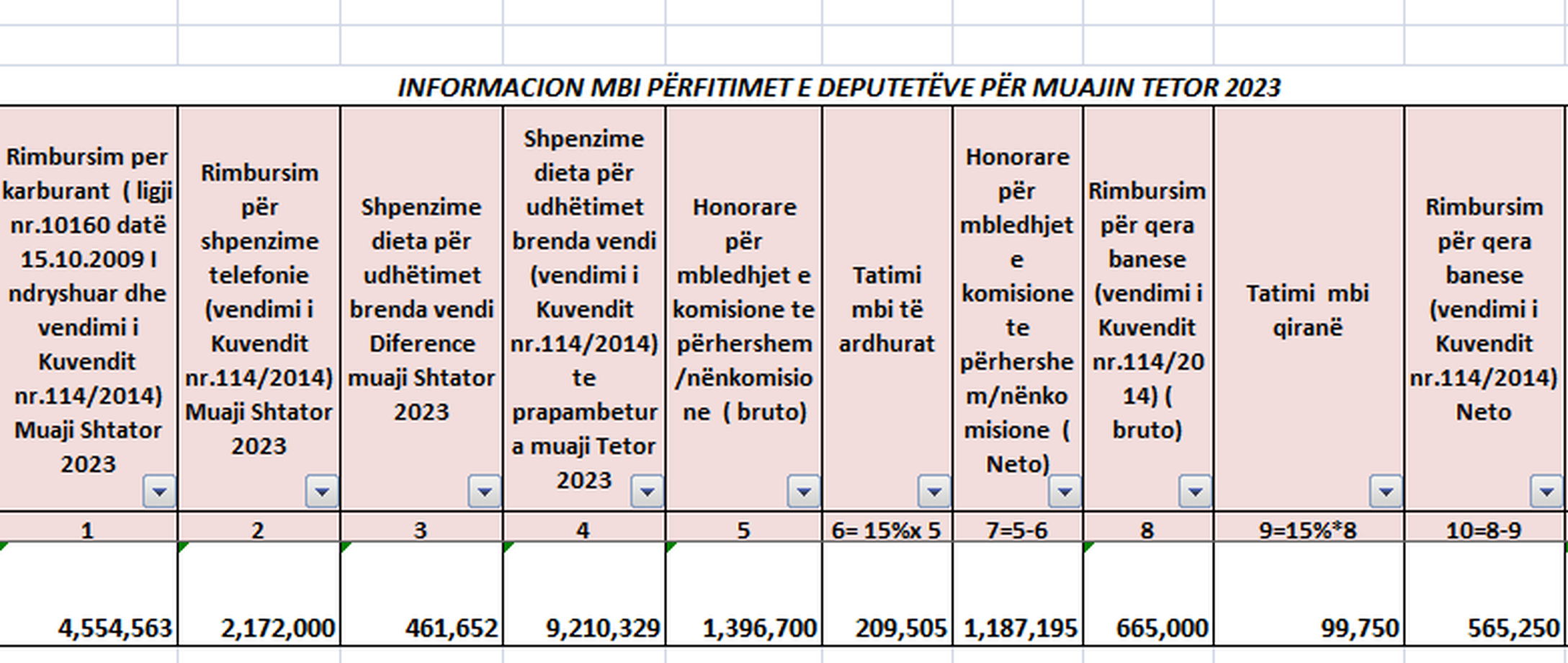
The latest report of the Parliament of Albania on the benefits of MPs shows that they received a total of 4.5 million ALL (new) in compensation for fuel expenses, 2.2 million ALL in payment for telephone bills and 9.2 million ALL in just one month. million ALL per diem for travel within the country.
"A large part of the deputies live in the capital, they do not have offices dedicated to citizens, while during campaign periods they only meet party militants, but in the meantime they are paid, rewarded with per diems and other benefits to exercise their constitutional role towards each citizens of this republic", Xhemollari accuses. inamedia