


"We are drowning..." - From Lisbon, Milan to Tirana, "The Guardi...
/ 2026-10-18 23:13:32Focus


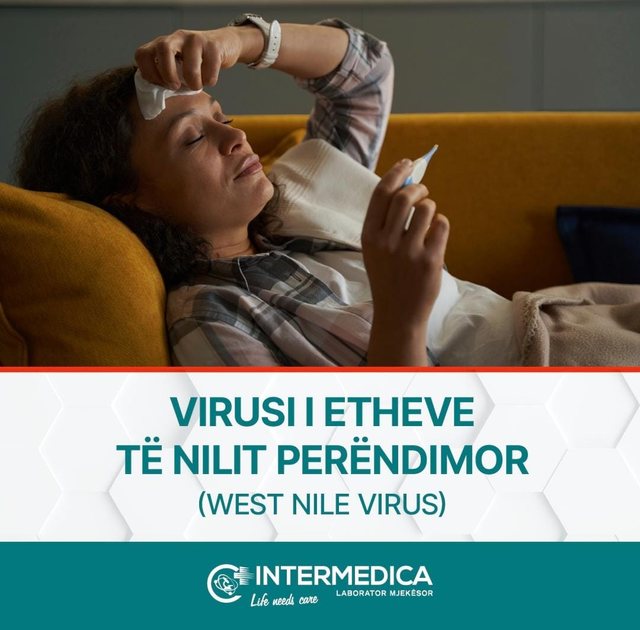
In Albania and the Balkan countries, the West Nile virus has been circulating for the past month. WEST NILE VIRUS is transmitted by the bite of infected common mosquitoes. This virus belongs to the Arbovirus family and has a monoclonal RNA genome. It was first isolated in the West Nile area of Uganda in 1937, from where it got its name.
In 80% of cases, the infection is asymptomatic, in 20% of cases it causes fever, headache, vomiting, muscle weakness and rash on the skin (mainly on the shoulders and chest). In 1% of cases, symptoms of the central nervous system such as encephalitis and meningitis can be manifested and very rarely it can cause death (less than 1/1000 cases). Mosquitoes pick up the virus from the blood of infected birds, which also carry the virus.
There is no vaccine for humans, and no specific therapy. Treatment is symptomatic and determined by the clinic and its severity. Laboratory tests include IgM and IgG antibodies. IgM antibodies appear 8 days after infection and can be performed in blood and cerebrospinal fluid for patients with central nervous system involvement. The analysis of IgM antibodies is the first analysis performed in patients with symptoms, if the patient does not have symptoms, these tests are not recommended. IgM positivity indicates that the patient is infected with the virus. If IgM is negative, the test is repeated after a few days.
IgG is also analyzed along with IgM. The positivity of both indicates a current infection by the virus. A single IgG positivity indicates a past infection, months or years ago. However, after the third week from the onset of symptoms, IgG may be positive and IgM negative. In this case, laboratory interpretation is based on scientific criteria.
To evaluate the clinical course of the disease, the test of IgM and IgG is repeated after 3-4 weeks to see if the level of antibodies has increased or decreased. Another route of transmission of the virus is through blood, if blood is transfused from an infected patient to another patient. If the disease occurs in a child who is fed only on mother's milk, the mother should be examined to confirm the route of transmission through milk. This is rare, however, it is scientifically confirmed.
The PCR method, which determines the nucleic acid of the virus through molecular biology, can also be used to detect the virus before the appearance of antibodies. Due to the most common period of appearance of this pathology, related to the breeding and activity of mosquitoes, it is recommended to take measures to fight against them. It is important to note that this disease is transmitted by ordinary mosquitoes and not by any "special" mosquito.
Dr. Vasil Llajo
CEO Intermedica


