Is this police force professional and capable of handling violen...
/ 2026-10-16 18:54:07Focus



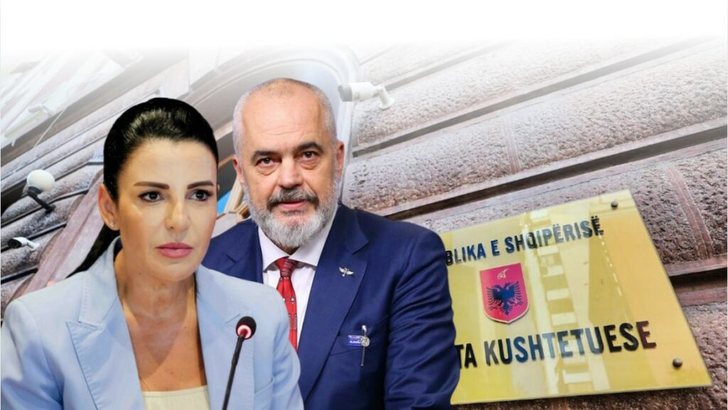
Prime Minister Edi Rama declared today that the suspension of a minister or senior official “paralyzes the institution” he leads. This is conceptually anti-state. Institutions are not persons. They do not function thanks to names. They function thanks to the law, the administration, the continuity of the state.
When the Prime Minister says that a suspension "paralyzes the institution," he equates the state with the individual. But public office has nothing to do with the personal fate of an official under investigation.
The truth is much simpler. You who appoint the minister also have the power to replace him. Temporarily or permanently, as soon as criminal suspicion arises.
No one is taking away the government's seals. No one is dismantling the ministry or the Prime Minister's Office from the boulevard. Justice is not saying the "institution" is guilty. It is clearly saying that a certain individual is a suspect.
How does the Prime Minister see the state? As an extension of the individuals who run it? Or as an institution that stands above them?
In a statesman, the reaction would be exactly the opposite. Because suspension for suspicion of corruption, in addition to a requirement of justice, is also a direct interest of the Prime Minister. To protect his integrity, the administration, the public trust. So it is a protective mechanism for the institution, for the state, not a threat to it.
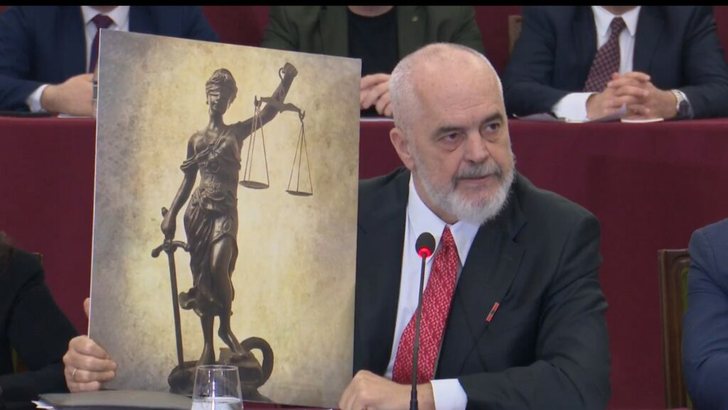
The Special Prosecution Office and the Special Court were not created by chance, for peripheral violations or petty officials. They have it written in their name that they are special precisely for the high level of corruption and abuse of power. Otherwise, why are they called “special”? Otherwise, why was all this investment made, if not to investigate precisely key figures in government?
To claim today that judicial intervention at high levels "paralyzes institutions" is to deny the very reason for which this new justice system was built.
In the Balluku case, as a key government figure with significant financial and infrastructural powers, the standard of accountability should have been higher, not lower. Much less, should it be used as a justification for “interference in legislation”!
There have been cases where the Prime Minister's public reactions have been emotional. These are not. They are thoughtful and repeated statements. They have institutional weight and constitute clear public pressure on justice.
The same justice that until yesterday was proclaimed by Rama himself as a national pride and a historic work of his government, today becomes a problem as soon as it affects a key figure in the cabinet.
In a word, the new justice is a valid instrument only as long as it does not violate the hierarchy of power. When it investigates the periphery, it is a reform, when it touches the center, it is declared a deviation, a "world folly," a danger to the balance of powers.
It is clear that the Prime Minister is protecting the individual, not the institution. Much less the balances. He knows the reasons. Let alone the ones that are being rumored.