Is this police force professional and capable of handling violen...
/ 2026-10-16 18:54:07Focus


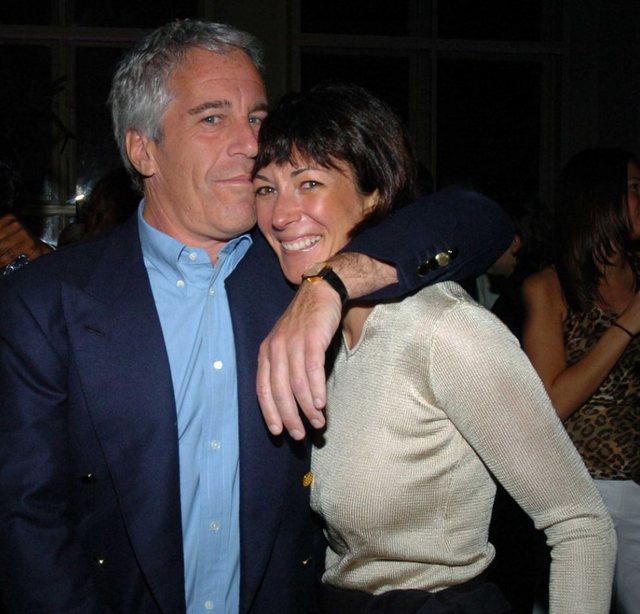
Beyond global conflicts, financial problems and the new geopolitical order, a new issue has been put on the market for global public opinion. The “Epstein” dossier. But who is this mysterious character who, even after his death, is still being talked about so much?
Jeffrey Epstein began his career as a math and physics teacher at the Dalton School, a private college preparatory school based in New York City. Considered an elite school for children from wealthy New York families.
And here begins the first contradiction, since it is implied that Epstein did not have a university degree and how it was possible that he was catapulted into this position early on. After being dismissed from this job for disability, through his network of friends he was able to enter the premises of Wall Street, at the heart of the American and global financial system, where billions of dollars move every day.
During the years '76-'80, he acted as the manager of many large accounts for wealthy families, who themselves lived illegally behind the scenes. The network of connections reached BCCI (Bank of Credit and Commerce International), involved in money laundering, corruption and illegal financing. An offshore scheme closed in 1991 by British and American authorities for massive abuses.
However, Epstein's status grew and grew by forming connections with the most prominent politicians of the time, with world secret agencies and by adding income to his wealth. In this way, he operated on the principle that economic power is the only power. Although found guilty in 2008 of prostitution of minors, it is strange how in a democratic and strong legal country like the USA, he avoided federal criminal prosecution only with a plea agreement, protecting him from further charges.
An extraordinary deal for an unusual character.
Finally, the names mentioned in the leaked documents do not constitute accusations or evidence of criminal behavior. However, their very existence in these files raises suspicions that heads of state, high-ranking political figures, and successful businessmen are part of one of the most high-profile scandals of the moment.
Provocation begins where explanation ends.
The questions that arise are: Why did Epstein receive such protection for so long? Why did the documents drag on for years? Why was justice only interested in tracking down the "small fish"? Is justice really just a tool of "absolute power"?
These questions don't necessarily bring conspiracy. They contain darkness.
The "Epstein suicide" itself remained a murky event. It occurred under unclear circumstances and with many dysfunctions in the operational chain of the system, which still raise questions such as; how? why? who?
The Epstein case combined three ingredients: power asymmetry, delayed justice, and elite invisibility. Lawyers, prosecutors, institutions, and the media—all remained actors in a shared system to provide stability. And that is precisely the real political lesson.
What began as a criminal case has evolved into a political symbol. The picture is divided into three parts - Epstein as a representative of the elite on the one hand, institutional decay on the other, and a third, a half-truth that always remains undiscovered.
The latter brings to life the conspiratorial thought that institutions are no longer capable of answering people's questions convincingly; or they simply don't want to.
The Epstein case may never have a conclusion, not because truth is relative but because the system itself is an Epstein in its own right and vice versa. What has happened is literally, a real picture of how the world has always worked. The concern is not why Epstein was silenced by a grand conspiracy, but that it could not be silenced. And the question we should be asking is no longer “who else was involved?” but rather, “how many similar stories never make it to the surface?”
In ancient Athens, the philosopher Socrates spoke of "the sun that illuminated everything, but people still choose to keep their eyes closed". Just as in ancient times Socrates warned the citizens of Athens for a little more sun of knowledge, today the sun that illuminates us has still not been able to fully open people's eyes, continuing to create doubts, fear and distrust of everything that happens under the light of power. And if these days there is a lot of talk about establishing a new world order, this issue gives us the true picture of this order; the fall of the curtain and morality, where the strong do what they can and the weak suffer what they must.