Is this police force professional and capable of handling violen...
/ 2026-10-16 18:54:07Focus


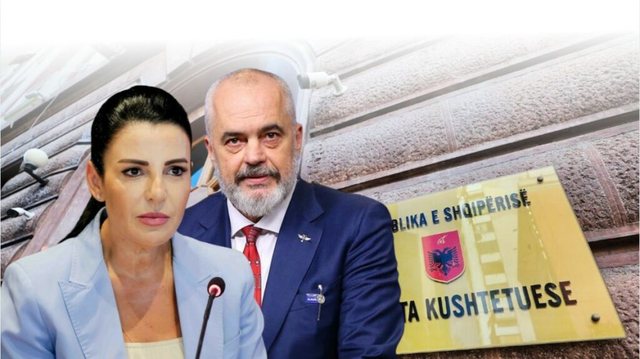
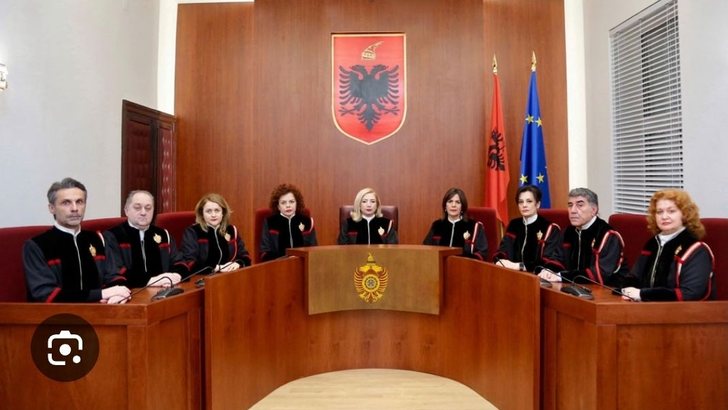
I was very impressed by the recent decision of the constitutional court, where the votes of its members were 4 to 4.
Since I have been dealing in depth with what is called "game theory", one of the most powerful applications of probability theory, psychology, and applied sociology, for some time now, I found the event very interesting.
From a probability point of view, the chance of not having this result was 500 times higher than if the event had a "pay off" of 4 to 4. And yet it happened. How incredible that it happened by chance, but it can! Just as it is possible for a cigarette butt thrown from a balcony to fall into the cigarette ashtray of the cafe on the sidewalk below! But it does happen!
It also seemed to me like the old matches between the Chinese and Albanian national football teams that ended 6-6. All according to "game theory". The audience enjoyed the goals, the match ended in a draw like the unbreakable Sino-Albanian friendship, the players scored, all sides found their result in a result with super mediocre play. A perfect balance point.
"Game theory" is applied in poker, tennis, economics, politics, wars, everywhere. Even in politics, have you seen the parties in European countries where politics is played freely, how the votes come out round by round in what is called "game average"? Votes, deputies, etc. are divided by two or three percent. Not like here, there is no probability that can predict us.
So if one side gets a member of the court, the other side gets one too, two by two, three by three, and so the external balance is reflected in the internal balance. 4 by 4 government with the scum. Balance inside and balance outside.
I have no evidence to say that the judges have agreed with each other, turning into what they call "cooperating actors", that is, they have done it by gossip. Far be it from me to make this diabolical conjecture. But that this result, like the matches with China in the past, satisfies everyone in the Court, there is no question about it.
No one can say that a member of the court is forced. So, some vote for, some against, what do you want now? The court has made a decision, those lawyers who say it did not make a decision are wrong.
They have legally made the decision not to make a decision! It is a decision of non-decision, at least a decision in the legal plan.
So, it returns the ball to the institutions that wanted to make the Court a battlefield.
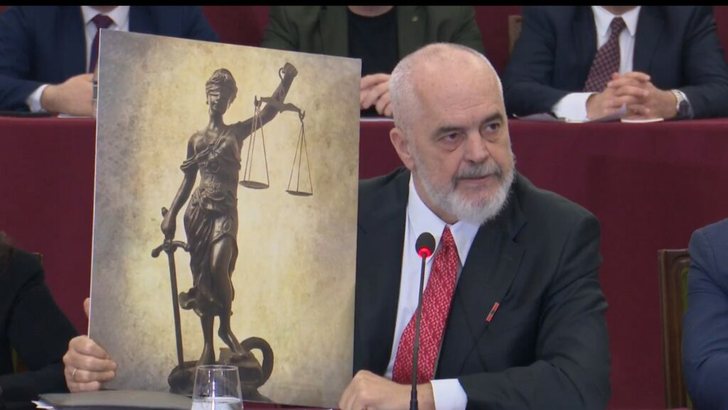
I've said it from the beginning: This issue either throws away justice reform or reshapes the government. There is no other way.
Why? Well study "game theorie" o analyst!
What should the judges do?
If they voted for the Prime Minister's complaint, then according to "game theory" they would be undermining the justice reform, that is, themselves. If they voted against it? Then they would be going against the government that put them there, even through the Parliament. The government is threatening them that it will see to their work, said a former lawyer minister the day before yesterday.
In this case of equal hesitations, game theory has the "minimax game" theorem, which means that the actors in the game only achieve a draw between themselves.
The mediocre result of the middle.
It's not a matter of the will of judges, it's a matter of probability and "rational choices".
This is short-term. What about long-term?
As one of the "game theory" theorists says, in the long run we are all dead! In a word, only fools think in the long run! Especially not politicians who in the long run will all lose power.