Protests highlight trauma crisis, operating rooms under reconstr...
/ 2026-10-15 18:35:16Focus


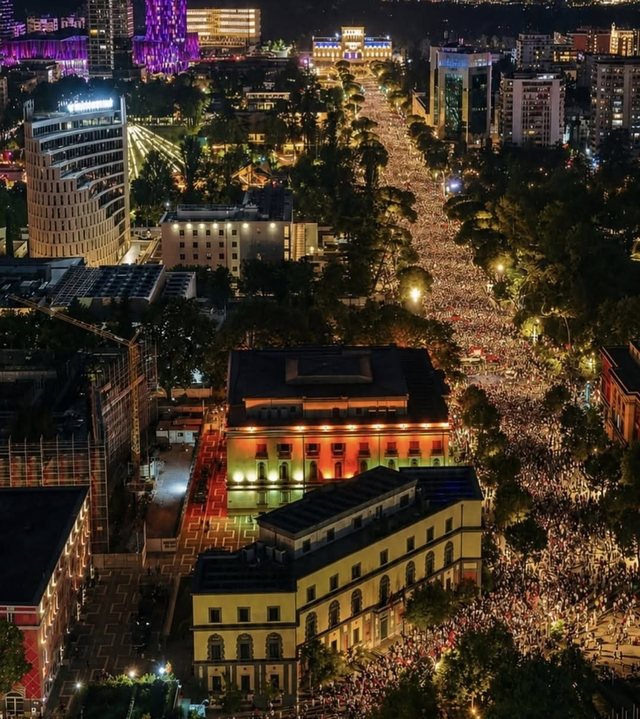
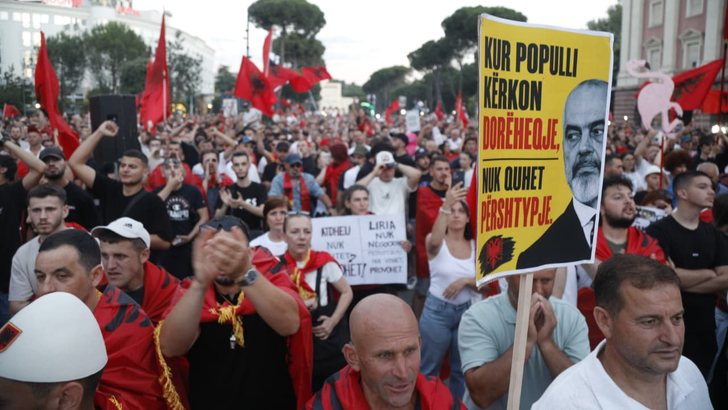
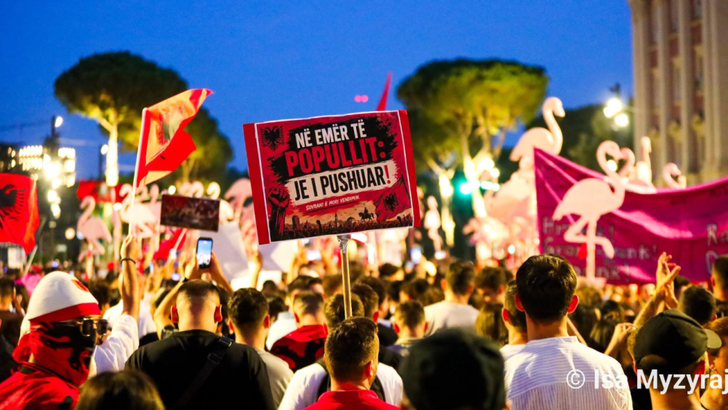
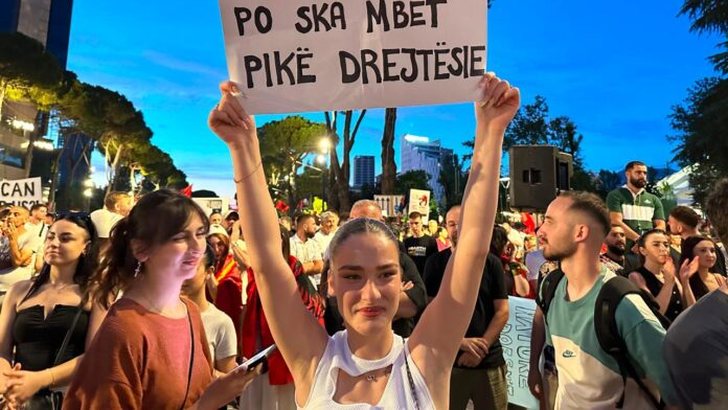
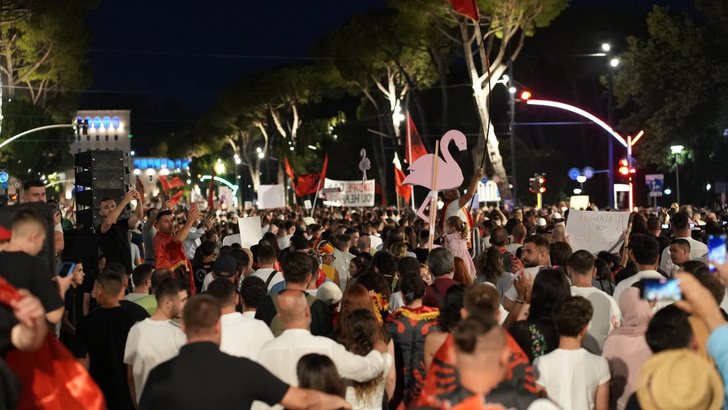
After three weeks of non-stop protests on Tirana's main boulevard, we are in uncharted territory. The most interesting development of the last few days is no longer measured by the square meters filled or the exact number of participants, although the recent injection from the diaspora, with citizens coming specifically from London, Berlin, Brussels, etc., gave the rally a new dimension of moral legitimacy.
After three weeks, it seems as if the government works during the day, while in the evening the protesters take to the streets and articulate the same demands. This configuration is both unusual and dangerous for the movement itself: protests arise to create a crisis and force the other side to reflect, but when they last without producing an institutional blockage, they risk becoming part of the (protected) urban landscape, a ritual where each side performs its role without violating the other.
All actors are under pressure to move: the square is under pressure to (not) produce an alternative, the government to change, the opposition to adapt, and SPAK to act.
The question “who moves first” does not assume that the first move will solve the crisis. But there is a deeper question that precedes it: even if the Prime Minister moves, by resignation or by reformation, who replaces him? Here the structural weakness of the “Flamingo Revolution” appears: it was born as a rejection of a model, not as a project of power. The square does not only demand the departure of Rama; it simultaneously rejects a part of the political, economic and media elite. Total rejection, without an organized alternative ready to replace the one who is overthrown, leaves the power vacuum open for anyone who can fill it, including those whom the square today rejects.
The algorithm, the next culprit
The Prime Minister has chosen a communication strategy that aims for normalization through disregard. While the square has been calling for “resignation” for three weeks, the head of government talks about algorithms and the digital manipulation of public opinion, a well-calculated diversionary maneuver. “Let’s talk about the algorithm and the nature of social networks, but not about the origins and causes of the revolt: transparency, closed decision-making, the arrogance of power and abuses.
This game, however, has a reciprocal cost. By attacking the algorithms, the prime minister indirectly admits that he has lost his monopoly on the public narrative. But 82 (plus 3) votes in Parliament still allow him to “enjoy the memes” of the protest and wait. Without a mechanism/pressure that politically forces him to let go, he waits for the fatigue of the square.
Will we have peaceful coexistence with the protest? Radicalization? Internal rupture or blow from "outside"?
1- Normalization
This is the line where the government has invested the most. The protest continues, the numbers (plus -minus) remain, but attention fades, especially international attention, and the square gradually turns into a ritual. In this scenario, the transformative force is lost, without solving anything fundamentally.
2- Radicalization
The greatest strength of the protest so far has been its peaceful and civic character, which has attracted families, young people and the diaspora. Any slide towards violence would give the internationals a pretext to distance themselves and the government the card of “victim of destabilization”, a way out that ends the energy of the square without ending the crisis that generated it. Increasing pressure without resorting to violence could be an option to break the “balance”.
3- The crack from within
The departure of a member of parliament from the majority does not shake the numbers, but political crises do not begin when many people leave, but when important people in the system begin to see leaving as a rational option for their survival.
If the pressure from the street manages to create doubts within the SP, another game opens up. But this game too remains within the same political class that the square is rejecting as a whole.
Herein lies the challenge for the opposition, both traditional and new. There is a large reservoir of discontent, but not necessarily trust in the opposition. The traditional opposition must show that it can be more than a passive beneficiary of this discontent, while the new opposition must prove that it knows how to transform civic energy into organization and political alternative. If neither manages to read this message, then the representation gap will remain as large as the discontent itself on the square.
4- SPAK and internationals
In this delicate balance, there is an actor who does not give speeches from the podium, but receives applause and who has the potential to accelerate the process: SPAK.
So far, SPAK has shown that it can change political careers and the balance of power faster than the elections themselves. Protest and SPAK operate on two complementary planes: protest produces social legitimacy and keeps attention on corruption, while SPAK produces institutional and criminal consequences that (do not) depend on the number of seats in the Assembly.
Protests have rarely triumphed from street pressure alone, but they have won when this pressure "coincides" with cracks in the elite, institutional interventions, or changes in the calculations of international factors.
This is where the international factor comes into play. Embassies are guided by the principle of stability, but this stability is not unconditional. For Washington and Brussels, support for justice reform remains unwavering. They will not side with the opposition to overthrow a government on the street, but will demand institutional reflection if the SPAK files reach levels that undermine the credibility of the state.
If the coming days or weeks bring important developments from the justice system on hot files, including Zvërnec, what can be called a "convergence of pressures" is created: from below (the square), from within (justice), and from without.
5- Calendar
There is also a type of pressure that depends neither on the fatigue of the protesters nor on their number: fixed deadlines.
The EU integration process and any international commitment with a specific date (closing negotiation chapters, NATO summit...) are moments when official Tirana must present itself as a normal country.
Political crises that clash with agendas become harder to postpone indefinitely than those that depend solely on the parties' internal resistance. The pressure may come not from an even bigger night of protests, but from a date on the calendar that no one, neither in the square nor in government, fully controls.
The 21st day shows that the government can exhaust the protest if it remains simply a night march. The protest can exhaust the government if it manages to produce political costs beyond the square. SPAK can shake the system if its investigations touch important nodes of power, but none of these factors alone solve the crisis.
Whoever it is, the first move will force the others to redesign their entire strategy.