Berisha: Altin "Troplini" Dumani amnestied electoral crimes, SKA...
/ 2026-10-19 11:44:20Focus



The High Judicial Council, after an urgent meeting with 260 judges, has established a working group and drafted a plan of measures for security in the courts.
The plan comes after the alarm raised by judges about security in the courts, following the murder in the courtroom of Appeals Judge Astrit Kalaja.

In a separate statement to the media, the Supreme Court says that they will analyze the measures taken and requests addressed to the Supreme Court by each court on security during the years 2023-2025.
The Supreme Court of Justice also says that they will analyze the existing security conditions in the courts and then address legal and sub-legal changes to take measures to guarantee security in the courts for judges, judicial personnel and every court user.
The plan drafted by the High Court of Justice also provides for the adoption of standard security protocols and procedures for each court.
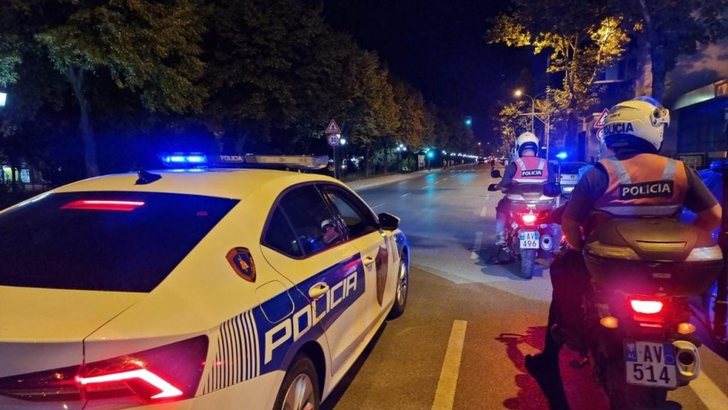
The arrest of the security guard at the Court of Appeals, following the murder of Judge Kalaja, after he failed to move to search the perpetrator, Elvis Shkambi, for the weapon, has led the Supreme Court to add another point to the plan, emphasizing that it will guarantee trained security guards, or State Police officers, for each court.
The full statement of the Supreme Court:
The High Judicial Council, at its meeting on 10.10.2025, in furtherance of fulfilling constitutional and legal obligations, with the aim of addressing the issues and needs raised in the meeting held by the judges, decided to draft a plan of measures related to:
-Receiving and analyzing detailed information regarding the measures taken and requests addressed to the High Judicial Council by each court, by the President, Deputy Presidents or Court Councils, during the years 2023, 2024, 2025, with the aim of administering/managing security in the court;
- Obtaining information regarding the existing service conditions and security infrastructure in courts, the equipment with scanners, detectors, security cameras, other security equipment, as well as their functioning, in accordance with the legal and sub-legal acts in force, with the aim of standardizing procedures and training personnel for the management of security-related situations;
-After analyzing the information received and identifying concrete issues and needs, establishing an inter-institutional working group with the aim of:
i) addressing legal and sub-legal changes to take measures to guarantee security in courts for judges, judicial personnel and every court user;
ii) ensuring the presence of trained security personnel or part of the State Police;
iii) the adoption of standard security protocols and procedures for each court;
-Establishment of an inter-institutional working group, with representatives from the High Judicial Council, the High Prosecutorial Council, the Ministry of Justice, the Ministry of Interior, the State Police and other law enforcement agencies, with the aim of drafting joint measures for security in the judicial system as a whole;
-Alignment of the legal framework with international best practices regarding the safety of judges, support staff, and court users;
-Keeping in mind the legal obligations and the work started from 2021 onwards, with the aim of ensuring an infrastructure suitable for working conditions and security in the courts, in coordination with the councils of each court, the High Judicial Council decided to take immediate measures regarding addressing the local government and seeking assistance for the construction of 8 new buildings for first instance courts in the judicial districts, as well as the construction of new buildings for the Court of Appeal of General Jurisdiction and the Court of First Instance of General Jurisdiction of Tirana;
-The Council also encourages the courts to take measures to implement projects, so that the allocated funds are realized within the budget year;
-In the framework of institutional independence, in coordination with the Ministry of Justice, to request the transfer of ownership of the High Judicial Council to the existing court buildings and those to be built;
-Analysis of data from periodic court reports, with the aim of increasing the performance and professional and moral commitment of each magistrate;
-Establishment of working groups with the aim of drafting proposals for legal amendments to Law No. 96/2016, “On the Status of Judges and Prosecutors in the Republic of Albania”, Law No. 98/2016, “On the Organization of the Judicial Power in the Republic of Albania”, composed of members of the High Judicial Council, judges from all three levels of the judiciary, the High Court, the Courts of Appeal and the Courts of First Instance, as well as administrative management staff at the Council;
-Cooperating with AKEP and AMA, with the aim of taking measures to prohibit inappropriate language towards judges on social networks, online platforms and media, informing these institutions about the current situation, as well as requesting them to take concrete measures within their legal competences;
-Initiating the procedure for naming the amphitheater hall in the "Justice Pole" building after "Astrit Kalaja", as well as sending the proposal to the relevant institutions for granting the title "Martyr of the Homeland" to the judge who fell in the line of duty.
The High Judicial Council remains committed to guaranteeing a secure, independent and functional justice system, at the service of citizens and the rule of law.