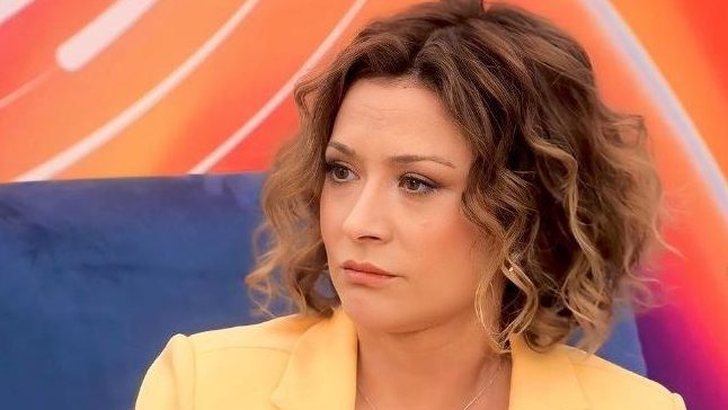
"We are drowning..." - From Lisbon, Milan to Tirana, "The Guardi...
/ 2026-10-18 23:13:32Focus



Sometimes, a comment is enough for the news to take hold and many characters are "dressed" with characteristics or problems that they do not have. The same thing happens with "Big Brother VIP Albania", where people do not hesitate to draw conclusions about the residents, referring to the behaviors they display.
Information is easily found on the internet, but not everything we read is properly understood, so drawing conclusions related to the health of others is something that only experts can do.
ADHD Theory and Gesture
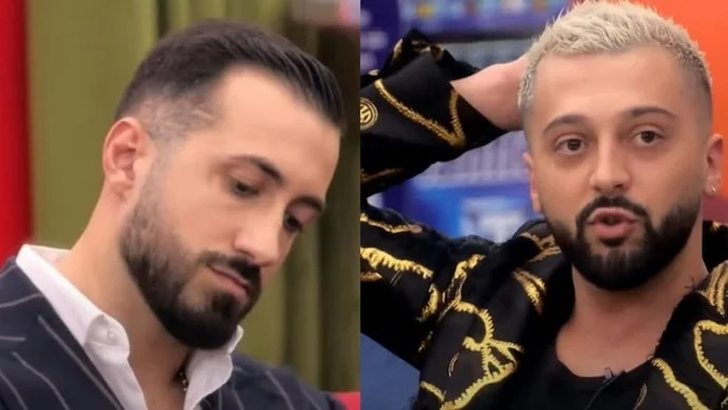
A theory "took hold" of social networks, where many people claimed and wrote that Gjesti suffers from ADHD.
First of all, what is ADHD?
Attention deficit hyperactivity disorder, otherwise known as ADHD, is a neurodevelopmental disorder which, as the name suggests, is characterized by difficulty concentrating and a tendency to be hyperactive and impulsive regardless of circumstances.
Are these characteristics that we can all display at certain times? Of course they do. Are they enough to conclude that we suffer from ADHD? Absolutely not.
On-screen diagnostics
To delve deeper into the risks of screen-based diagnosis, Anabel.al contacted field expert, clinical psychologist Ilva Mile.
Initially, she emphasizes that drawing such conclusions, commenting on and popularizing such theories is not only wrong, but also quite harmful.
"Taking as a trigger certain conclusions circulating on the internet about the psycho-emotional state of public figures who have been followed on screen by a wide audience for several months, namely from the allusions that have been constantly made about the possibility that Gjesti suffers from ADHD, I find it very necessary, as a professional in the field, to dwell on this topic and explain further why coming to these conclusions is not only wrong but harmful," she says.
According to the expert, many people can easily jump to conclusions based on what they read online, but the truth is that their exact meaning is something that only a professional in the field can do with ease and responsibility. And there's a reason for that:
"When it comes to diagnoses, the criteria you read on the internet or the criteria set out in the DSM (Diagnostic and Statistical Manual of Mental Disorders) for each of them are described in general terms and only a professional can interpret them correctly. You find yourself or find characteristics of other people in those descriptions because ultimately all people, at no matter how low levels, can identify with those descriptions because they are characteristics of human nature. This does not mean that we are automatically dealing with a disorder because the nature of the disorders is more complex than that, it hinders and damages the quality of life and functionality of the person and the people around them. Only a mental health professional (psychiatrist, neurologist, neuropsychiatrist, clinical psychologist) can make a diagnosis (and be careful!), this is never done from a screen or by never interacting with the person in question, but through meetings, clinical conversations, psychological tests, questions and therapeutic sessions.", emphasizes psychology.
But the "prey" of commenting on these diagnoses are not only people who do not belong to the field. Often, people who emphasize that they are professionals in the field analyze the residents of "BBVA", but not only, by making diagnoses from the screen.
But how professional and accurate is this?
"Making diagnoses from the screen, both in cases when it is done by people who identify themselves as "professionals" and when it is done by ordinary people with limited knowledge of the field, is wrong, but more so in the case of "professionals". This is because a true professional must know that simply observing the behavior of individuals from afar is not enough to make diagnoses (and even more so in unusual conditions such as the Big Brother format) and must also know that diagnosis as a process must only occur with the individual's own consent, otherwise it constitutes an ethical violation," she adds.
Moreover, making such diagnoses is not only unprofessional and unethical, but also constitutes a violation of the dignity and human rights of these characters.
However, as the expert points out, Gjesti is not the only case where this phenomenon is encountered. Many times, different people write that someone suffers from a certain mental health problem, referring to the behaviors they show on screen. In fact, often such diagnoses are used to insult someone.
"The case of Gjesti is not the only one that has caught my attention, I constantly come across such incorrect conclusions in comments about other characters, I have encountered them in previous years and it is always the same story: there are people out there who come to conclusions that someone is bipolar, schizophrenic, narcissistic, with OCD, psychopath, etc. just by observing them from the screen. Sometimes these characters themselves describe each other with such terms, contributing to the stigma surrounding mental health. The above terms are serious diagnoses, sometimes the opinion of a single professional is not enough to come to a conclusion, but the opinion of a multidisciplinary team is required to come to the most accurate conclusions.", explains Mile.
Psychological and psychiatric diagnoses differ from medical diagnoses where sometimes a scan or analysis is enough to reach a certain conclusion, psychological disorders are more complex than that and therefore require maximum care in diagnosing them because they are not as easily identifiable as one might think. In addition, in the field of psychology, a diagnosis is nothing more than a label and in no way defines an individual, it does not represent who they are.
Education and information on mental health issues is not done with the aim of making it easier and quicker for us to draw conclusions based on the behaviors that others exhibit, but rather to better understand human nature and how important it is to be there emotionally for each other instead of categorizing everyone's uniqueness into labels and stereotyped diagnoses. /Anabel