Protests, violence, curfews: From France to Albania, why Europe'...
/ 2026-10-20 23:47:20Focus


Where one empire fell, another empire rose. But if the first was an empire of war and military power, the second was a spiritual empire. What is the history of the Vatican, the state within the state, whose power in the international sphere is in no way comparable to its territorial size?
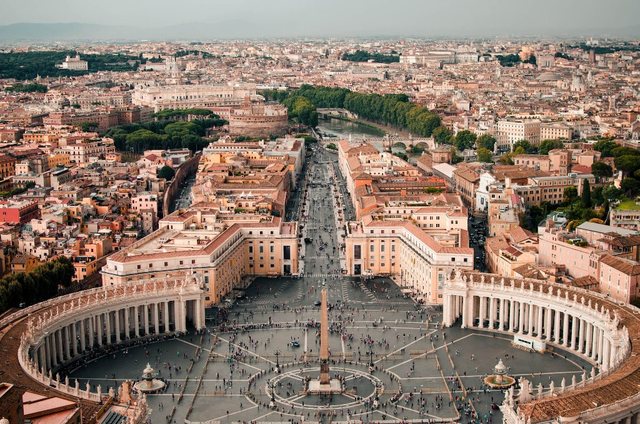
The Vatican is the smallest country in the world. It has an area of 44 hectares and a population of 764 inhabitants. It is located in Rome. (Status Civitatis Vaticanæ), is the original name of the Vatican. The Vatican City State, known as Vatican City or simply as the Vatican, is an independent European state under the sovereignty of the Holy See.
The first creator of the Vatican is Saint Peter, in whose honor the square of the same name was built. This dates back to the year 33 AD and he is one of the apostles of the prophet Jesus Christ who undertook to transmit and spread the Catholic faith throughout the world.
Mysteries and legends
Within the borders of the Vatican are architectural marvels such as St. Peter's Basilica, the Sistine Chapel, and the Vatican Museums, but there is also a more secretive aspect to this holy city-state - legends that speak of hidden treasures buried deep within its interior.
It's not just about gold coins or precious stones, but about a collection of ancient artifacts, manuscripts, and secrets that could change the way we understand history, religion, and humanity itself.
The Mystery of the Vatican
For centuries, the Vatican has been shrouded in mystery. As the seat of the papacy, the Vatican has amassed untold wealth through donations, conquests, and the faithful. Some of this wealth is visible in its art collections and religious relics, but rumors say the true wealth is greater than meets the eye.
The curiosity begins with the Vatican Library and its secret archives. Founded in the 15th century, the library houses tens of thousands of manuscripts, some of which date back over 2,000 years.
These texts are said to contain important information, forbidden texts, and documents that contradict the way history has been “served” to us. According to some theories, these archives also hold maps that lead to ancient treasures, relics of early Christianity, and even evidence of the existence of extraterrestrial life.
What treasures can be hidden?
The mystery of the treasures hidden in the Vatican can be divided into three main categories: spiritual artifacts, historical documents, and material wealth.
Spiritual Artifacts: Legends say that the Vatican houses objects of extraordinary spiritual value. These include the Holy Grail, the Ark of the Covenant, and relics of saints that can inspire faith, or fear. Some claim that even the spear that pierced Jesus on the cross is in the Vatican's treasury.
Historical Documents : The Vatican's secret archives are said to contain writings that challenge traditional history. From true accounts of the Knights Templar to the secret teachings of Jesus, these documents could rewrite entire chapters of human history. Some speculate that the archives contain letters between early popes and figures like Leonardo da Vinci, Galileo, and even kings of ancient civilizations.

Material wealth: As a center for religious gifts and the spoils of war, the Vatican is said to be home to treasures of gold, precious stones, and rare artifacts accumulated over the centuries. During the Crusades, for example, treasures are believed to have been brought from Jerusalem and Constantinople for safekeeping in the Vatican. Some believe these are hidden in underground catacombs or secret chambers.
Legends and theories
Many stories fuel the myth of the Vatican’s hidden treasures. One of them mentions a secret chamber beneath St. Peter’s Basilica, thought to contain treasures looted from the Second Temple of Jerusalem during the Roman conquest in 70 AD. This chamber, known as the “Temple Treasury,” is believed to house the Menorah, sacred vessels, and manuscripts of great religious value.
Another theory concerns the lost documents of the Knights Templar. As a Christian military order, the Templars were known for the wealth and knowledge they supposedly discovered during their stay in the Holy Land. When they were disbanded in the 14th century, some believe their treasures and secrets fell into the hands of the Vatican.
Testimony of a female Pope
Pope Joan, a female pope who led the Church around 855, is a sensitive subject for the Catholic Church. And this despite the fact that she is mentioned in at least 500 historical texts. Joan is said to have escaped the violence and poverty of the era by disguising herself as a priest named John Anglicus, John of England.
She was capable and very popular, managing to climb the ladder of the church hierarchy to the rank of cardinal, and was eventually elected Pope. Those were turbulent and violent times in Rome. Popes were often beaten to death by ambitious clerics.
Many texts say that she was chosen while she was pregnant, and that she gave birth to the child in the middle of a religious service. She and the child were killed by the mob. But some other texts claim that she was sent to a monastery, and that the child later became a bishop. The church is not a fan of the story of Pope Joan. And various scholars say that it is nothing more than a strange legend.

The secretive nature of the Vatican
Pikërisht fshehtësia e Vatikanit i jep jetë këtyre spekulimeve. Qasja në arkivat sekrete është shumë e kufizuar, e rezervuar vetëm për studiues të kualifikuar dhe klerikë, dhe madje edhe ata mund të kenë qasje vetëm në dokumente të caktuara. Katakombet nëntokësore të Vatikanit janë ende të paarritshme për shumicën e botës, duke lënë të hapur pyetjen: çfarë fshihet aty?
Kjo rezervë nuk është pa arsye. Vatikanit i është besuar ruajtja e besimit dhe e objekteve që, nëse bien në duar të gabuara, mund të trondisin sistemet fetare apo politike. Megjithatë, kritikët argumentojnë se kjo fshehtësi i mohon njerëzimit të drejtën për të kuptuar historinë dhe trashëgiminë e vet të vërtetë.
Gjuetia për thesare: fakt apo fantazi?
Edhe pse ideja e thesareve të fshehura në Vatikan mbetet intriguese, provat për ekzistencën e tyre janë kryesisht tërthorazi. Skeptikët argumentojnë se Vatikanit nuk i mungon as pasuria dhe as ndikimi, përse do t’i duhej të fshihte diçka?
Megjithatë, historia na mëson se institucionet shpesh fshehin informacion ose objekte për t’i mbrojtur, për të ruajtur kontrollin apo nga frika e keqpërdorimit. Pavarësisht mungesës së provave konkrete, teoritë dhe kureshtja nuk kanë reshtur kurrë.
Çfarë e bën tërheqëse legjendën e thesareve të Vatikanit nuk është vetëm ideja e pasurisë, por ajo që simbolizojnë: misterin e besimit, lidhjen mes fesë dhe historisë dhe kërkimin e pandërprerë të së vërtetës nga njerëzimi.
Si vendi më i vogël në botë, Vatikani ka një ndikim të jashtëzakonshëm në jetën e miliona njerëzve. Thesaret e tij, qofshin të vërteta apo të imagjinuara, pasqyrojnë kompleksitetin e një vendi që është njëkohësisht strehë shpirtërore dhe rojtar sekretesh.
A do të zbulohet ndonjëherë e vërteta mbi thesaret e tij të fshehura? Kjo nuk dihet, por një gjë është e sigurt: Vatikani do të vazhdojë të magjepsë breza të tjerë me radhë.
Disa shpjegime:
Popullsia dhe gjuhët
Thuajse gjithë banorët e Vatikanit jetojnë brenda mureve të Vatikanit ose shërbejnë në ambasadat e Selisë së Shenjtë nëpër botë. Popullsia e Vatikanit përbëhet nga dy grupe: kleri, pjesa më e madhe e të cilit është në shërbimin e Selisë së Shenjtë dhe disa zyrtarë të shtetit, si dhe rojet zvicerane. Shumica e tre mijë punëtorëve, të cilët përbëjnë forcën punëtore të Vatikanit jetojnë jashtë Vatikanit dhe janë shtetas italianë përgjithësisht. Si rezultat, gjithë banorët e Vatikanit janë katolikë. Vatikani nuk ka asnjë gjuhë zyrtare. Në legjislacion dhe komunikim zyrtar përdoret gjuha italiane. Në Gardën Zviceriane përdoret gjuha gjermane, ndërkohë që faqja zyrtare e internetit të Vatikanit është në italisht, anglisht, frëngjisht, gjermanisht dhe spanjisht.
Artefakte – objekte të krijuara nga dora e njeriut, zakonisht me rëndësi historike, kulturore ose fetare; shpeshherë të gjetura në gërmime arkeologjike.
The Holy Grail – a legendary object, often described as the cup used by Jesus at the Last Supper. According to myth, it has supernatural powers and has been sought for centuries by knights and adventurers.
Ark of the Covenant – a sacred box according to Jewish tradition, where the tablets with the Ten Commandments were kept. It was said to be a sign of God's presence and a symbol of the covenant with the people of Israel.
Knights Templar – military and religious order founded in the 12th century, known for protecting pilgrims in the Holy Land and for the wealth, power, and mysteries surrounding them.
Holy Land – the region that includes parts of Israel, Palestine, Jordan, and other surrounding countries, of particular importance to Judaism, Christianity, and Islam.
Crusades – military campaigns organized by European Christians between the 11th and 13th centuries, with the aim of reclaiming the Holy Land from Muslim control.
Catacombs – underground galleries that were often used as burial places in ancient times; in the Vatican, they are part of the mysteries containing relics and perhaps hidden treasures.
The Second Temple of Jerusalem – the temple rebuilt by the Jews after their return from exile in Babylon; it was destroyed by the Romans in 70 AD and has a powerful symbolism in religious history.
Menorah – a seven-branched candelabrum that represents one of the oldest symbols of Judaism. It was used in the Temple in Jerusalem and is still the state symbol of Israel.
Swiss Guard – The papal army today is officially called the Swiss Guard, which has about 135 troops and is in charge of security at the Vatican.
The Swiss Guard was created in 1506 under Pope Julius II and became the only active army in the Vatican, which subsequent popes continued to support.
Why Swiss?
The reason for choosing Switzerland was that at that time many Swiss, due to the great poverty in their country, worked as mercenaries in the armies of many European countries and became known as disciplined and skilled soldiers, so the Pope hired a group of these mercenaries to serve as his personal guards.