Is this police force professional and capable of handling violen...
/ 2026-10-16 18:54:07Focus


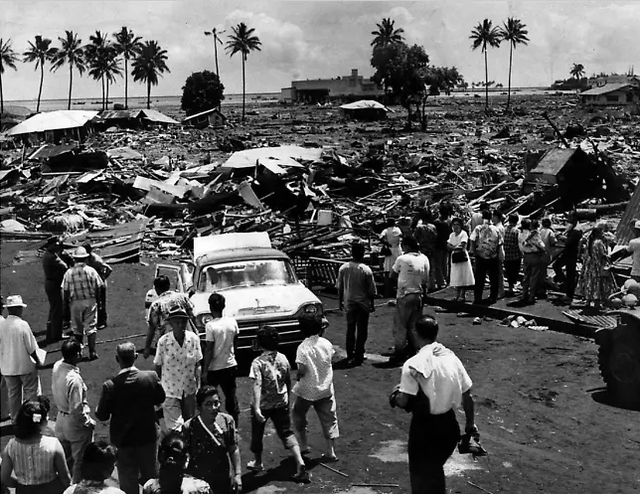
And while a powerful earthquake with a magnitude of 6.1 has shaken the inhabitants of Crete in Greece, on the same date, but 65 years ago, the most powerful earthquake in history was recorded.
On May 22, 1960, the most powerful earthquake recorded by seismic instruments occurred in Chile, which caused extensive damage not only in Chile but also beyond, significant loss of life, displacement and destruction, as well as a massive tsunami that swept across the Pacific Ocean.
With a magnitude of 9.5, the earthquake known as the Valdivia or Bío Bío earthquake struck the south-central coast of the country. The epicenter was located near the city of Valdivia, but it affected about 900 km along the subduction zone where the Nazca plate slides under the South American plate.
The earthquake was caused by the sudden slippage between two tectonic plates, with an average movement of about 15 meters to 40 meters. This giant release of energy generated not only a prolonged and destructive tremor, lasting over 10 minutes, but also a massive tsunami.
Waves over 20 meters high along the Chilean coast then reached almost all the coasts of the Pacific Ocean: Hawaii, Japan, the Philippines, New Zealand and many others.
A tsunami followed a few hours after the earthquake.
The damage was devastating. More than two million people were left homeless in Chile alone. The earthquake killed approximately 3,000 people, but the death toll was exacerbated by the tsunami, with over 50 deaths in Hawaii and more than 100 in Japan. The waves reached foreign shores many hours later, theoretically enough time to issue effective warnings. However, at the time there was still no international tsunami warning system.
The 1960 Chilean earthquake inspired the first tsunami warning system in the Pacific
In response to this tragedy, the first Pacific Early Warning System, headquartered in Honolulu, was launched in 1965. This event represents a milestone in the history of seismology and disaster mitigation. It taught the importance of global monitoring and provided essential data on the dynamics of subduction earthquakes.
The Valdivia earthquake, along with those in Sumatra in 2004 and Japan in 2011, profoundly changed our understanding of large seismic events and showed that, despite scientific progress.