"The fate of the homeland is in our hands" - An appeal by Ismail...
/ 2026-10-18 16:09:54Focus


Tourism is the "fate" that knocked on Albania's door at a critical moment. The country was suffering from a decline in consumption due to population shrinkage.
Increasingly oriented towards services, the economy would experience a sharp decline if millions of tourists did not come to visit the cities, coasts, mountains, and other natural and cultural attractions that we have in abundance.
In 2024, a record 11.7 million foreign nationals entered the country, twice as many as in 2019.
Tourists boosted a range of businesses, from accommodation and food services to support sectors. At the end of 2024, the accommodation and food services sector accounted for 4.1% of Gross Domestic Product, the highest level ever recorded.
Until 2017, accommodation and food services contributed less than 2% of GDP.
In value, accommodation and food services generated 176 billion lek, or nearly 1.8 billion euros, in 2024, according to INSTAT, reaching a record level, driven by the tourism boom. However, real growth rates slowed to 8.5% in 2024, from 36% the previous year.
The effect on the economy has also been lower. This trend is related to the fact that unlike income (output, which measures the sector's total turnover, at basic prices, before deducting production costs), the sector's value added (which includes wages, profits and taxes generated by that company) is growing more slowly.
This indicates that most of the revenue increase is going to cover costs (materials, energy, transportation), not to increase profits or wages.
In analyses of economic structure, this ratio is often used to indicate "quantitative" development without qualitative increases in economic efficiency.
The decline of the Euro is a major factor that has reduced the sector's performance. Entrepreneur Behar Male, a shareholder in the largest hotel by revenue in the capital, says the main reason is related to the decline of the Euro, which has devalued revenues. "The Euro is destroying the hotel business," he claims.
"The cost of every kind of goods and services has increased just from the depreciation of the Euro. Added to this are the high energy costs for large entities, staff salaries, and more."
The fall of the Euro and the increase in costs are not offset by room prices, which remain low for tourists with low paying capacity.
According to a search on Booking.com, 5-star hotels in the capital sell rooms starting at 180 euros per night and 4-star hotels for less than 100 euros per night.
In Milan, according to the KAYAK platform, for 5-star hotels in Milan, the price is around 620 euros per night, while 4-star ones are around 200-230 euros/night.
The growth of tourism has also encouraged investments in the hotel industry, especially in coastal areas. In recent years, the number of hotels that rank on the list of the largest, both in terms of turnover and profit, has increased.
In 2023, for the first time, a hotel structure entered the “Monitor 200” list, based on profits. In 2024, there are two such.
However, their profit rate for the most part remains low, compared to residential construction and tourist villages, "justifying" the trend towards the latter in coastal areas.
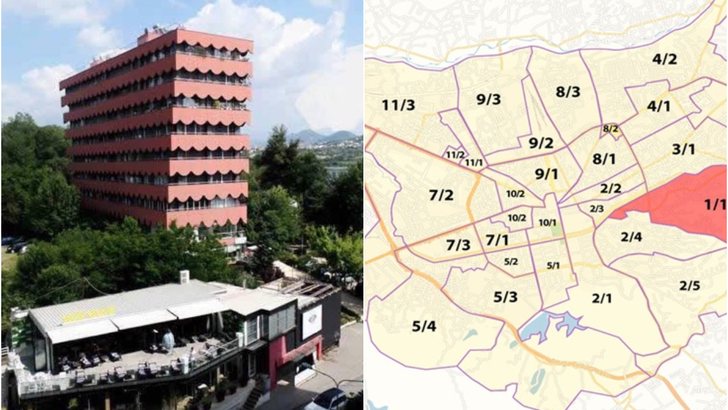
While there are many hotel construction projects in the capital, which are trying to attract well-known brands, it is not known whether there will be work for everyone. “Tirana has a demand for accommodation in hotels that are fully booked for a maximum of 10-15 days a year,” says Mr. Male.
"I notice that in Tirana many permits for hotels have been granted or are in the process. I doubt that Tirana has a demand for hotels or that there will be a growing trend. With those permits that are in the process, that are not yet introduced to the market, I think that there will be many unnecessary structures."
He adds that the country lacks genuine tourist structures on the coast, which are brands. "We have hotels, but not structures that gather organized groups in significant numbers," he asserted in the quote for the publication of "Monitor 200" for the year 2023.
The 2024 data confirms the entrepreneur's concern. Current hotels in the capital are "surviving", reporting minimal profits.
In contrast, coastal hotel structures, especially those that segment high-income tourists and sell expensive rooms, are generating high returns.
In its second full year of operation, revenues reached nearly 1.7 billion lek, an increase of 41.5% compared to 2023, when it began operations. Profits increased by 49%, to 334 million lek. The profit margin was 19.7%.
Albania continues to be an attractive destination for investment, thanks to its untouched coastline, pro-business environment and strategic location. / Taken from Monitor