Is this police force professional and capable of handling violen...
/ 2026-10-16 18:54:07Focus


By Graeme Wood – The Atlantic
Iran has yet to officially announce the identity of its new supreme leader. The young man will be, according to Israeli Defense Minister Israel Katz, “a clear target for elimination.” Israel’s success in this department raises the possibility of some efficiencies for Iran’s cash-strapped government: serving, Hamlet-like, the leftovers from the new supreme leader’s inaugural banquet as cold leftovers at the same man’s funeral the next day.
Most likely, the Assembly of Experts tasked with appointing the supreme leader will delay the announcement in order to consider how best to protect the appointee's life and prepare for a smooth succession if he or she is unable to.
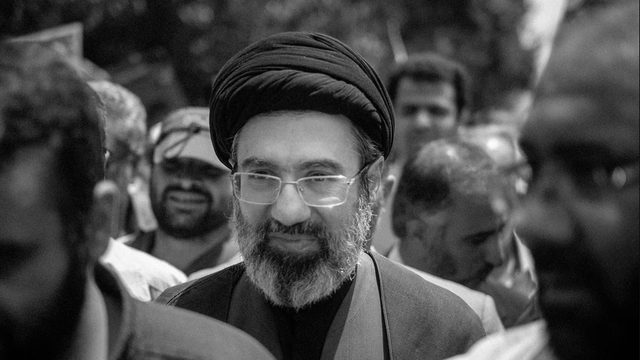
The choice the group makes will determine much about Iran's future as a theocratic state. So far, the name most frequently mentioned is that of Mojtaba Khamenei, the 56-year-old son of Ali Khamenei, who was killed in a joint US-Israeli operation on Saturday after ruling Iran since 1989.
Some have suggested that Mojtaba might be a modernizing autocrat, willing to consolidate power brutally but enact much-needed reforms. This is pure fantasy. Last month, before the outbreak of war, an acquaintance of Mojtaba told me that he was “the most dangerous man in the world” and far more violent and ideological than his father.
For one thing, Mojtaba is not a religious scholar, fit to lead a country whose fundamental revolutionary goal was to place the state under the total authority of the most prominent Shiite jurist. His father failed in this regard as well—but not as weakly as Mojtaba. Upon his appointment, Ali was a hoyyat al-Islam, a qualified jurist, one rank below ayatollah. (In elevating Ali to the position, the Assembly of Experts bypassed Hussein-Ali Montazeri, a grand ayatollah whose academic skills surpassed those of Khamenei but who had recently fallen out with the regime.)
Mojtaba has studied religion. The typical currency of clerical power is the number of people who freely choose to follow your instructions when you make decisions about what Islam commands, whether in personal or political matters. Very few obeyed Ali Khamenei on matters of Islamic law when he rose to office, and no one cares at all what his son has to say on these matters.
Many fear Mojtaba, but they fear his secular influence. In US diplomatic cables released by WikiLeaks, Iranian sources complained as early as 18 years ago that Mojtaba had become too powerful and was running his father's office. (They also claimed that he repeatedly traveled to London for impotence treatment.)
Being the son of the previous leader is, if anything, a handicap. The Islamic revolution that toppled the Shah mocked the idea of succession and boasted that only scholarship—religious merit—determined their choice of leader. In their system, Shiite scholars never appointed their sons as anything other than office managers. “Sons do not succeed their fathers,” the historian Meir Litvak told me before the war. “Appointing Mojtaba would violate this taboo.”
He suggested that the Islamic Republic could circumvent the taboo by appointing some nine-year-old, deposed ayatollah to occupy the supreme leadership for a few years, then let Mojtaba take over. Perhaps none of this matters, because whoever leads Iran next will have a lifespan measured in weeks or even days. But appointing someone with no religious credentials would be a final act of self-delegitimization for a regime that already lacks legitimacy in the eyes of most Iranians.
The regime may be looking for a true ayatollah to succeed Khamenei. But if they want an ayatollah whose views align with those of the hardliners and who is himself a true believer in Iran’s theocratic system, the options are few. “The cupboard is empty,” David Patel, an expert on political Shiism at Harvard, told me. But he said that no matter which cleric Iran’s leaders choose, a reckoning is coming for Shiism. The death of Iran’s most famous cleric will soon be followed by the imminent actuarial death of Iraq’s most famous cleric, 95-year-old Ali Sistani. This moment of change will be a generational one, an opportunity for younger clerics to assert themselves as candidates to replace them.
"If I were a second-tier aspiring ayatollah, I might see my chance to take reformist positions against America," Patel said.
Other candidates for the job of supreme leader include interim supreme leader Ayatollah Alireza Arafi. He is an academic administrator and may have the authority to keep these young men in line. Having a mild-mannered religious leader like Mojtaba at the helm would mean even more room for these young clerics to innovate and take on unconventional positions. Whether the current war will change Iran’s regime is still unclear. But it has already changed, or at least accelerated, the dynamics of the clergy.