"The fate of the homeland is in our hands" - An appeal by Ismail...
/ 2026-10-18 16:09:54Focus


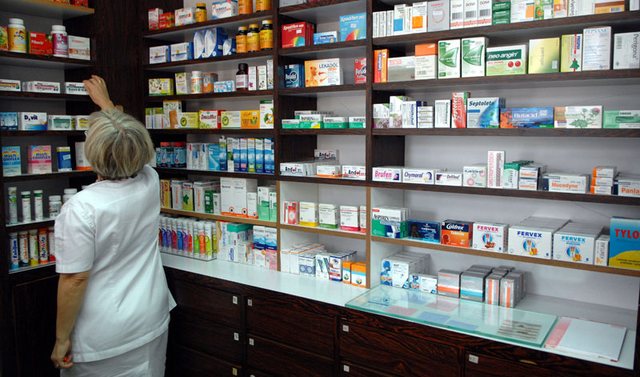
Like many pensioners of her generation in Albania, Sanija, 72, lives far from her son, who emigrated to the United States years ago. But emigration has had a positive side, as her son takes care of all the medications she needs to treat her high blood pressure, arrhythmia and osteoporosis.
“The change in the medications that come to me from America is like night and day compared to the ones in Albania,” the woman from Tirana insists. “If I use the blood pressure medications that I get reimbursed for, it takes me a month to stabilize [my blood pressure], when I use the ones that come to me from America, my blood pressure stabilizes in a week,” she added.
The elderly woman is not alone in sharing the popular opinion that the medications circulating in Albania are not efficient. A group of patients, doctors and experts in the field told BIRN in separate interviews that they do not trust the Albanian pharmaceutical market, which suffers from shortages and a lack of control.
The issue of the quality and efficacy of medications has remained a topic of discussion for at least a decade, ever since the Ministry of Health changed the law and decided to open the market to cheap generic medications, which do not necessarily carry the guarantee of consumption by European Union citizens.
In the absence of reliable studies or transparency, more and more Albanians are choosing to buy their medications abroad as a guarantee of their efficacy.
"Not always the cheapest thing is good. And here we are talking about people's health, where the cost is not measured and is not just lek," says Florian Toti, head of the Endocrinology service at the "Mother Teresa" University Hospital Center in Tirana.
Health system experts blame the lack of trust in one institution - the National Agency for Medicines and Medical Devices, which fails to analyze a large portion of the medications circulating in the country.
"The vast majority of drugs circulating in our country are not tested, they are based only on the dossier submitted by the company. They (the drugs) may be of good quality, but as long as they are not tested, we have no way of knowing," questions Ilir Pecnikaj, professor of Organic Chemistry at the Department of Pharmacy at the University of Medicine in Tirana.
The National Agency for Medicines and Medical Devices, AKBPM, dismisses concerns about the lack of control of medicines and emphasizes that "medicines circulating in the Republic of Albania meet quality and safety criteria."
“We emphasize that there is no specific legal provision that requires the performance of physico-chemical and microbiological analyses of every drug (*molecule) placed on the market in the Republic of Albania,” the AKBPM said in a written response to BIRN, describing its work as in line with EU practices.
"Big setback"
In 2014, the government of Prime Minister Edi Rama amended the law “On Medicines and Pharmaceutical Services” in the name of a cost-cutting reform. The law is associated with the name of the then Minister of Health, Ilir Beqaj, and its main effect was to expand the countries of origin of medicines beyond the European Union, the United States or other Western countries.
To be marketed in Albania, a medicine no longer needs to be certified by the European Medicines Agency - EMA - but it is sufficient for it to be circulating in one of the Balkan countries or other countries.
The change in the law brought a fundamental change in the structure of the Albanian pharmaceutical market with a total turnover of 25.4 billion lek [259 million euros].
According to data provided by Customs, although Germany and Italy continue to be among the main importers of medicines, they are increasingly competing with Turkey, Serbia, Bulgaria and Cyprus. And this is not a good sign for medical experts.
The Head of the Endocrinology Service, Florian Toti, says that after the legal changes, the quality and safety of medications has suffered "a major regression."
"With the idea that by lowering the price we also reduce the cost per patient, quality has actually decreased," said Toti, who links this to the removal of many patent medications and their replacement with generics.
Even doctor Erion Dasho, who has been practicing his profession in Germany for years, believes that the change in the law no longer offers a guarantee of quality.
“This has made patients less confident,” Dasho told BIRN.
Diana Toma, former head of the Order of Pharmacists, also views with concern this reversal of the origin of medications circulating in the country.
"We have been invaded by Turkey, but even if we accept this, can we do an analysis: why did Turkey come? Did it come because it was preferred by the Albanian citizen or because the market was deliberately emptied of other molecules and this was the most convenient form," she asks rhetorically.
Patients are also dissatisfied and are seeking solutions for their illnesses abroad.
Mira has been treated for hypertension for years and recently suffered an ischemic stroke in the veins of her leg. The effectiveness of a cure she bought in Italy has raised doubts about the medications she has been using for years.
“I was surprised how quickly they worked,” says the 75-year-old. “We live on a pension, but I would rather buy them abroad than get them for free,” she added, convinced that medicines bought in Albania “do nothing.”
Despite the concerns, doctor Florian Toti calls for things not to be exaggerated and not to lump everything in one bag. According to him, sometimes there are very high-quality drugs from Turkey or India, but there are also many other drugs whose origin is unknown.
Missing control
The National Agency for the Control of Medicines and Medical Devices, AKBPM, was established in 1965 and is the sole state institution responsible for the marketing, export, trade and use of medicines and medical devices. At the heart of the Agency's mission lies the medicines control laboratory, as the only quality control structure in the country.
After receiving marketing authorization from the AKBPM, manufacturing companies are required to submit drug samples to the control laboratory. However, most of these samples are not tested.
Data obtained by BIRN shows that the AKBPM laboratory has limited capacities and performs between 230 and 270 physico-chemical and microbiological analyses per year - a negligible figure compared to the medicines circulating on the market.
According to a 2024 audit by the Supreme State Audit Office, the liberalization of the origin of medicines market and limited control capacities have exposed Albanian citizens to medicines that "do not have the quality and safety of EU standards."
"The analysis control laboratory at the AKBPM does not operate at full capacity and is almost non-existent, a fact which does not provide assurance about the quality of all imported medicines," the KLSH report states.
Limited laboratory capacities are also evidenced by the low number of analyses. During the years 2020-2023, AKBPM has authorized and reauthorized 3,624 medications, but has only performed a very small number of analyses for only 644 of them.
"This figure is alarming," says Taulant Muka, a medical scientist involved with the pharmaceutical market abroad.
"Analyses must be regular, systematic and based on random selection to guarantee real quality control," he added, emphasizing drugs that are not certified by recognized international agencies such as EMA/FDA.
The reduced capacities of this laboratory are a secret known to all doctors, who, if they need to verify medications, are forced to send them abroad.
"I personally haven't had a case, but there have been some doctors who have requested that some tablets be analyzed that had no name or anything else and we have asked to know, for example, whether this is leverotoxin or not, and they have been sent out," said Toti from the Endocrinology service.
"Theoretically, every medication that is introduced must be approved and controlled by the drug control center, but in practice the agency does not have any kind of laboratory to verify the drugs," he added.
AKBPM itself says that it has taken measures to conduct analyzes and as of January 31, 2025, the two testing laboratories, the physico-chemical and microbiological ones, have been accredited by the General Directorate of Accreditation, "enabling accreditation for 105 indices as a testing laboratory."
“Accreditation with ISO 17025:2017 demonstrates that a laboratory operates competently and generates accurate results, improving confidence in the services it provides,” said AKBPM, adding that this accreditation sets “a missing standard.”
However, experts are skeptical that accreditation will have any real impact on the situation of medications circulating on the market.
"We don't suffer from the fact that it is accredited or not, we suffer from how real the test results are," said Diana Toma, adding that the laboratory should have been accredited.
Toma is critical of the use of the CEFTA agreement in the pharmaceutical market, while emphasizing that the main problem in healthcare today is the fact that trade is prevailing over quality.
"You see the pharmaceutical market only as a trade, so the safety of the drug does not prevail, but the financial effectiveness prevails," she said.
When a medication is registered for use in Albania, the manufacturing company or pharmaceutical firm must provide a certificate of origin, but according to experts, the AKBPM has a legal obligation to verify each medication and not just trust the file.
Professor Ilir Pecnikaj says that around 244 molecules circulate in the Albanian market, while accreditation for 105 indices indicates a minimum value of examinations that can be performed.
"A file check should be done for every drug registration, but today we only do file checks, not laboratory analyses," Pecnikaj told BIRN.
"In addition to the active principle, fillers should also be analyzed, but at least the amount of active ingredients is required to be analyzed for every medication, but it is not being done," he added.
Broken chain
One of the mechanisms that the Medicines Agency has at its disposal to monitor the quality and safety of medications is pharmacovigilance, a mechanism that aims to collect all reports of adverse drug effects or other problems.
However, even this mechanism does not function properly.
A pharmacist in the Astir area says that she has never been notified by the Agency about problems with any medication, which according to her is done by the manufacturing companies themselves.
"I once tried pharmacovigilance, a blister that a patient bought at my pharmacy turned out to be moldy and I immediately notified the agency through pharmacovigilance, but they never responded," says the pharmacist.
"I trust my state, and I believe the state has checked it, but the product turns out to be not in order and no one put water on the fire even after the notification," she added.
Although the AKBPM considers pharmacovigilance as one of its main pillars, in fact, notifications about problems with medications, which are received directly from the EMA, are not only very few, but also several weeks and even months late.
BIRN verified some of the announcements on the AKBPM website and found that they are 1 to 3 months late compared to the EMA. Such a delay for problems that could have serious consequences for consumers is considered unacceptable by experts.
"The Drug Agency should be on alert immediately with all other institutions, it's not that it doesn't receive the notification, but it doesn't implement and connect to the alert system in time. The Drug Agency is non-existent in all these cases, as the entire chain is not functioning," says professor Pecnikaj.
For Diana Toma, the fact that there have been no complaints to pharmacovigilance does not indicate a lack of problems, but a lack of trust.
"...as long as we do not have information on the official website, as long as the accreditation of the institution is late compared to its history, as long as we have the market invaded by drugs that have less popular origins than drugs that are marketed in the European community, of course the trust of patients will be shaken," Toma emphasized.
The Head of the Endocrinology Service, Florian Toti, says that origin is not the only problem with medicines in Albania, which according to him are not stored and transported properly.
Toti takes insulin as an example, which must be stored at 2-8 degrees or else its safety is questionable. But according to him, there is no tracking system.
"At customs, the truck waits for 1-5 days and no one guarantees whether this protocol has been respected. The medicines are transported to the most remote corners, let's not forget that even in the middle of Tirana there is no electricity for hours. Then the consumer keeps it in his bag for 5-6 hours, so the chain is unmonitored," he emphasizes.
Health experts insist that the lack of transparency directly harms citizens and creates a two-tiered health system: one for those who can afford to find a way to get treatment with medications they get abroad, and one for others who are left behind. In this situation, there is no shortage of suggestions for a new reform.
"Reviewing the way pharmacies are licensed, setting standards for the sale of medicines, and above all, strengthening the capacities of the National Medicines Agency," says expert Muka about the interventions that need to be made.
"The lack of citizen trust is a clear indication that the current system is not functioning properly," he concluded./ reporter.al