Peqin, a new '5D'? The Municipality Secretary creates a company ...
2026-11-19 14:17:00Focus


Vladimir Putin can be considered the biggest diplomatic beneficiary of the historic trilateral meeting in China, not because of any agreement reached, but for the position he was given at the table with Donald Trump and Xi Jinping.
As the New York Times writes, the meeting placed the Russian president on the same diplomatic level as the leaders of the United States and China, even though Russia lags behind the two powers in almost all indicators of global power, with the exception of its nuclear arsenal.
For the Kremlin, the format of the meeting itself is a political boon. Putin appeared as one of three leaders discussing the future of international security, while the war in Ukraine was included in the talks without the participation of Kiev or its European allies.
According to the BBC, Moscow appears to see the meeting as a kind of "Yalta 2.0," referring to the 1945 conference when American, British and Soviet leaders discussed the organization of post-war Europe.
Putin reinforced this symbolism by recalling the three countries' role as victorious powers in World War II and their shared responsibility for maintaining international peace.
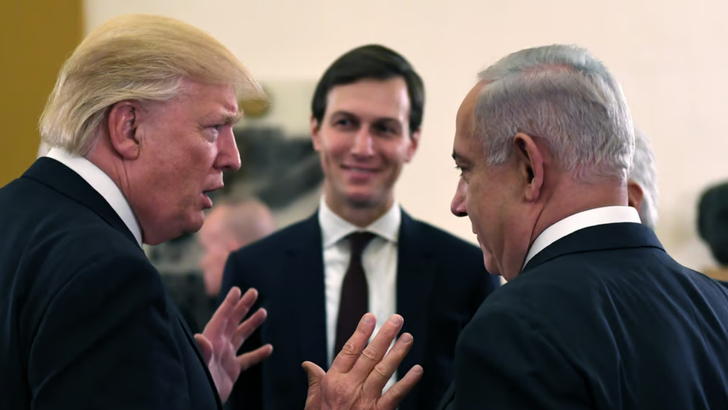
Trump's stance also contributed to this perception. The US president addressed Putin by the name "Vladimir", described him as a friend and confirmed that he had discussed ending the war in Ukraine with him.
But, beyond the symbolism, the concrete results remain unclear.
According to the New York Times analysis, Trump did not present a mechanism for reducing nuclear arsenals, did not propose a new treaty to replace New START, nor a Korean-style ceasefire to freeze the front lines in Ukraine.
Meanwhile, Xi Jinping had earlier held a bilateral meeting with Trump, where he called for maintaining stability in relations between Beijing and Washington.
The Chinese president warned that the United States should avoid actions that could cause a deterioration in relations, especially on the Taiwan issue.
According to the New York Times, the message could be linked to Beijing's efforts to block a $14 billion US arms sale to Taiwan, while trade tensions and restrictions on advanced technology remain sensitive issues.
Thus, each of the three powers entered the meeting with different interests: Trump with the aim of promoting dialogue on global security, Xi with a priority on the stability of relations with Washington, and Putin with the opportunity to strengthen Russia's diplomatic position.
At this stage, Putin's most obvious gain is symbolic and diplomatic. He secured a seat at the superpower table, while the crucial question remains whether the meeting will produce negotiations with concrete deadlines and commitments.
For the Kremlin, however, even without an announced agreement, the very presence at that table constitutes a political outcome.