


Is this police force professional and capable of handling violen...
/ 2026-10-16 18:54:07Focus


If you happened to pass through Terminal 1 of Charles de Gaulle International Airport in Paris between August 1988 and July 2006, you may have seen M ehran Karimi Nasseri : he was not a passenger like the others, but the man who was the point Initial for The Terminal (2004), directed by Steven Spielberg.
In the film version, Viktor Navorski (Tom Hanks) is an Eastern European forced to stay at a New York airport because his homeland has suffered a coup and ceased to exist while he is at the airport.
He quickly finds friends he can count on, finds a job and falls in love with a flight attendant ( Catherine Zeta Jones) .

Spielberg's brilliant film, however, tells a profoundly different story, given that in Nasser's true story there was no happy ending: the man came from Iran and headed for the UK, but a change of law and lack of documentation left him stranded at the parisian terminal for 18 years.
The beginning of Mehran Karimi Nasseri's story is difficult to determine - he himself has claimed to have different origins over time - but what is undoubtedly true is that for almost 18 years he lived inside the Paris airport.

Born in Masjed Soleiman in Iran in 1943, Nasseri traveled to the UK in 1973 to study at Bradford University. He said he took part as a student in the protests against Shah Reza Pahlavi: back in Iran in 1977 Nasseri was imprisoned and then interned for anti-government activities.
Mehran Karimi Nasseri then sought political asylum outside Iran and, after being ignored by capitals across Europe for four years, the United Nations High Commissioner for Refugees in Belgium finally granted him official refugee status in 1981.
Refugee credentials allowed her to apply for citizenship in a European country: the husband claimed his mother was British and, after spending years in Belgium, in 1986 he decided to settle in the UK.
He was traveling to London via Paris in 1988, when at that moment the story becomes complicated.
Nasser claimed that his file containing refugee documents was stolen on a train in Paris, and so when he arrived at London Heathrow Airport, passport control returned him back to France, where he was initially arrested by police; but his entry into the airport proved lawful and he was soon released.
However, he could not leave the airport.
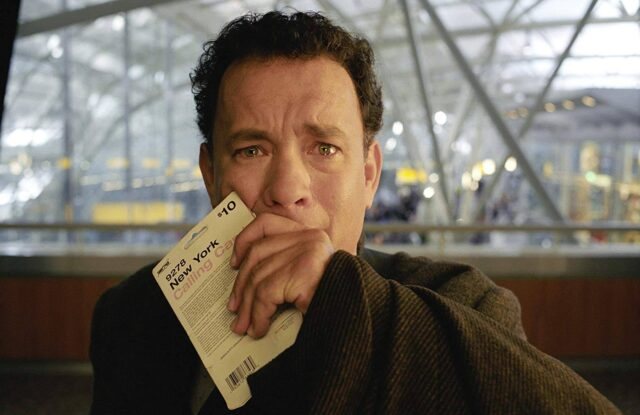
Without documents and without a country of origin, Mehran Karimi Nasseri's residence at Terminal 1 of Charles de Gaulle International Airport in Paris had just begun.
Days passed, then weeks, then months, then years.
With luggage always near him, Nasser spent his time reading and studying economics, and he recounted his experience in a diary of over a thousand pages.
He ate regularly at McDonald's, rolled Pall Mall cigarettes - airport staff saw him as a lucky terminal and brought him newspapers and food.
Very attentive to personal care, Nasser bathed in the men's bathroom and sent his clothes to the airport laundry.
Meanwhile, Naser's situation was recognized internationally through journalists from all over the world who visited the airport to interview him.

He received letters of support from people from all over the world.
Among other things, Nasser attracted the attention of French human rights lawyer Christian Bourguet, who later became his lawyer.
The solution was close, because if Belgium issued any new documents, Nasser could be identified again as someone.
But the stick was still: Belgium could republish documents only if Nasser showed up in person, but he could not travel to get documents… without having documents!
Moreover, Belgian law explicitly states that a refugee who leaves the country after being accepted could not return.
Finally, in 1999, the Belgian government agreed to mail Mehran Karimi Naseri's documents, and the French authorities granted him a residence permit.

But there had been confusion before, which ended up complicating matters years later: in 1981, when Nasser gained recognition as a political refugee, he was given documents in the name of Sir Alfred Mehran and British nationality: the name on the documents obtained in 1999 was his original name, Mehran Karimi Nasseri, and he listed it as Iranian.
In 1999, when those documents finally arrived, he stubbornly refused to sign them, claiming that his name was Sir Alfred and that he was British.
Attorney Bourguet said he was shocked because after 11 years Nasser finally had the chance to take his life back in hand; it would have been enough to sign the documents he possessed and then legally change his name, but apparently living for years in an airport can lead to strange consequences on a person's psychological profile.
In a 2003 interview with GQ, Bourguet stated that perhaps Nasser was crazy: -
"He was close to madness anyway."
Bourguet added that Nasser was "quite sober in telling his story, but over time he had become 'illogical' and so his story continued to change."
Nasser once said he was Swedish, and when Bourguet asked him how he got from Sweden to Iran, Nasser replied, "By a submarine."
When Hollywood learned the story, 'Dreamworks' gave "a few hundred thousand dollars" - there are those who talk about 300 thousand - for Mehran Karimi Nasseri to tell his story for the movie "Terminal".
But the husband never benefited from the amount he earned.

Another weird thing about his story is the fact that no relatives, no friends, no acquaintances ever showed up during the 18 years he spent at the terminal.
Nasser was a completely single man.
In 2006 Mehran Karimi Nasseri was hospitalized for an as yet undetected disorder, ending his extended stay at Charles de Gaulle International Airport: he reportedly was released from hospital in 2007 and transferred to a nearby hotel. airport.
He was given freedom of movement in France, but he never flew to London, the destination he had chosen almost twenty years ago.
Not much is known since then, but those who saw him in Paris in 2008 said he lived in a shelter on the outskirts of Paris.
Forgotten by all.


