


How Belinda Balluku is fabricating the rumor about Top Channel's...
/ 2026-10-19 16:19:00Focus


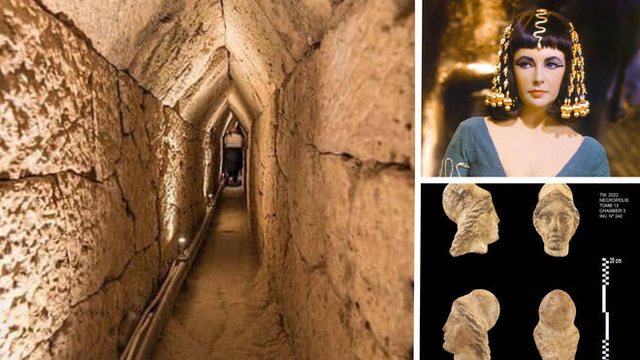
Archaeologists have discovered a rock-cut tunnel beneath Egypt's ancient Taposiris Magna temple that they believe may lead to the lost tomb of Cleopatra, the last ruler of Egypt from the Ptolemaic era from 51 to 30 BC.
Egypt's Ministry of Tourism and Antiquities announced the discovery last week, describing the 1,300-metre-long tunnel found 13 meters underground as a "geometrical marvel". It is similar to the Eupalinus Tunnel from the island of Samos, which is considered an architectural wonder of the ancient world.
The excavation was led by archaeologist Caitlin Martinez from the University of Sao Domingos, writes ArtNet.
According to historical records, Cleopatra committed suicide at the same time as her husband, the Roman general Mark Antony, and it is believed that they were buried together.
Martinez traveled to Egypt in search of the ancient queen's tomb twenty years ago and after much research believes that Taposiris Magna, a temple near present-day Alexandria dedicated to Osiris, the god of the dead, is the most likely resting place of Cleopatra.
She managed to convince Egypt's chief archaeologist Zahi Hawass, then minister of antiquities, to allow her to conduct research in the country for two months. However, she received much more than that. Work has been ongoing since 2004, and the new discovery is the strongest proof yet that Martinez is on the right track.
"This is the perfect place for Cleopatra's tomb. If there's a one percent chance that the last queen of Egypt is buried here, it's my job to look for it. "If we find the tomb, it will be the most important discovery of the 21st century. If we don't, we've already found important things inside and outside the temple," Martinez told the Heritage Key blog.
So far, two mummies and a cemetery with mummies buried in the Greco-Roman style in front of the temple have been found. Also, a small bust believed to represent Cleopatra and 22 coins with her image were discovered.





