"We are drowning..." - From Lisbon, Milan to Tirana, "The Guardi...
/ 2026-10-18 23:13:32Focus


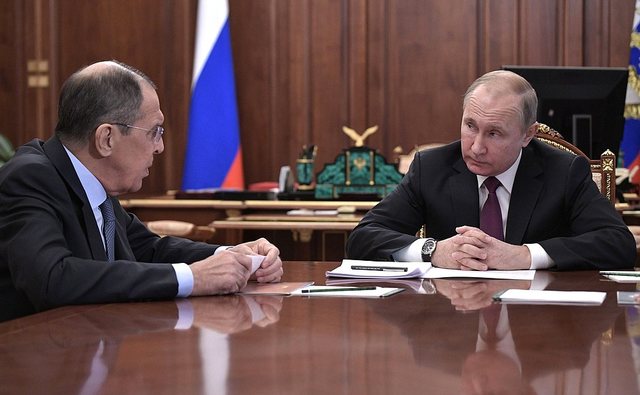
He did not lead the Russian delegation at the Southeast Asian summit last October, will not represent Moscow at the G20 in South Africa this month, and was the only one absent from the Security Council on Wednesday.
This was enough for some international opposition media and Telegram channels to write that Russian Foreign Minister Sergei Lavrov had “fallen from the ashes”: he is reportedly being blamed for postponing the summit between Vladimir Putin and Donald Trump in Budapest after his “tense” phone call with US Secretary of State Marco Rubio.
The first to notice the minister's absence from the Security Council on November 5 was Kommersant journalist Andrei Kolesnikov.
It was also a "historic" meeting, where Putin had instructed his officials to assess whether they should prepare for the resumption of nuclear testing after 35 years.
“Informed sources” reportedly told Kolesnikov that Lavrov was “absent by mutual consent.” This formulation only fueled speculation. Also because, the day before, Putin had appointed by decree the deputy chief of staff of the presidential administration, Maxim Oreshkin, to head the Russian delegation to the G20 on November 22 and 23 in Johannesburg.
Previously, Lavrov had always replaced Putin whenever he was forced to withdraw from international events due to an international arrest warrant for “war crimes,” such as the G20 summit in Bali in 2022 or this year’s BRICS summit in Brazil. And in late October, Deputy Prime Minister Alexei Overchuk led the Russian delegation to the Association of Southeast Asian Nations (ASEAN) summit, usually led by Lavrov.
The minister's "absences" began after his October 21 phone call with Rubio, which was supposed to lay the groundwork for a summit between the two leaders in Budapest.
However, according to Reuters, Lavrov was “expecting too much,” prompting the Secretary of State to advise Trump to cancel the meeting. The summit’s postponement was followed by sanctions against Rosneft and Lukoil, the first since Trump returned to the White House.
Someone in the Kremlin would have taken advantage of the situation to accuse the longest-serving minister in the Putin era, 21 years out of 76 years at the helm of the Foreign Ministry, of “sabotage.”
Lavrov reportedly had “a serious conversation” with Putin and is now “demoralized” because he “found himself at the center of a conspiracy.” “Many believe he is following in the footsteps” of former Defense Minister Sergei Shoigu, who, after the withdrawals from the Ukrainian front in the fall of 2022 and the Wagner uprising in 2023, was appointed head of the Security Council in May 2024. Lavrov, Nezygar continues, “has lost Putin’s favor” and “is forced to reveal information to prove his innocence,” but his only crime, if he ever had one, was the belief that “his tougher and more principled approach reflected Putin’s position.”
Commenting on this situation, Peskov said that such allegations are "untrue" and have no basis in reality.