Is this police force professional and capable of handling violen...
/ 2026-10-16 18:54:07Focus


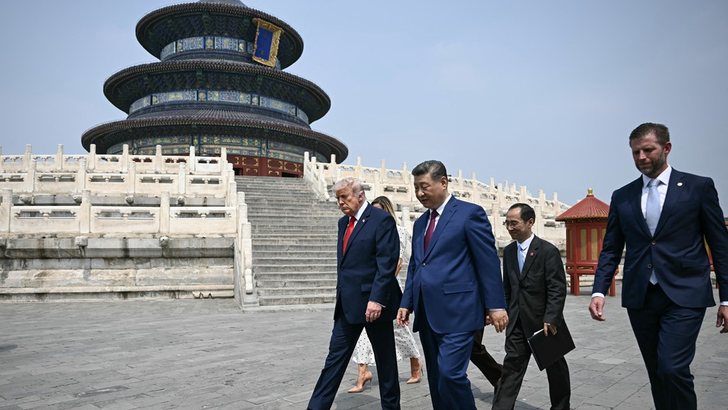
With a quote from ancient Greece, Xi Jinping brought one of the most controversial concepts in contemporary geopolitics to the forefront again: the “Thucydides Trap.” Speaking to Donald Trump, the Chinese leader raised the risk that the rivalry between an emerging power and a dominant power could erupt into conflict, as happened more than two thousand years ago between Athens and Sparta.
The expression takes its name from the Greek historian Thucydides, author of “The Peloponnesian War,” the conflict that pitted Sparta and Athens against each other in the 5th century BC. In his account of the war, Thucydides writes that “it was the rise of Athens and the fear it aroused in Sparta that made war inevitable.” This gave rise to the idea, revived in modern times by scholars of international relations, that the risk of conflict increases when a rising power threatens the dominance of an already consolidated power.
According to this interpretation, Athens represented the new power expanding economically, militarily, and navally, while Sparta embodied the dominant order of the Greek world. The rivalry between the two city-states escalated into the long Peloponnesian War, fought between 431 and 404 BC, which ultimately weakened both.
The modern phrase “Thucydides’ Trap” was made famous by Harvard political scientist Graham Allison, particularly in his book “Destined for War,” which focuses specifically on relations between the United States and China. Allison argues that power shifts between great powers are often accompanied by tensions, mutual fears, nationalism, and miscalculations that can make conflict more likely, even without a clear desire for war.

Xi Jinping has used this reference for years in discussions with American presidents, from Barack Obama to Joe Biden to today's meeting with Trump. The implicit message is that Washington should not view China's rise as an imminent threat, thereby preventing the strategic competition between the two superpowers from degenerating into open conflict, especially on sensitive issues such as Taiwan, trade and technology.