Protests, violence, curfews: From France to Albania, why Europe'...
/ 2026-10-20 23:47:20Focus


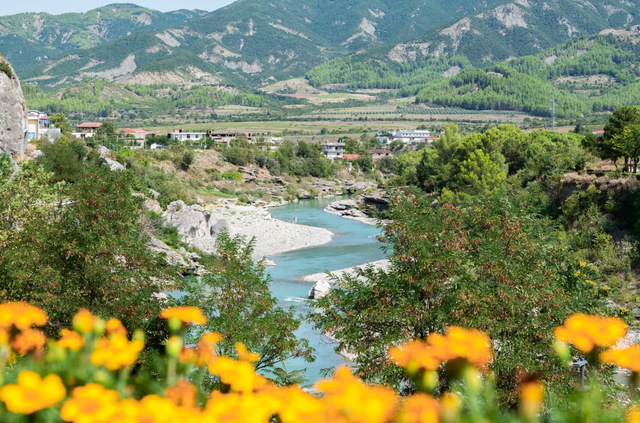
The prestigious "New York Times" has dedicated a report to the last wild river in Europe, the Vjosa. While Albania announced it at the beginning of this year, National Park, at the same time Vjosa was listed among 52 places that must be visited this year.
For the New York Times , Vjosa is an example of the balance of how a natural park is preserved and explored at the same time.
***
Between fertile valleys, gorges, ancient ruins and mountain villages, Europe's first wild river national park "Vjosa" tries to balance tourism and preservation of cultural sites.
A trip along southern Albania's Vjosa River, one of Europe's last remaining waterways, means traversing a landscape that looks like it has passed through the ages.
Flowing from the northwest border of Greece into the Adriatic Sea, the Vjosa flows into canyons and gorges formed by rugged oak and fir forests.
Ancient stone bridges connect its shores, crossing the turquoise waters.
Earlier this year, Albania took a critical step towards preserving cultural sites with the establishment of the Vjosa Wild River National Park, the first in Europe and a destination included in the list of "52 places to visit this year".
The Albanian government, the International Union for Conservation of Nature, non-governmental organizations from the Save the Blue Heart of Europe campaign and the American outdoor clothing company Patagonia worked together to protect 120 miles of the river in Albania and its main tributaries. his.
The source of the 169-mile Vjosa is in the Pindis Mountains of Greece.
After years of protests against mining and dam projects and support from Hollywood actor Leonardo DiCaprio, the park's classification was a victory.
"Our support for Vjosa increased when we began partnering with the Albanian government in 2021 to do something that had not been done before," said Ryan Gellert, Patagonia's chief executive.
According to Gellert, the plan calls for the park to be fully operational, with a center for visitors and staff in 2024.
For locals and tourists alike, park classification is a boon, if not a lifesaver.
In a country already known for its food, the territory of the Vjosa Valley puts it at the top of the list.
Fresh fruit and vegetables, trout, mountain honey, lamb, wine, beef, brandy, cheeses and herbs abound, along with Balkan hospitality.
The new park includes tributaries of the Vjosa, a river about 250 miles long and more than 31,000 hectares: an ecosystem with about 1,200 species, 15 of which are in danger of extinction.
"Ten years ago, everyone was fleeing the villages," Mirela Kumbaro, Albania's Minister of Tourism and Environment, wrote in an email.
"Now we have more and more people who are returning from emigration to their villages, to open guesthouses, agro-tourism and agricultural farms", she writes.
"I see the future of tourism as environmentally friendly, with people who will appreciate nature as a priceless asset," Kumbaro added.
The valley was packed with visitors when I made my first stop at the town of Permet, which lies on a bend in the Vjosa about 20 miles from the Greek border.
"Vjosa n'Fest", the second annual edition, was organized in the former Ottoman shopping center, called "City of Roses", which is being turned into an adventure center.
The festival lineup included musical performances, guided hikes, horse riding, cycling and rafting.
Halfway through the three-hour expedition, we landed on a pebbly beach.
Behind us was Maja e Papingu 2489 m, the highest point in the Nemercka range.
The locals call the mountain by its mythical name: "Peak of Light".
This country mainly shines with its local inns, local interactions and unwritten discoveries.
The combination of hospitality and untapped potential makes the relatively undiscovered Vjosa Valley intoxicating.
It also creates fertile conditions for exceptional tourism.
"Mass tourism and urbanization is a danger," said Andrej Sovinc, a protected areas expert at the International Union for Conservation of Nature, the organization that classified Vjosa as a national park.
"To address this, we are designing a plan for the sustainable development of tourism in and around WRNP Vjosa, which focuses on local people and the preservation of natural and cultural values," he said.
The next trip was an hour's walk south of Përmet to the 18th century Orthodox Church of Saint Mary in the hill settlement of Leusa.
The three-nave, stone and brick church, which has an intricately carved wooden iconostasis, is filled with frescoes and murals.
Next, we visited the narrow canyon of Lengarica, located on the river Lengarica, a branch of the Vjosa, and a series of hot springs near the village of Benjë.
We walked past the Ottoman-era Katiu Bridge, which forms the largest thermal baths, already crowded with people.
Each of the six sulfur baths has a distinct medicinal benefit.
The next day, we took a 45-minute hike from the riverside town of Kelcyra to the remains of a 2,400-year-old Illyrian fortress on a ridge overlooking Vjosa.
On my last visit, I followed the new 675-mile UNESCO cycling route, part of which runs through the Vjosa Basin to the bottom of the Adriatic Sea.
The journey, about 30 miles a day for three days, began in Gjirokastra, a UNESCO World Heritage Site known for its architectural character typical of the Ottoman period.
The city's rooftop buildings are spread along the Drin River, one of the new protected tributaries of the park.
The birthplace of the writer Ismail Kadare and the dictator Enver Hoxha, the "City of Stone" was buzzing with visitors wandering the 13th century castle and the steep cobbled streets of the bazaar.
The tracks continued north along the Drini, past the 222-hectare Archaeological Park of Antigone, where stone blocks depict the ancient Greek city.
The trail followed a state road with twisting climbs and sweeping descents that opened into valleys.
In the town of Tepelena, a 19th century castle stood guard near the confluence of Drin and Vjosa.
I stopped at the Lord Byron Guest House, as the English poet who visited the town in 1809 called it.
"Vjosa's extraordinary vision includes the environment, economic growth and the balance between them," said Rezarta Bare, tourism advisor for the German Agency for International Cooperation in Albania.
"Real history is about people. The people of this region are warm and kind, the epitome of southern Albanian hospitality. The conversation about the Vjosa is important because it sheds light on the vulnerability of people, nature and culture, all intertwined in this wild river," she added.
The river ended north of Vlora, the country's second largest coastal city, founded by the Greeks 2,600 years ago.
In the Vjosa-Narta Protected Area, which covers about 50,000 hectares between the Vjosa delta and the Narta lagoon, the space resembles a paradise for birds; with nearly 200 species, including flamingos, a critical migratory habitat.
Vjosa is also at the center of a recent controversy, as the government has begun construction of a new airport within the protected area.