"The fate of the homeland is in our hands" - An appeal by Ismail...
/ 2026-10-18 16:09:54Focus


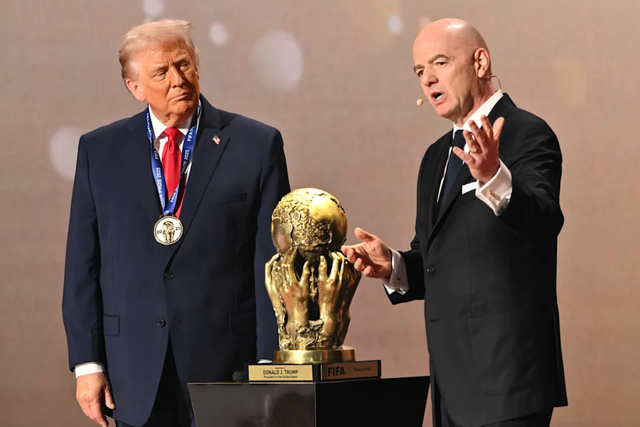
The front that seeks to abandon the most important football competition is expanding. The issue has involved politics, while on the other side is Washington's hard line on immigration, which partially denies fans entry into the US.
The World Cup has never been so in danger. It's not about qualifying any big team, it's about politics. More and more European countries are considering boycotting this summer's event, following recent developments in relations with the United States.
At the forefront of the protest is, of course, Denmark. Trump's attempts to take over Greenland (a territory belonging to the Danish crown) have angered public opinion. In a recent poll by the portal "BT", 90% of Danes expressed their support for a boycott of the World Cup.
The issue has also affected Sweden, where a large portion of consumers have long refused to buy "Made in USA" goods, as a response to the lack of clarity in Trump's position on the conflict between Russia and Ukraine.
There are also strong discussions about the American World Cup in Germany. The vice president of the Federation, Oke Göttlich, president of St. Pauli, a club from the working-class neighborhood of Hamburg, has come out openly against it. He has always been against the football-business model.
Göttlich told the Hamburger Morgenpost that the time has come for concrete, strong action. This stance is in line with the demands of St. Pauli fans, who recently appealed to FIFA to recognize the Greenland Football Association. A symbolic gesture that could represent a "diplomatic lever" against American claims.
The initiative was supported by several CDU politicians, but was stopped by the president of the German Football Association, Bernd Neuendorf, who had supported the German national team's protest in Qatar for human rights.
There are also problems related to the security factor. Especially after the images of recent days in Minneapolis, with 3,000 ICE agents mobilized for the anti-immigration operation requested by Trump. It is not yet clear how the US government will manage the influx of fans from many countries of the world who will follow the World Cup.
In recent months, Washington has suspended or banned tourist visas for citizens of several countries, including those that have qualified for the World Cup. This is the case of Iran. It is also unclear how the "Fifa pass" proposed by Infantino to facilitate the entry of fans of any passport will be applied.
The tense international climate, rising tensions in the US and uncertainty over tourist visas seriously risk compromising the spirit of brotherhood and universality that has always been the basis of the World Cup. The idea of a weekly co-hosting is gaining traction.