Protests, violence, curfews: From France to Albania, why Europe'...
/ 2026-10-20 23:47:20Focus


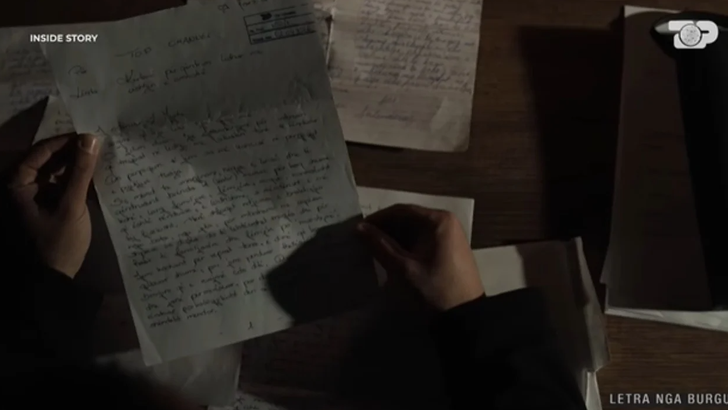
Every letter that comes from prison is not just a request, but a long confrontation with a moment that will never come back.
We are conscious of our actions, we know that we have made many mistakes, but we have deeply repented and believe that we suffer for it every day.
This is the story of Rudina Kishta.
A day that begins inside an apartment, but quickly turns into a series of events where family conflict, a fire, and a serious act against her two minor daughters turn it into a day of horror...
According to the file, it all started with an argument with her roommate, who asked her to leave the house. This request led Rudina to take a serious action by burning her roommate's clothes and apartment, which was reduced to ashes within a few hours.
"My flat was burned down by my roommate Rudina Kishte, because she tried once when I was there. The reason Rudina burned the house down was that she wanted me to take her to pick up her mother and drop her off at my flat, but I told her that maybe I could take her to dinner. She got angry and set the flat on fire, burning all my household furniture. The flat was completely burnt down and became uninhabitable."
"When a society lives in poverty, there is nothing different than a society that lives in violence, because poverty is above all a lack of opportunities, and often people who live deprived of an opportunity go towards an inner turmoil, an inner revolt. But, this does not mean that every poor person is involved in crime," said Entela Binjaku, sociologist.

"Women who commit crimes due to social pressure are another category. They are included in that category of marginalized groups, who, in the absence of opportunities, in the absence of mechanisms that would strengthen their emotional and economic independence, fall prey to pressure and since society is not supportive of either empowering mechanisms or mechanisms that would amortize and prevent criminal behavior in these women," said Almedia Xhaferri, a psychologist.
After the fire in the apartment, Rudina had fled with her two minor daughters. In the area near the Seman River, a casual witness who was fishing is confronted with a scene that has nothing to do with normality, a mother with two children who tries to strangle them...
"She put the girls in the water and tried to hold their heads under the water... I immediately went in to save them..."
But according to the file, the mother's actions don't stop there. She tries to approach the children again, creating a chaotic situation, where only the intervention of bystanders and the police prevents the tragedy from ending...
"The defendant took direct actions to cause the death of two minors, interrupted only by the intervention of third parties..."
Today, from her cell, she expresses remorse, but such a crime has given her one of the most recoverable punishments: that of losing the connection with those most dear to her, with her children... A connection that, due to the terrible attempt, can no longer be justified...
***
"I feel the weight of the mistake..." The harrowing story of the mother who threw her baby into the river and the message from the cell
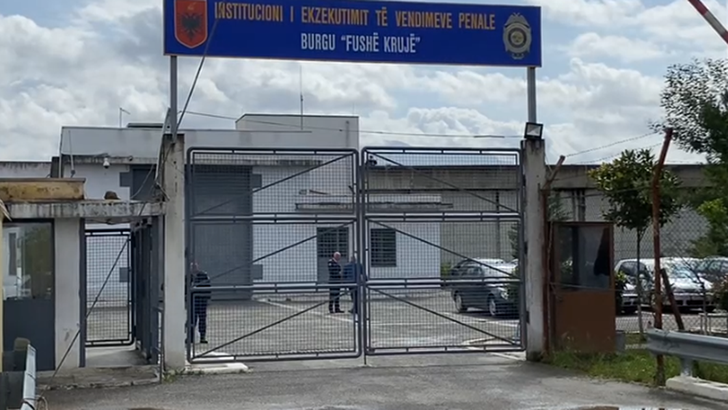
Dozens of women are serving their sentences in Pojska prison. Each of them represents a tragedy etched in the investigative files and the family or social upheavals that their actions have caused. Actions linked to stories that do not start from nothing, but are covered up to the final tragic steps. In the letters expressing repentance, between the lines their inner world is revealed within the prison walls...
Some have reflected and improved, but some have unfortunately become psychologically aggravated to the point of mental health disorders.
This is the story of Orjana Gremi...
One of the most serious events, where human pain directly collides with criminal responsibility. A story where what should have been a beginning... turns into an end, and instead of joy, a heavy silence remains.
According to the file and her story, Orjana Gremi was in a deep state of emotional shock immediately after giving birth. A moment where thought and action no longer go together, where everything happens without complete clarity.
In a few moments that change a life forever, the event that would remain one of the most difficult of these stories also occurs.
"On 04.01.2023, during the early hours of the evening, the defendant intentionally killed her four-day-old baby, citizen EG. The defendant took the baby, wrapped it in a blanket, then put it in a large plastic bag, closed the mouth of which, and then threw the baby into the waters of the Kir River. Due to the lack of air, the constant presence of water, and low temperatures, the baby died."
What was the great joy of a family and a young mother turns into tragedy. The new beginning was quickly extinguished. A heavy silence remained, a confrontation with a fact that could not be reversed.
The defendant was responsible, she commanded and controlled her actions. She did not kill the baby she had given birth to immediately after birth, but 4 days later and after she had completed all legal procedures for both registering the child and providing a check to withdraw the money she was entitled to from the birth of the child.
"There is a connection between the victim and the perpetrator, they are victims for a long time, but without a doubt, the moment they commit a crime they have killed. The way society perceives them when they kill, especially their families, is this, they are abandoned..." said journalist Anila Hoxha.
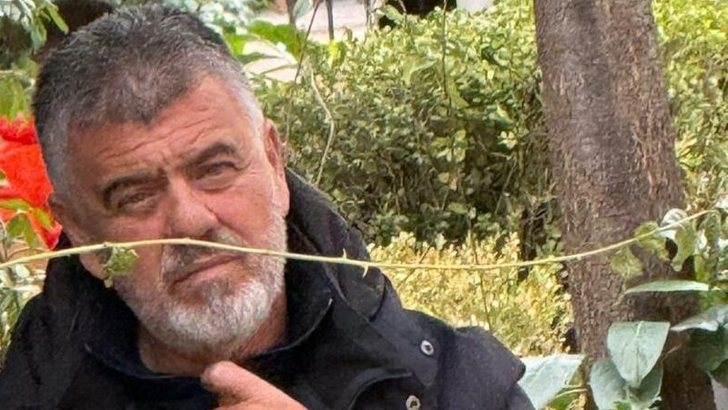
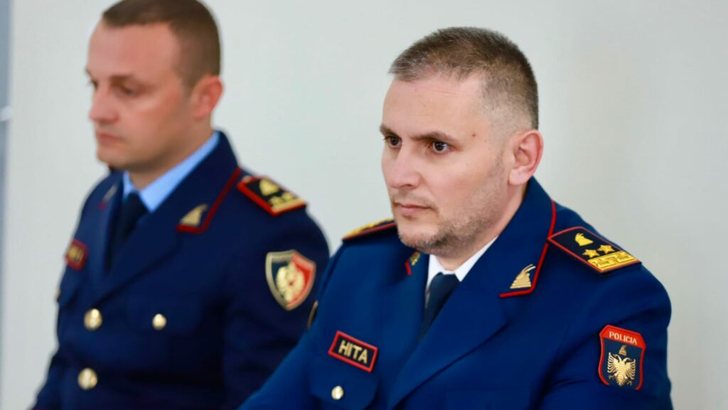
"I had a good cooperation with the police officers who were on duty at night, and they told me that there are many women who wake up at night sleepwalking, screaming, howling, crying. We go in, calm them down and they tell us 'I had a dream. The anxiety of the murder came back to us'. So, with a few words, you will be black after a murder...", said the director of the women's prison, Xhoi Jakaj
In her accounts from prison, Orjana does not deny the incident. She links it to an uncontrolled emotional moment, to a severe psychological state.
But, faced with the file, the fact remains the same: an act with irreversible consequences. And as in many cases, time does not erase it, it only moves it from the court to the conscience.
But, beyond the crimes and files, from inside the cells today comes another request, amnesty....
On paper, a humane act, a second chance. But in Pojska it is experienced differently.
Because out of 447 prisoners who receive release, only 9 are women. A statistic on paper, but an exception in reality.
We feel the weight of our mistake, but we want a second chance to show that we have been rehabilitated and can live in the community, to be able to join the young children and families who are waiting for us. Everyone deserves a second chance. Each of us has learned the right lesson.
A request that does not deny the crime, but seeks a chance beyond it.
We are mothers with children who live only for them, waiting every day for a small hope, an amnesty, a pardon, or even a reduction in the years of our sentence.
Between the law that promises and the reality that excludes, the gap becomes visible. For some, amnesty is freedom, for some, expectations, for others, it remains just a word.
For us, a second chance means a second life. This is the message we want to convey. The state should sometimes think about cases like these. The last general amnesty was made in 2016.
"This has opened up many discussions about why women do not benefit as significantly, but there are arguments and justifications of the nature that since women, unlike men, when they commit macabre crimes, end up with life imprisonment, or even when they are co-authors, partners or secret lovers, when the co-author is the court has expressed life imprisonment, while for the woman 25-30 years ," said Anila Hoxha, journalist.
"I don't know how I'll sound in public, but women who were more attentive in activities, in reading, when we read books, women who had no education we read to them, so those who had committed crimes were more likely to be rehabilitated and I link this to the pangs of conscience ," said the former director of the women's prison, Xhoi Jakaj.